


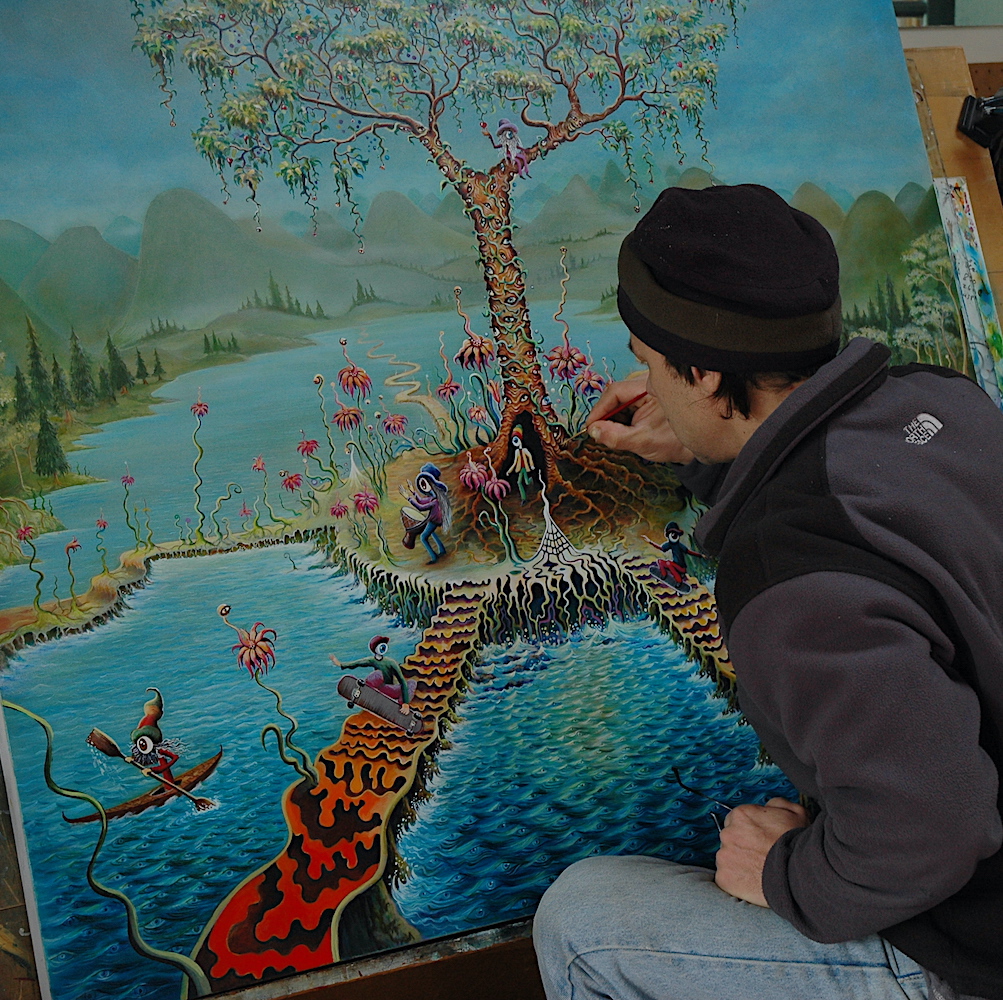
Mike DuBois and the Art of Rock ’n’ Roll
The Golden Era of Rock ‘n’ Roll poster art may have started in San Francisco in the mid-1960s, but it remains alive and thriving in the Hudson Valley thanks to Mike DuBois.
Like legendary Bay Area artists Stanley Mouse and Alton Kelley, Woodstock’s Mike DuBois has gained recognition by creating captivating posters and a diverse array of merchandise for bands such as the Grateful Dead, the Allman Brothers, the Rolling Stones, AC/DC, and Levon Helm, as well as the official imagery for two Woodstock Festivals and the revitalized Bearsville Theatre. DuBois’ family roots in the Hudson Valley date to the 1670s, when his ancestors were among the first settlers in New Paltz.
Mike and his wife/business partner, Kelly Sinclair, recently made headlines when they bought the landmark building at 59 Tinker Street to serve as the headquarters for their HappyLife Productions and retail store/art gallery. This building was once home to many venues important to Woodstock’s music legacy, including the famous Café Espresso (Café Depresso to the locals!) and the legendary performance space, Tinker Street Café. And the second-floor apartment at 59 Tinker was where Bob Dylan often crashed in the mid-1960s and composed many of his best-known songs.
For a deep dip into Woodstock’s music and art history, read all about Mike here.
We are Upstate NY with Artist + Entrepreneur Mike Dubois
-
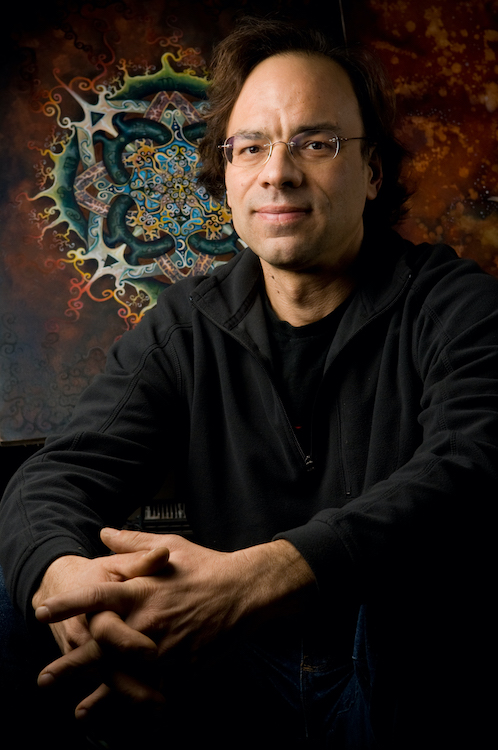
- Photo Jennifer May
-
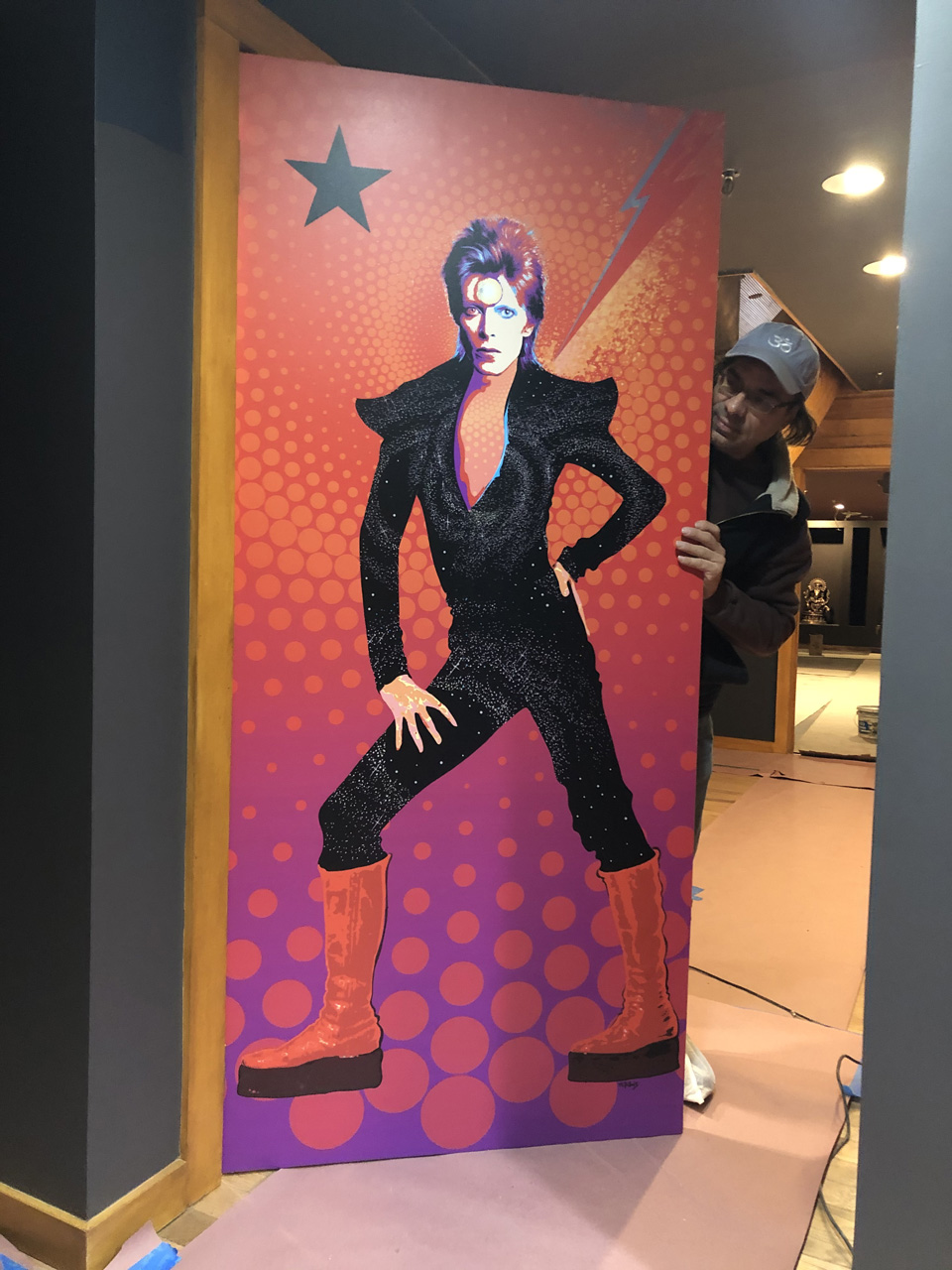
- Bowie at Bearsville Theater
INSIDE+OUT: Although you were born and raised in Syracuse, your family has very deep roots in our area. Tell us a little about your ancestors’ history in the Hudson Valley, and when you decided to relocate here?
Mike DuBois: My ancestors on my father’s side were descendants of the French Huguenots who were exiled from France and settled in New Paltz in 1677. The DuBois family was one of seven that created a community of their own in New Paltz. My great-grandparents still lived there but moved to Rochester in the 1930s. I grew up in Syracuse and came to New Paltz in 1981 to attend SUNY New Paltz. After graduating and then traveling, I returned to settle in Woodstock in 1986.
How old were you when you developed an interest in art? What were some of your first professional activities, the ones you began in your teens, and when did you decide to focus on music as your creative subject matter?
Mike DuBois: I’ve always been interested in art. Since I was a kid, I would draw and create constantly. It was a natural passion I was born with. Growing up, I always had sketchbooks and drawing pads nearby. I would spend hours in my room drawing and painting. Some of my first professional art projects included designing t-shirts for my junior high sports teams, making posters and flyers for local bands, and taking on mural painting commissions for private businesses and city-owned properties. I was also a musician from a young age, and in my early teens, I started playing in punk bands around Central New York. I created designs, logos, posters, and shirts for local bands. It was a perfect fit and something that truly inspired me.
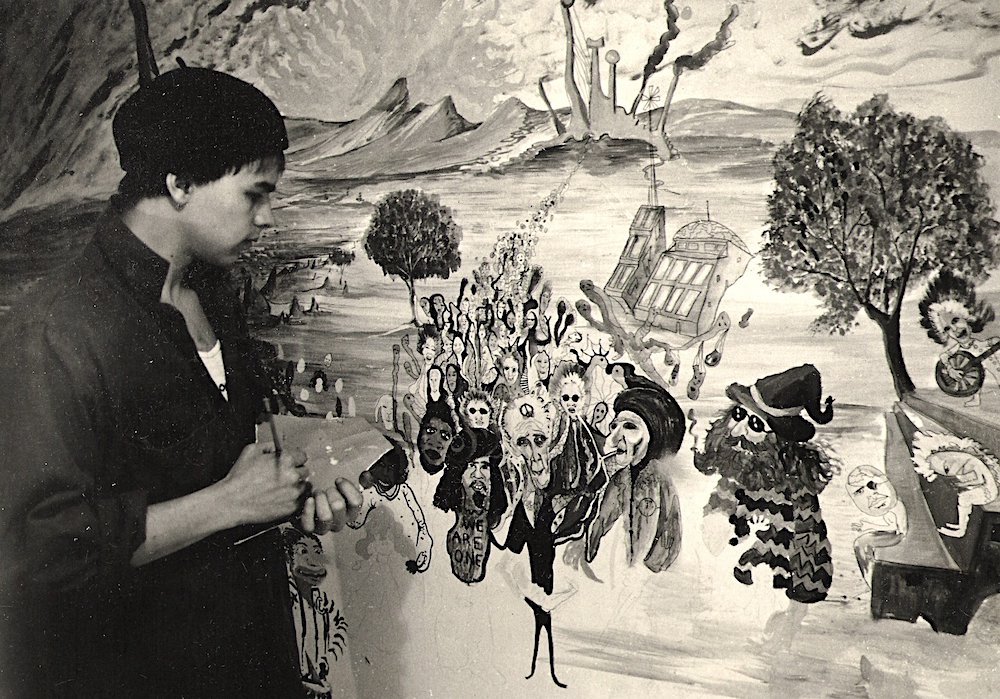
Photo John Vorel
How did your studies at SUNY New Paltz shape your art, and who were some of your early art influences?
Mike DuBois: I majored in Visual Art and Sociology in college. Back then, SUNY New Paltz was known as one of the top art colleges in the SUNY system. I took a diverse range of art classes, including painting, graphic design, metalworking, photography, and art history. I was politically active in the student association senate and the Appropriate Technology Association, for which I created graphics. I was hired by the school to paint murals on campus buildings, which was a fun experience. In 1980, I started a small graphics company with a college friend. We made posters for campus events, concerts and local bands. That was the start of my company, HappyLife Productions. My earliest influences were cartoons and comic books from my youth, and my dad, who would draw characters with me. Later influences included artists such as MC Escher, Dalí, Antoni Gaudí, and many album and poster artists from the ’60s and ’70s, such as Rick Griffin, Stanley Mouse, Roger Dean, and R. Crumb.
In the mid-80s, you spent a few years in San Francisco. How did that experience shape your art and the circle of musicians you work with?
Mike DuBois: In 1985, I was living in the redwoods north of San Francisco. I would go to San Francisco for various events and work on different art projects and posters. I partnered with a gallery called Art Rock, which provided me with a platform to sell my shirts and posters long before the internet. Meeting Bay Area musicians gave me opportunities to create promotional and merchandise designs, which helped my work reach many people who might not otherwise have seen it. Working with bands naturally brings an audience that might otherwise never encounter the artwork. It also opens doors for other bands, organizations, and festivals to request artwork.
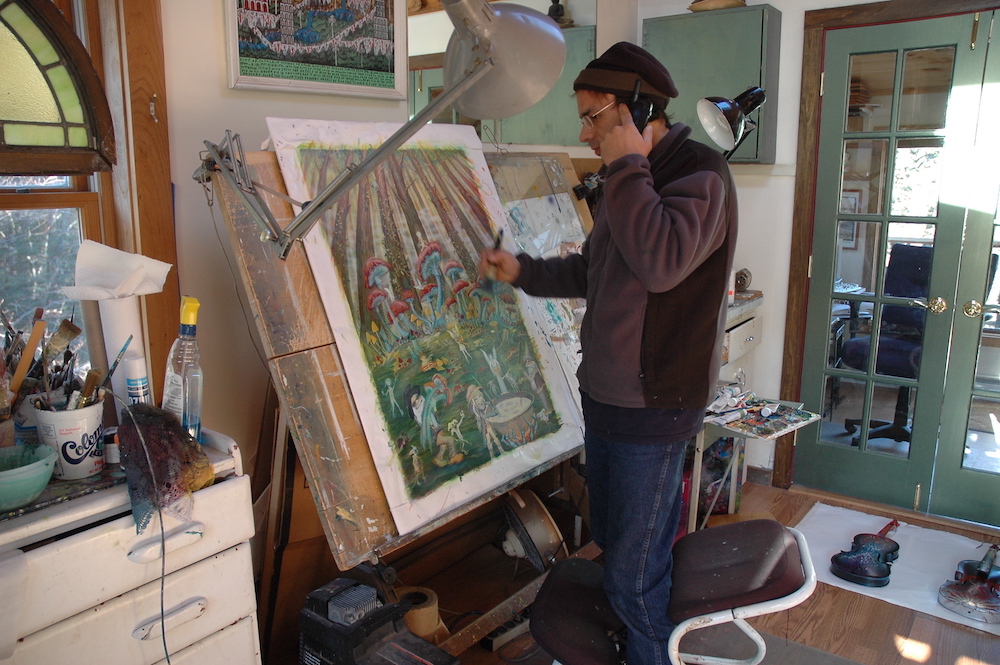
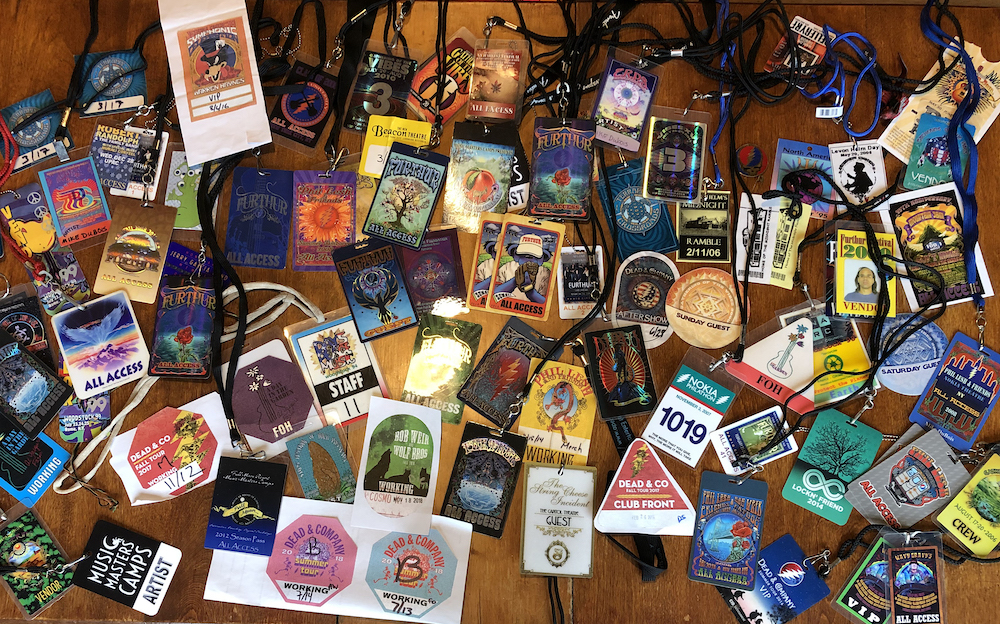
Photos by Kelly Sinclair
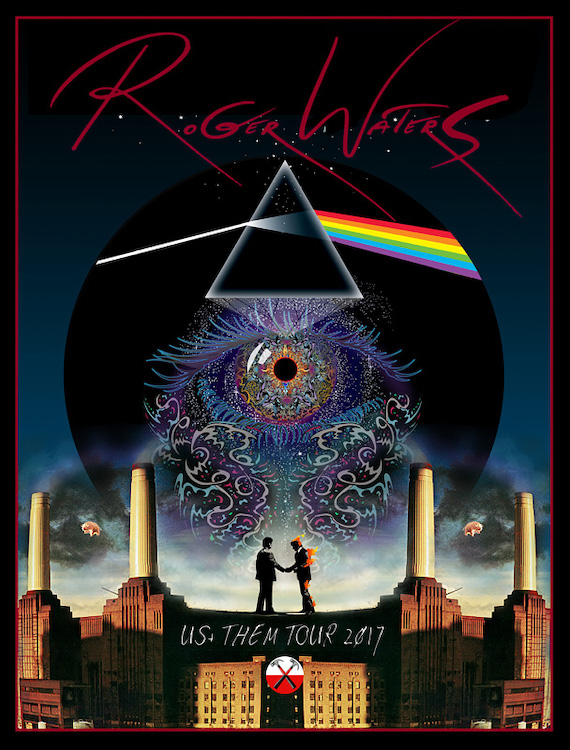
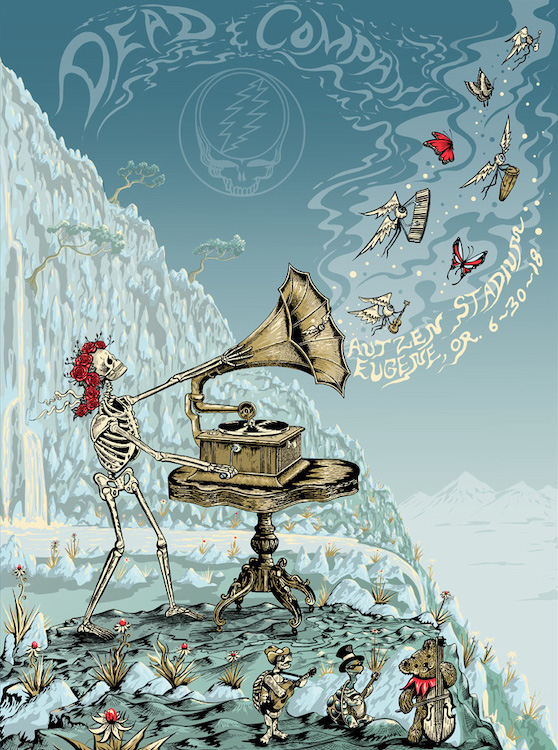
Your poster art for bands, concerts, and festivals may be your best-known work. Tell us about some of the many great artists you’ve worked with, your special relationship with the Grateful Dead and its offshoots, and how that led you to develop a broader business in tour merchandise.
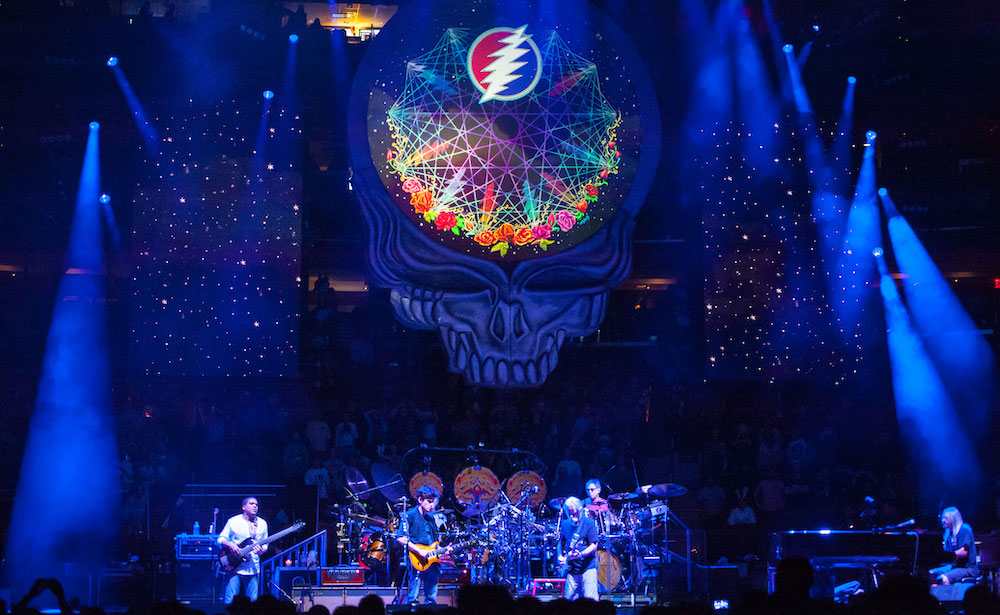
Mike DuBois: I have been fortunate enough to work with many of the greatest bands of the rock era, including some I dreamed of working with as a kid. The list of bands I’ve worked with is extensive, but I’ll highlight a few: I’ve created posters and tour merchandise for the Allman Brothers Band, Tom Petty, the Rolling Stones, AC/DC, Fleetwood Mac, Santana, Black Sabbath, the Woodstock Festivals in 1994 and 1999, Levon Helm, Alabama Shakes, The Grateful Dead, and all of their offshoot bands and members. I began working with the Grateful Dead in 1986, designing a tour shirt for them under the Not Fade Away Graphics license, and I’ve continued to work with them every year since. Over the past 40 years, I’ve designed numerous tour merchandise items, posters, and stage backdrops for them. I secured my own license with Grateful Dead Productions in the mid-1990s and have continued to create products and their annual calendar. I’ve been fortunate to meet and collaborate with each member of the Grateful Dead to craft art for their unique projects.
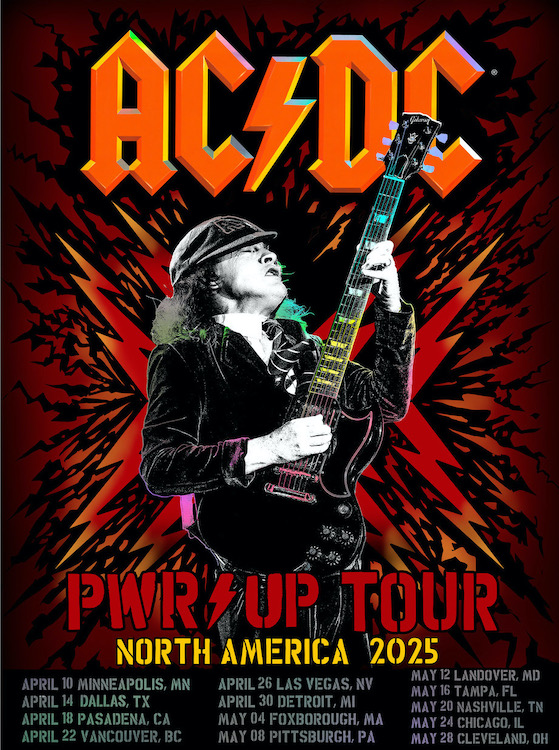
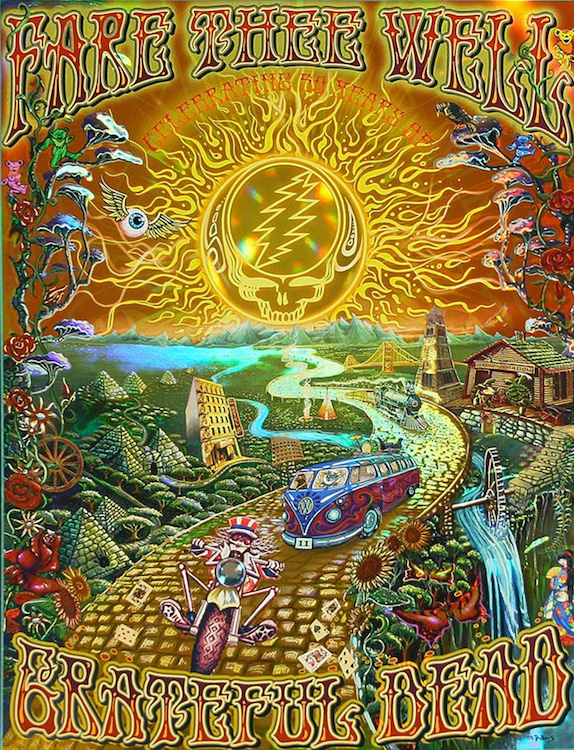
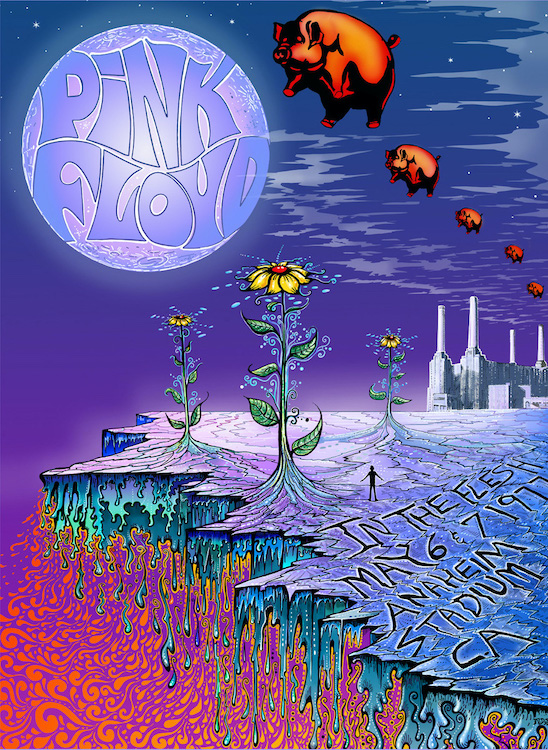
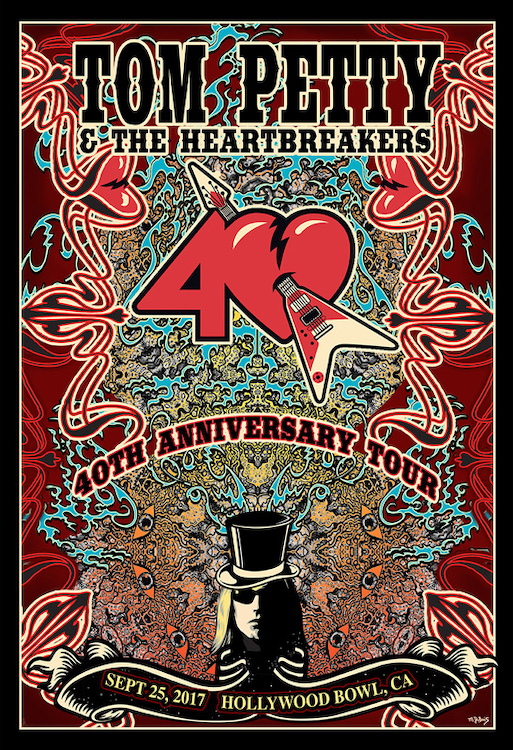
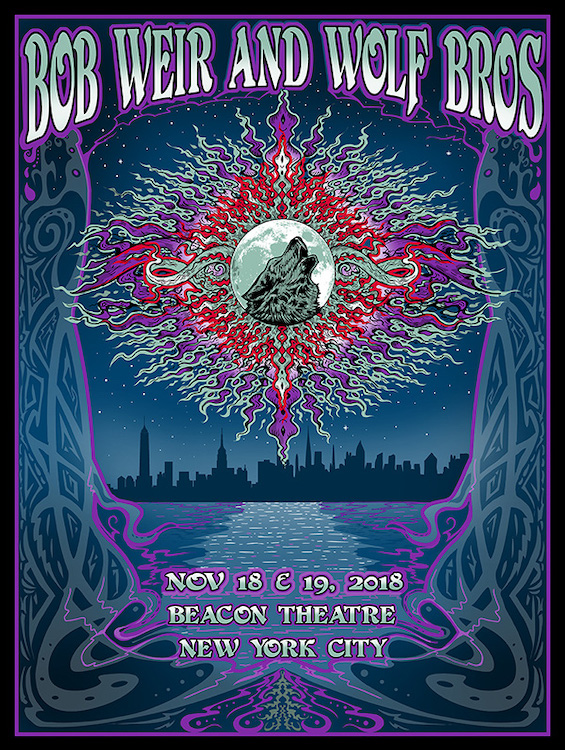
.
With the founding of HappyLife Productions, you greatly broadened the range of products you produce, from limited-edition prints and posters to greeting cards and even children’s clothing, distributed not only here in the U.S. but also internationally. What have been the successes and challenges you’ve faced with the business?
Mike DuBois: I started HappyLife Productions in 1984, producing graphics and posters for local bands in New Paltz. I gradually expanded into printing my artwork on T-shirts and other clothing. I would travel to art shows and music festivals, including Grateful Dead shows, selling my products. By building capital slowly, we began attending trade shows and entering the wholesale market. This continued for many years. The wholesale business grew, and we were shipping orders daily. In 1992, Kelly Sinclair, my wife, began managing the office and production schedule. We kept developing new designs and products, including T-shirts, sweatshirts, women’s shirts, hats, kids’ clothing, notecards, stickers, art prints, magnets, and more. We still run the business and have many accounts nationwide that order our products. Every year, it’s a challenge to create new designs and stay relevant. Somehow, we’ve made it work!
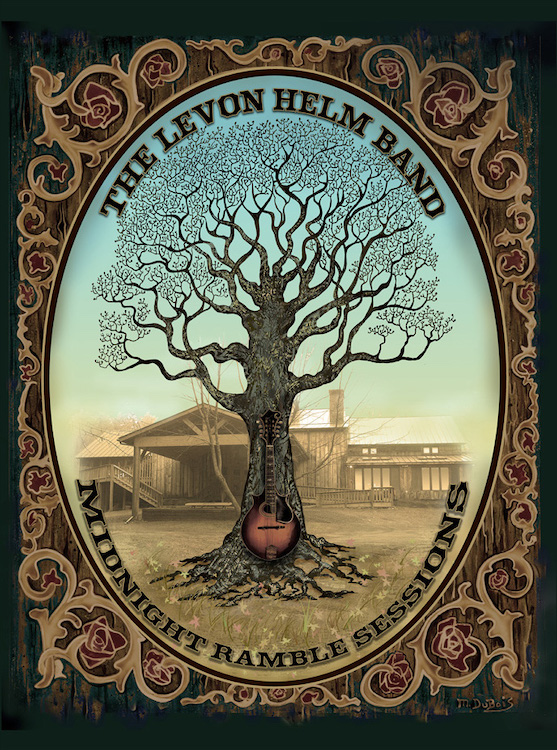
In 2009, you designed and illustrated the Grammy-Award winning album, Electric Dirt, by Woodstock’s most beloved musician, Levon Helm. What was it like working with Levon on this project? And why do you think he is so revered?
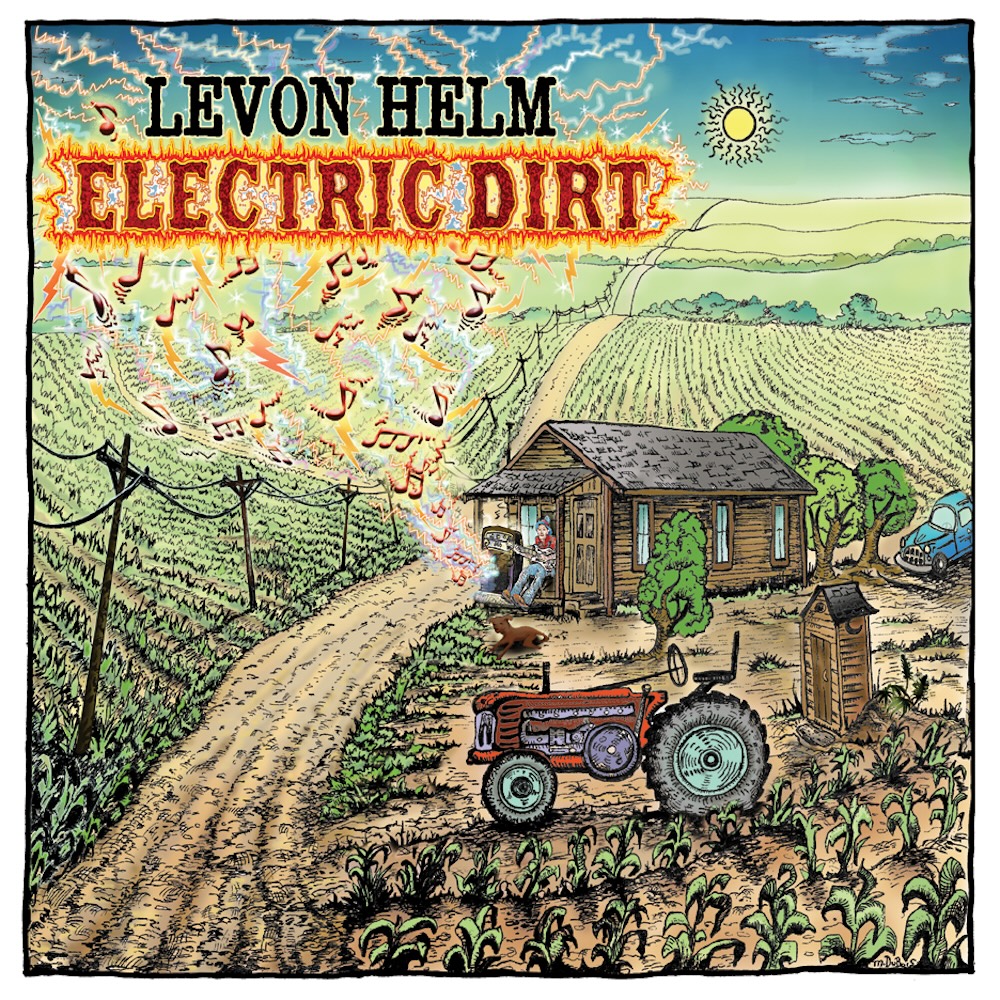
Mike DuBois: I started working with Levon Helm and the early versions of what would become known as the Midnight Rambles. I was designing and producing most of the merchandise sold there at the time—shirts, posters, mugs, CD covers, hats, and more. The Rambles originally began as rent parties with live music. Over time, they grew more organized and eventually gained worldwide fame, attracting many of Levon’s well-known musician friends from all over the country to perform in Levon’s barn.
In 2007, Levon released Dirt Farmer, his first studio album since 1982. It received widespread praise and won a Grammy Award for Best Traditional Folk Album. Riding high on this success, Levon was eager to follow up with another album. I worked closely with him on designing the cover artwork. Electric Dirt came out in 2009 and won the inaugural Best Americana Album award, introduced in 2010. Working with Levon on this album was not only an unforgettable experience but a highlight of my career. He was a truly authentic character and a top-notch musician. He was full of life and humor and possessed a sense of calm that created an exciting, fun, and relaxed environment.
You’ve made big news lately when you and your artist wife, Kelly, purchased the building at 59 Tinker St, the former site of the legendary Café Espresso and Tinker Street Bar, and the former apartment where Bob Dylan wrote some of his greatest classics in the mid-60s. Everybody’s dying to know: What are your plans for this legendary space?
Mike DuBois: Yes, we recently purchased the building at 59 Tinker Street, which we have been renting for the past four years. We originally had a store in Woodstock from 1992 to 1993 near the Village Green. We reopened on Tinker Street in 2013, then moved to 59 Tinker in 2022. I have a long history with the building, having been the graphic designer for the Tinker Street Café from 1988 to 1998. Not only was it a great music venue, but it was also an iconic community hangout for decades.
The history of that building spans over 100 years. It was constructed in the late 1800s as a barn. Then, in the 1940s, it became a small café and soda fountain called The Nook. It served as a gathering place for locals and artists. The Café Espresso opened there in 1959 and operated until 1986. Many musicians performed there over the years, and Bob Dylan lived upstairs in 1964 and 1965, writing some of his most famous songs during that time. In 1988, The Tinker Street Café opened and was on its way to becoming a legendary music venue, hosting a diverse range of musicians—from locals like Rick Danko and Tony Levin to national acts like the Dave Matthews Band, Jewel, and Ozzy Osbourne. The Center for Photography at Woodstock (CPW) moved into the building’s lower level in 1990 after 15 years of occupying the upstairs, where it maintained darkrooms and offices, and remained there until 2021. As owners of this historically creative space, we aim to honor its past while moving forward. Currently, we rent the upstairs to Queen of Rogues, a multifaceted art organization that hosts art shows, dance classes, and small performances. Also upstairs, The Overlook Press, an independent, locally owned online news outlet with office space, reports on all things local—an important asset to our community. Downstairs, we have Peace, Love, and Cupcakes making award-winning cupcakes.
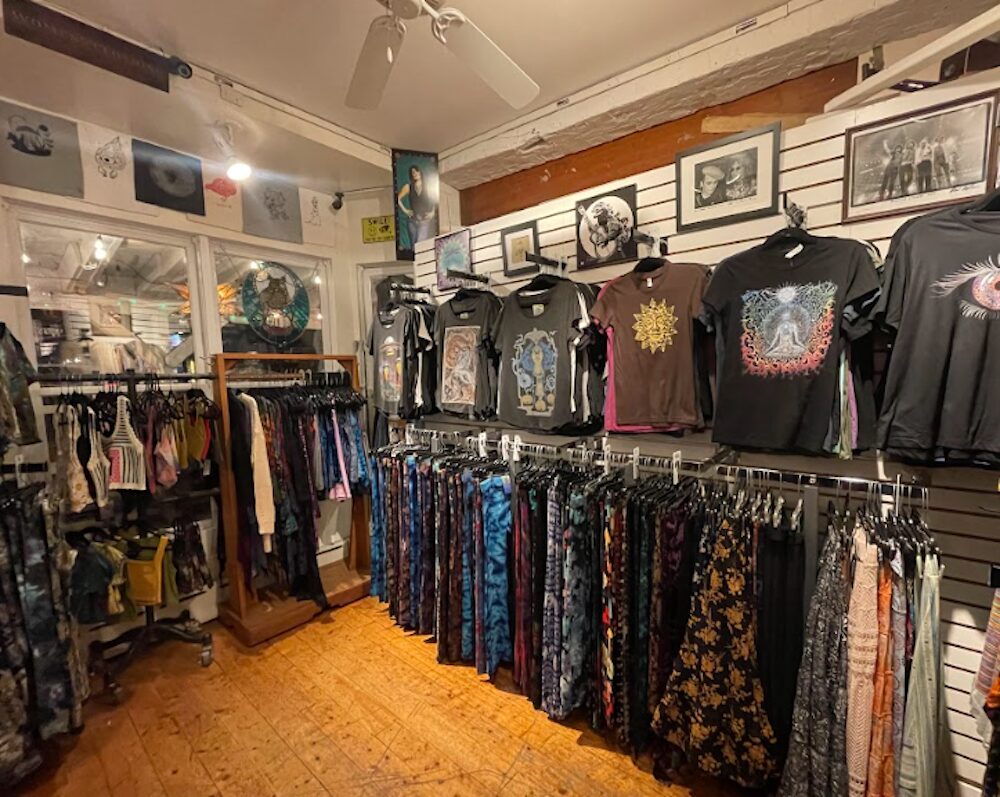
Photo by Kelly Sinclair
Our shop and gallery showcase my art alongside my wife Kelly’s photography, a diverse selection of works from pop culture and music, including band posters, as well as those by world-renowned photographers. Our collection spans generations, from local young artists to artists who have long since passed away. We also offer a full range of clothing, jewelry, incense, body care products, and various Woodstock-themed items. Much of our inventory is created and printed right here in the Hudson Valley, including the complete line developed by HappyLife Productions. Additionally, we feature locally made crafts, tinctures, soaps, and maple syrup. Over the past three summers, we’ve hosted outdoor shows on our porch. It’s important to me that the music continues at 59 Tinker Street. Our outdoor events have included everything from solo folk artists to full electric bands — and they’re all free, which people really enjoy! I hope to grow the outdoor shows and work with Queen of Rogues upstairs to keep live music thriving within the walls of this building for many years to come.
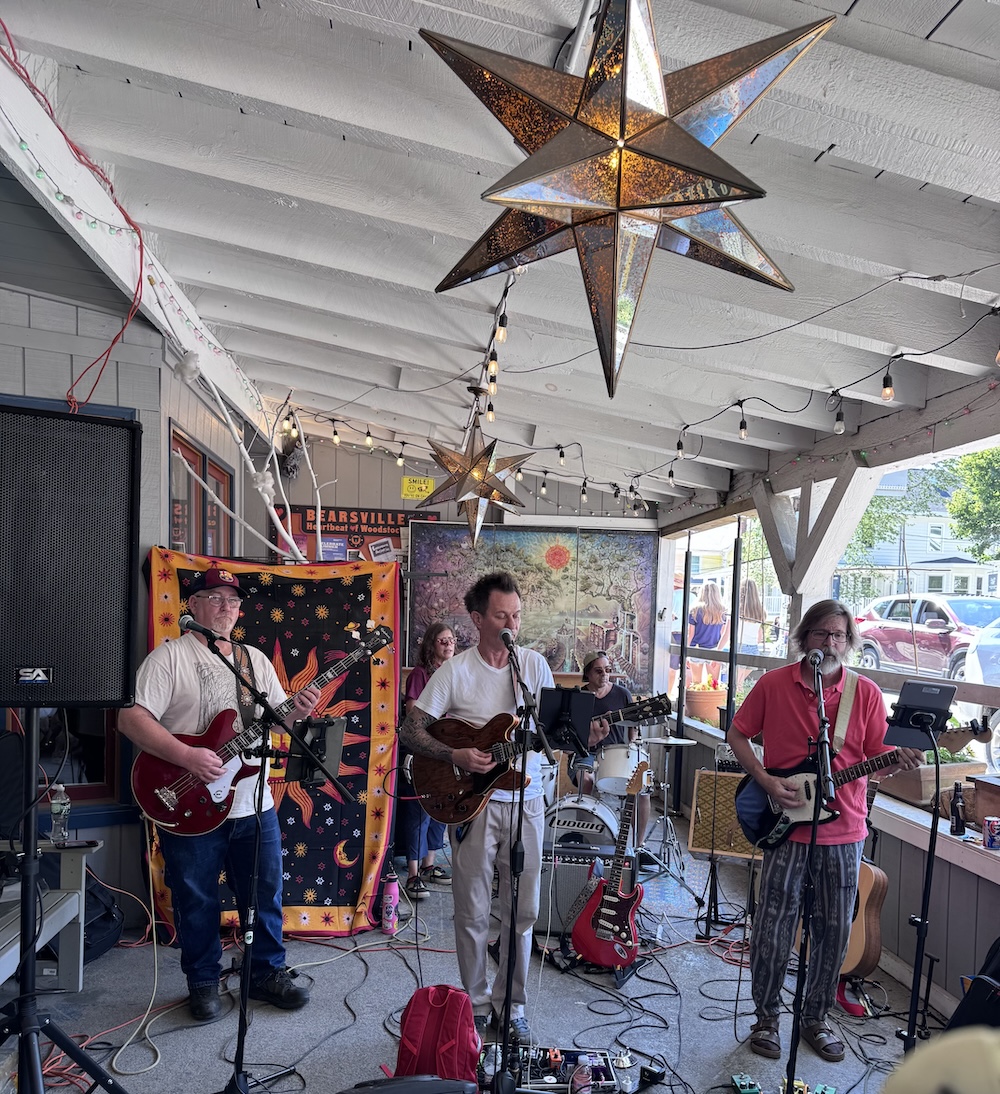
Photo by Kelly Sinclair
You’ve been in the retail business in Woodstock for 13 years, with your HappyLife Productions shop and art gallery. What is it like to run a retail business here, and how has the town changed with the influx of new residents who arrived during the COVID pandemic?
Mike DuBois: Running a retail business here is great. I’d say the most challenging part is maintaining stability through the slow winter months of January, February, and March. Woodstock is a town that is constantly changing. I’ve been here since 1986, and like any place, it evolves with the times, but at its core it remains a vibrant, deeply creative community. There was a noticeable influx of people during Covid, and for a while, the town felt a bit different, but a few years on, the tide is shifting again. Some things change, some things return, and through it all, Woodstock continues to hold onto that singular mix of artistry, character, and possibility.
A great deal of my work is rooted right here in Woodstock, which has made it especially meaningful to contribute to places that are part of the town’s cultural fabric. In 2019, I created the current Bearsville logo, drawing inspiration from the original Bearsville Records logo designed by Milton Glaser in 1970. At the time, the Bearsville complex was being renovated under new ownership, and the goal was to honor the spirit of the original while creating something fresh, iconic, and ready for the reopening of the Bearsville Theater complex. I wanted the design to feel simple and graphic, with the strength and flexibility to work across branding, products, and a wide range of uses.
HappyLife, too, continues to be a beacon of joy and creativity in the town — a reflection of the enduring spirit that has always made Woodstock such a special place.
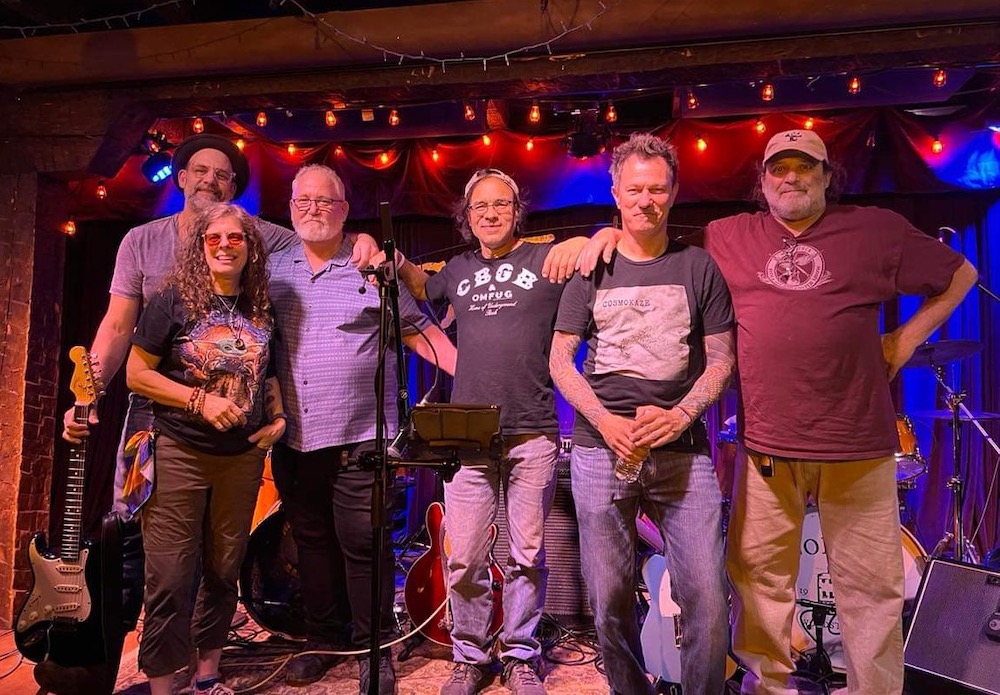
Photo by Kelly Sinclair
We’d be remiss in not talking about your work as a musician. You’re a drummer who plays in a number of local bands, including the Misty Mountain Ramblers. Tell us when you became interested in music and what most inspires you about playing?
Mike DuBois: I have been a musician for most of my life, primarily playing drums, but also guitar, bass, and keyboards. Growing up in Syracuse, I played in several original bands within the vibrant punk scene of the late 1970s and early 1980s. After moving to New Paltz for college, I continued playing in local bands. To me, music is an expression of visceral inspiration. It acts as a bridge between internal emotional states and external sound. Music evokes memories, feelings, and physical sensations. The experience is immediate, unlike creating visual art, which requires more time and physical effort. I love the feeling of creating rhythm; it is innate, primitive, and the foundational heartbeat element of music.
Speaking of music, what are some of your go-to favorite albums, a few from the past and some from emerging artists?
Mike DuBois: A few favorite albums: David Bowie’s Ziggy Stardust, Rolling Stones’ Exile on Main Street, Joni Mitchell’s Blue, REM’s Reckoning, Grateful Dead Europe ‘72’, The Clash’s London Calling, Led Zeppelin’s IV, Patti Smith’s Horses, Bob Dylan’s Blood on the Tracks, Sex Pistols’, Never Mind the Bullocks and Miles Davis’ Sketches of Spain.
Some emerging artists to watch include Geese, Honey Badger, Boggy, OGHU, Beach Weather, Lola Young, Goose, and Eggy.
What is it about the Hudson Valley that makes it unique to live + work here?
Mike DuBois: The Hudson Valley is a beautiful place to live and work, offering four seasons, stunning natural beauty, rich history, and proximity to New York City.
What impact do you, as an artist, have on your community?
Mike DuBois: I hope my impact on the community will be to serve as a source of light and creativity.
What local businesses do you rely on to be successful in your career and just in enjoying life?
Mike DuBois: I use many local businesses for a variety of services: Jamie Flynn tie-dyes, Phillip Brown Studios, So Many Roads Printing, and Sunshine Tees, to name a few.
What is missing in the area that you wish we had?
Mike DuBois: The ocean!
What would be your dream assignment?
Mike DuBois: To paint a large canvas for Keith Richards.
Who or what inspires you personally?
Mike DuBois: Other successful and good vibe artists, and my family.
Tell us something about yourself that people might be surprised to know.
Mike DuBois: I have been a handyman and landscaper for much of my life and have been fixing up old houses for over 30 years.
What is your favorite non-musical activity?
Mike DuBois: Bike riding and building things.
-
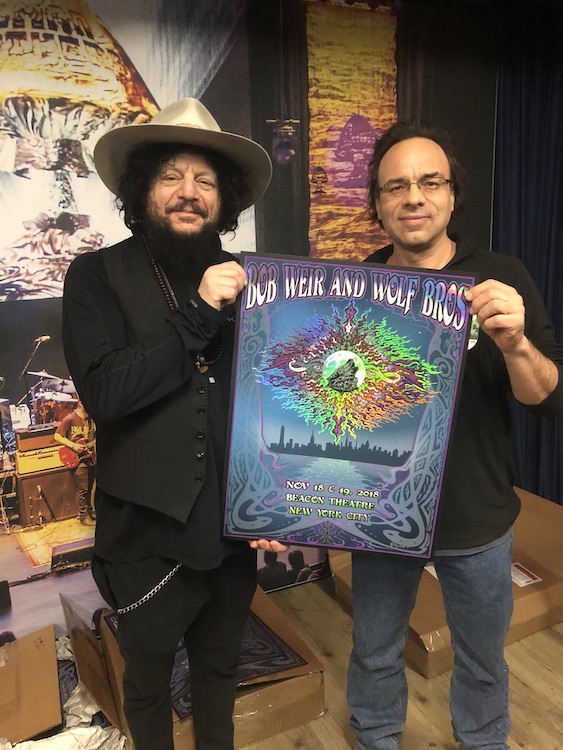
- Don Was+ Mike Dubois. Photo Kelly Sinclair
-
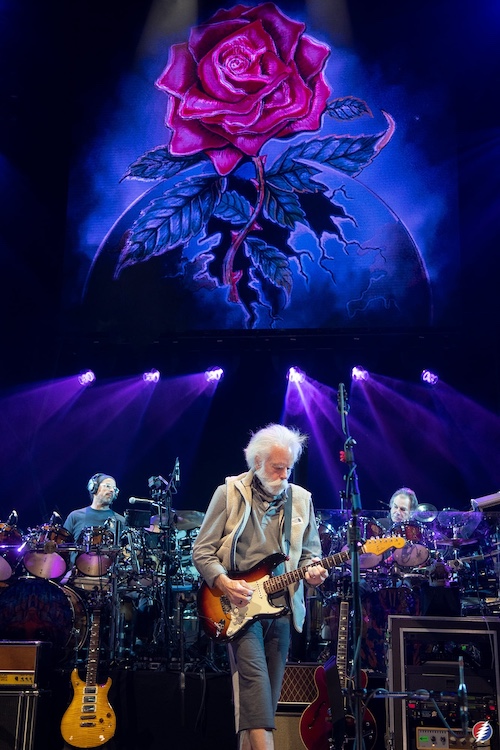
- Stage Design by Mike Dubois
-
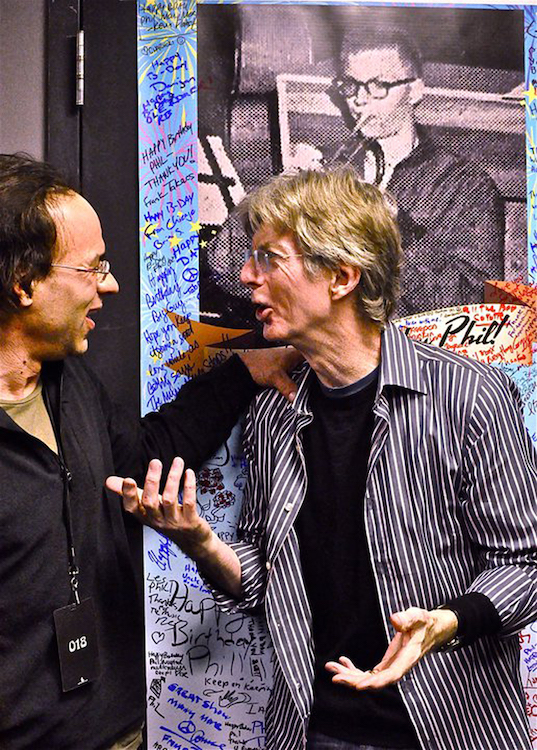
- Mike Dubois + Phil Lesh. Photo Elliott Newhouse
+ + +
Photos courtesy of Mike DuBois, Streetwalker, Kelly Sinclair (featured photo), Elliot Newhouse + Jim Brock
Follow/Connect with Mike DuBois and Happy Life Productions via Website | Facebook | Instagram
Click HERE to see all of our exclusive interviews with the amazing folks who proudly call the Hudson Valley home.
Related Posts
Write a Comment
You must be logged in to post a comment.