


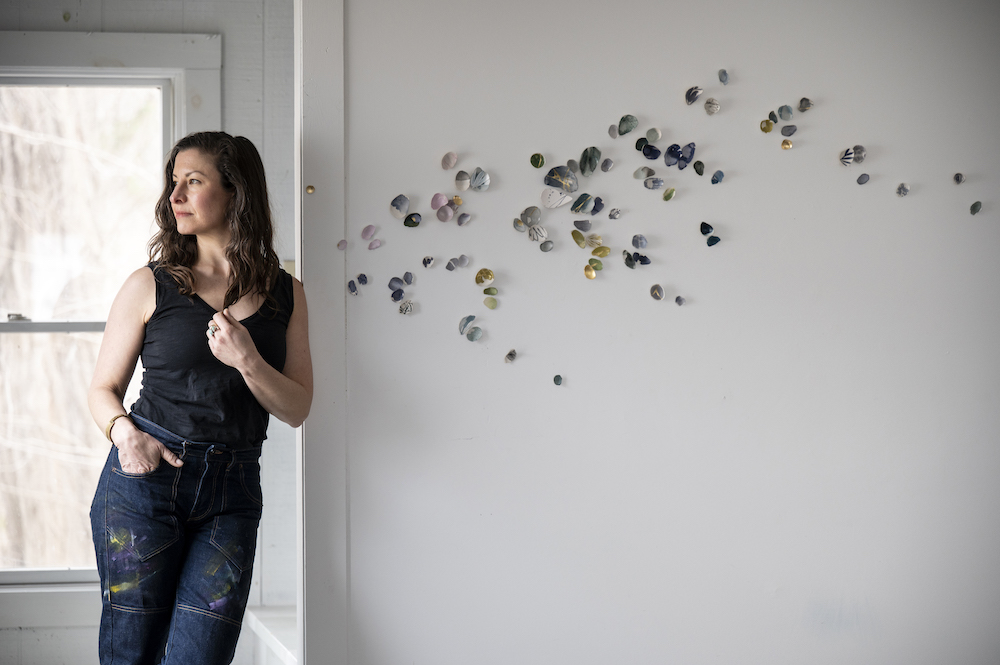
The Beauty of Broken: We are Upstate NY with Artist Elisa Sheehan
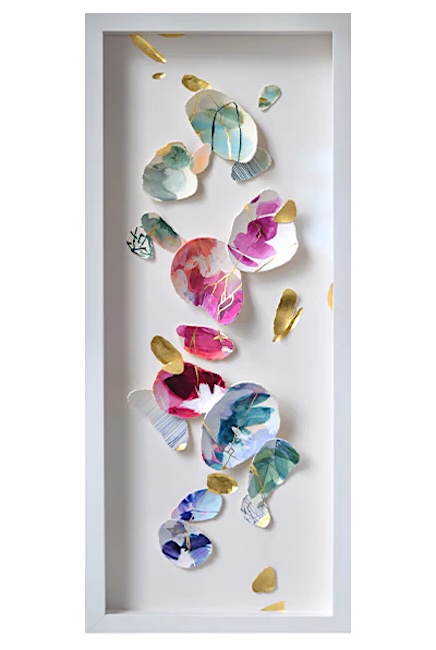
Artist Elisa Sheehan transforms fragile, discarded eggshells into luminous art, drawing inspiration from the Japanese philosophy of kintsugi and the changing seasons in New York’s Hudson Valley.
Elisa’s work, which began as a morning ritual, has evolved into a practice that finds beauty in brokenness, utilizing paint, eggshells, gold leaf, and porcelain to bridge the gap between fine art and intimate, organic forms.
Read our exclusive interview with Elisa to learn more about her creative process and inspiration.
INSIDE+OUT: Spring is often described as a season of awakening. As the landscape around you shifts each year, do you feel a similar shift in your creative energy?
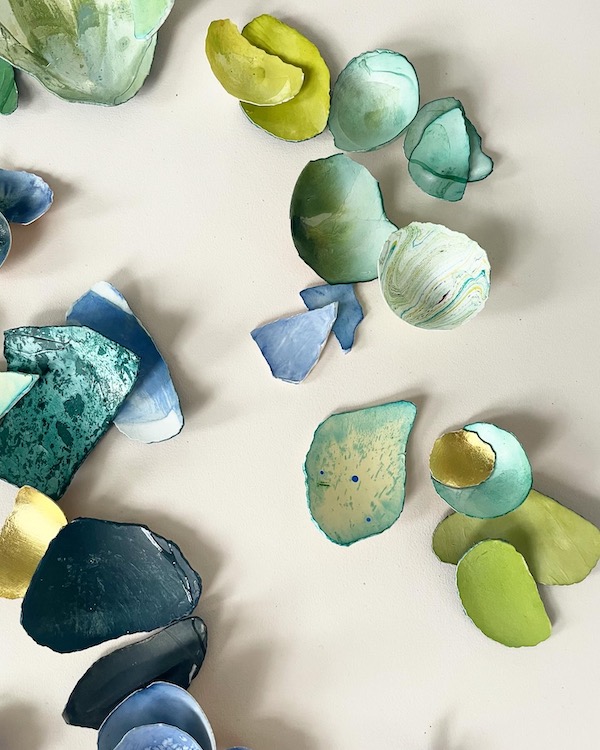
Elisa Sheehan: I really do. I often find myself bent over in my yard, searching for new plants emerging from their winter slumber. I love witnessing that new growth—it feels full of hope. I’m also drawn to the contrast between those fresh beginnings and the remnants of fall: the dead branches and leaves that still hold their own quiet beauty. The shapes of both the new and the old always find a way into my work.
The smell of the earth waking up is invigorating, too. In the spring, I feel a pull toward more botanical elements—colors, forms, and textures that echo what’s happening outside. I’m also a warm-weather person, so as the temperature creeps upward and the light fills my studio for longer each day, my energy naturally expands with it.
Eggs are such a humble, everyday object—yet in your work, they become something luminous and contemplative. What first led you to see the eggshell as a canvas, and what possibilities did it open for you as an artist?
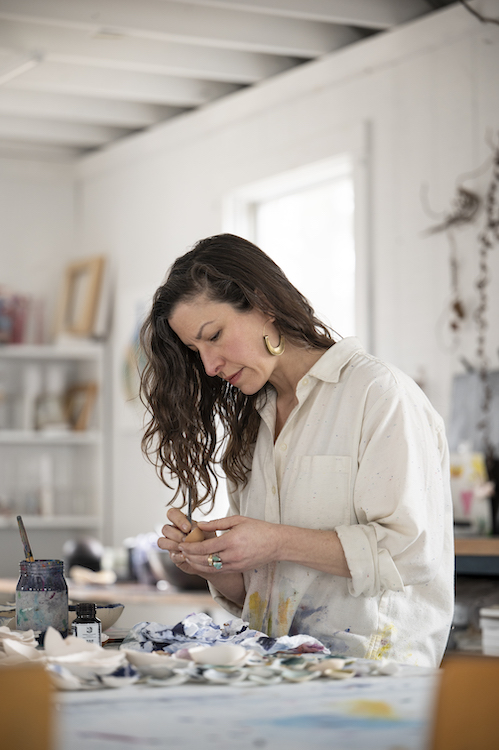
Elisa Sheehan: That’s a beautiful thing to say—thank you. The eggshells really entered my work quite unexpectedly. Years ago, I was spending the early hours of 5–7 a.m. in my studio each morning. At the time, it was a three-season porch, so in the colder months I’d be working beside a space heater, trying to warm up both physically and creatively.
One morning, I noticed a few eggshells on the kitchen counter, set aside for the compost. In that early light, they looked incredibly paper-like and luminous, small blank canvases. I brought them into the studio and began doodling inside them as a kind of warm-up—almost like a meditation to start the day. Over time, that small ritual grew into painting inside the shells, and a collection began to build on my worktable.
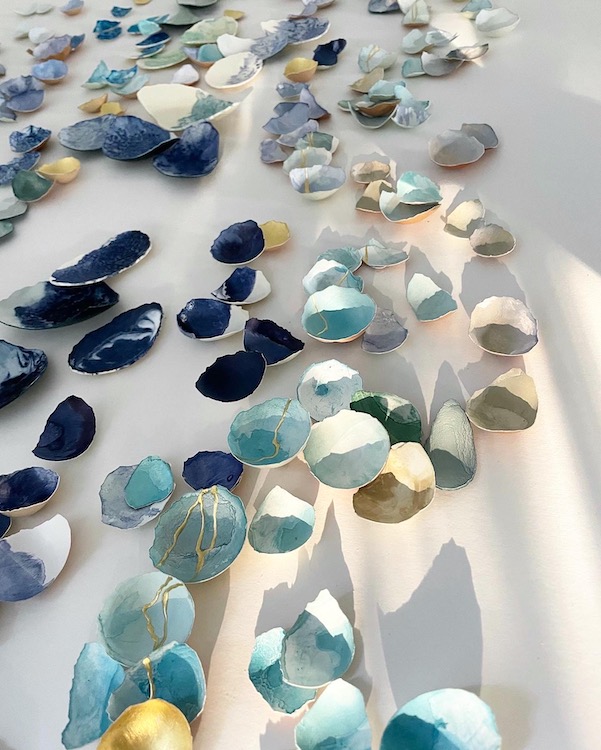
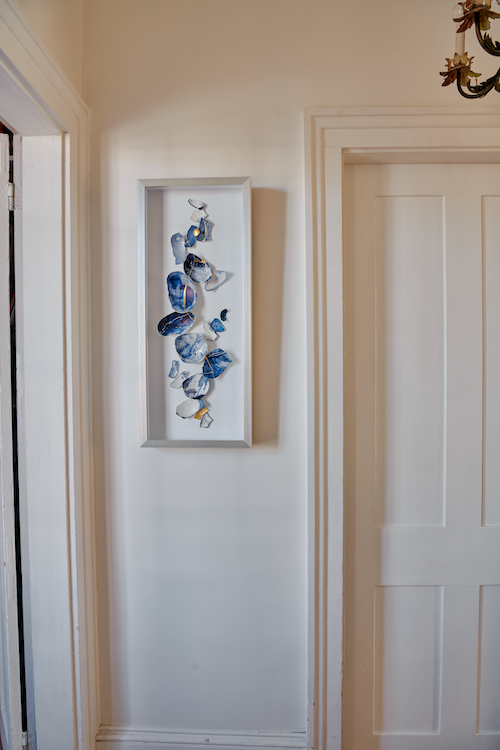
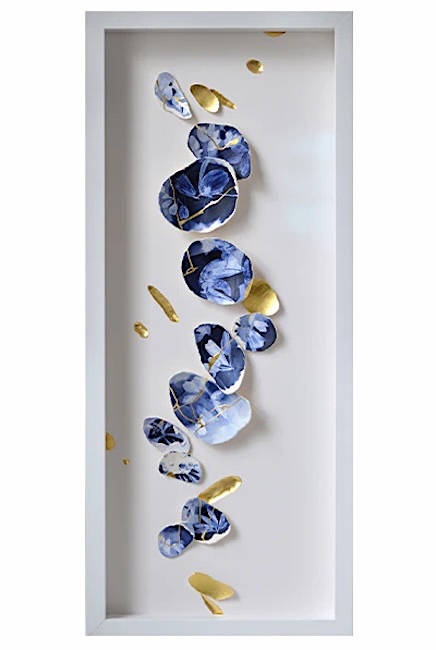
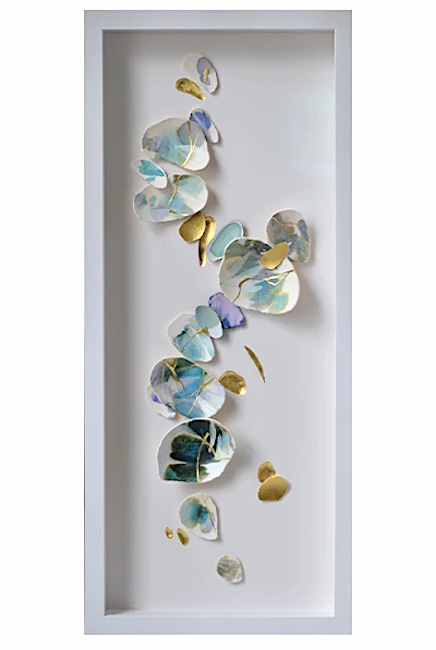
The turning point came when I dropped one, and it shattered. The fragments immediately brought to mind the Japanese practice of kintsugi – repairing broken pottery with gold in a way that honors, rather than hides, the break. That moment shifted everything. I began to think about how to mount, frame, and gild the pieces, using the eggshell as both surface and structure.
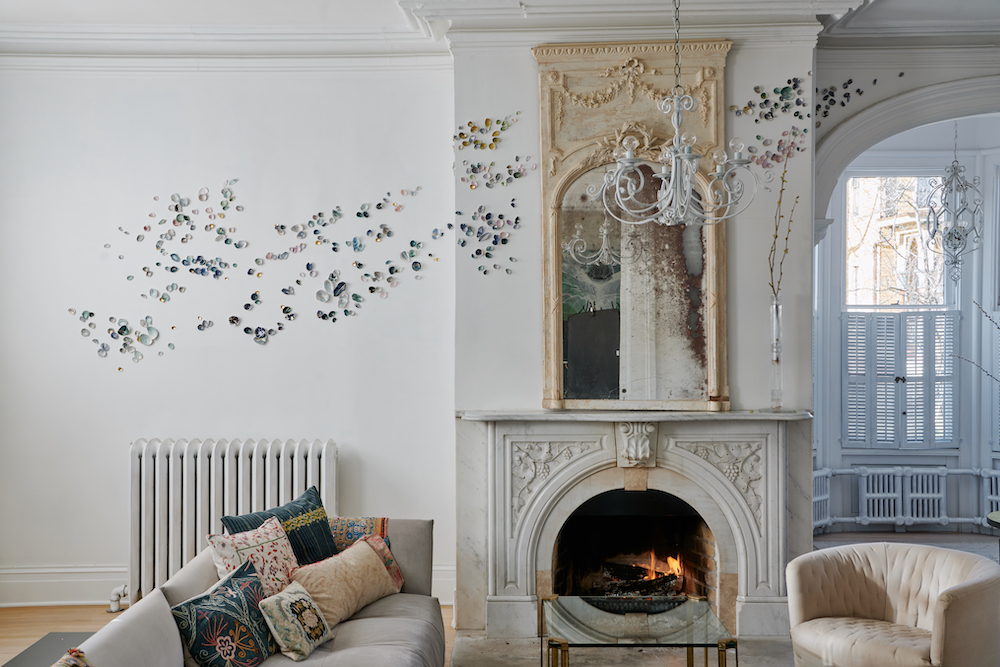
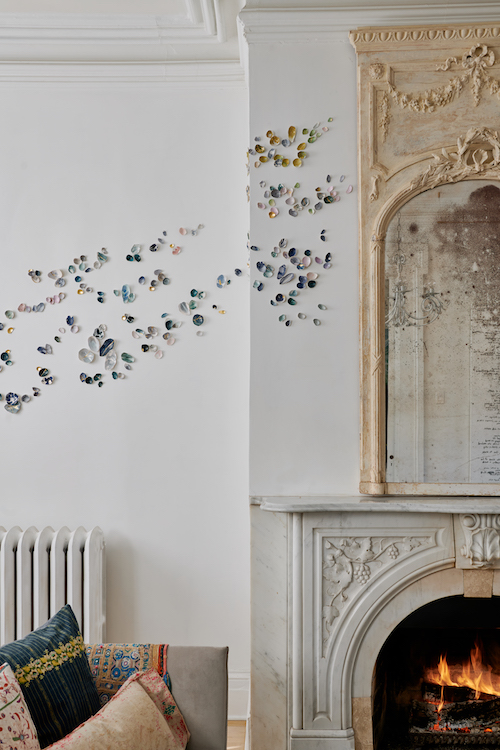
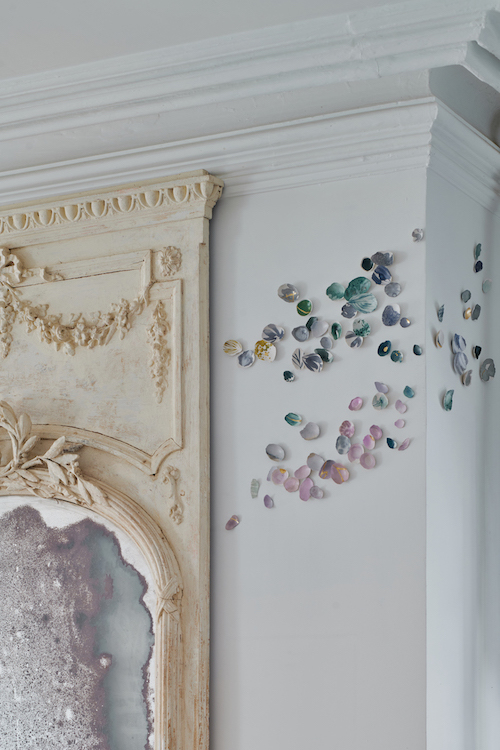
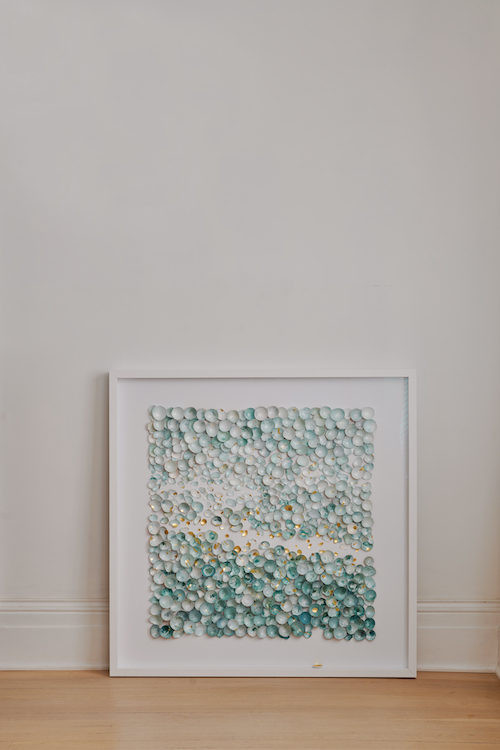
What started as an accident has since expanded into a larger language in my work. In my framed pieces, I use real eggshells, preserving their fragility and history. In my site-specific, direct-to-wall installations, I translate that form into handmade porcelain eggshells, which allow me to work at a different scale and respond more directly to a space. Together, they trace the evolution of the idea—moving from something intimate and found to something more expansive and immersive.
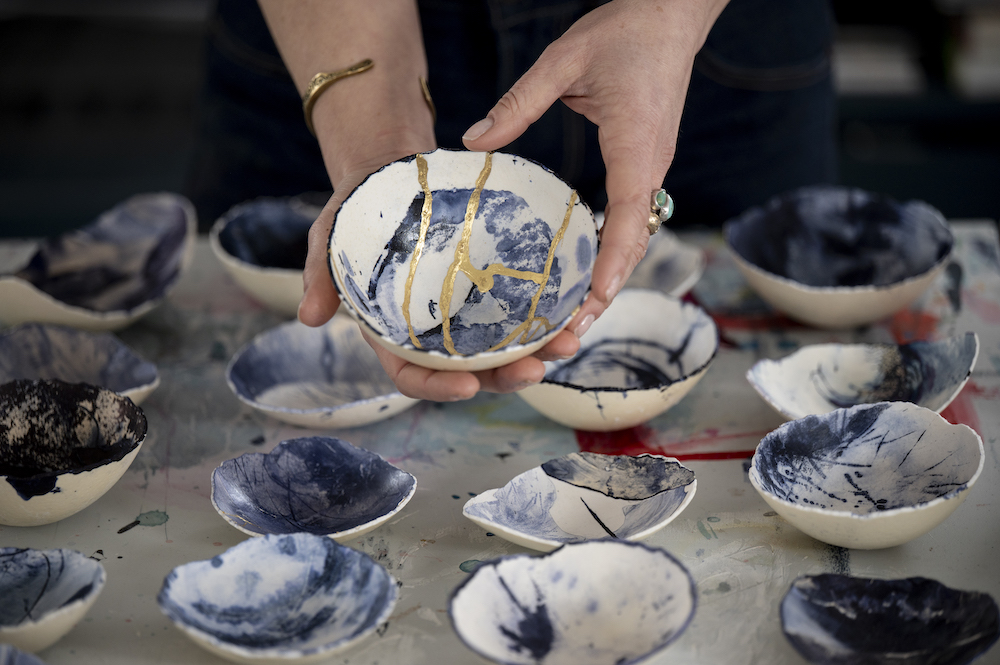
Your work draws inspiration from the Japanese philosophy of kintsugi, which celebrates the marks of repair rather than hiding them. What was it about that idea that resonated with you so deeply?
Elisa Sheehan: I’ve always been drawn to the Japanese art of kintsugi, and its meaning has only deepened for me over time. It invites us to honor age, history, and the marks that life leaves behind—rather than conceal them. That perspective resonates with how I think about myself, others, and the evolution of my relationships.
It speaks to the inevitability of imperfection, and to the quiet beauty within it. I’m especially moved by the dualities it holds—fragility and strength, beauty and brokenness—and how those opposites can exist simultaneously.
As my work has evolved, it’s been a surprising and natural progression to begin working in porcelain, which I use in my larger wall installations. It’s a material so closely tied to the ceramic traditions from which kintsugi originates, adding another layer of meaning for me. What began with fragile, found eggshells has grown into something more expansive yet still rooted in the same ideas of care, transformation, and reverence for the material.
I try to carry that awareness into my work each day. In a way, it becomes a gesture of respect—for the materials, for the process, and for the people and places the work will ultimately live with.
Your pieces seem to exist in a beautiful balance between control and surrender. How much of your process is planned, and how much unfolds intuitively as you work?
Elisa Sheehan: That balance is very real, and I think it’s part of what makes the work feel both engaging and alive. It’s also necessary when working with fragile, at times unpredictable, materials. So much of my inspiration comes directly from nature, and how you describe the work could also be directly applied to speaking about nature and our interactions with it.
When I’m creating a commission, there’s usually a loose plan in place—a framework to respond to. But outside of that, my process often becomes much more intuitive. I’m exploring, testing how far I can push the materials and my ideas, and allowing space for unexpected moments to emerge.
In those instances, there’s very little structure. It’s about freedom, curiosity, and discovery—following where the work wants to go and finding ways to bring those evolving ideas to life.
Many viewers say your work invites them to slow down and look closely. Do you think art can create those small moments of pause and reflection in a fast-moving world?
Elisa Sheehan: I believe it can—I’ve experienced that myself, and I hear it often from collectors. When you take the time to sit with a piece, there’s always something new to notice. We bring our daily experiences with us into everything we see, and art is no exception.
In my work, I try to create a sense of calm and contemplation through layout, form, and color—something that invites a slower, more attentive kind of looking.
One of the most meaningful things I hear is that even years after living with a piece, someone will discover something new in it, or find that it resonates differently over time. I love the idea that the work remains alive for the viewer—that it continues to evolve alongside them.
With a background in both fine art and design, how do those two disciplines influence one another in your studio practice?
Elisa Sheehan: With a background in fine art, I bring a strong foundation in color theory, color mixing, and painting techniques to a material that might otherwise be perceived as “craft.” That technical sensitivity allows me to approach the eggshells with the same level of intention and nuance as I would a canvas.
At the same time, design plays a significant role in how I think about composition. I spend a lot of time considering layout, form, white space, and balance—principles that translate seamlessly across disciplines. Some pieces take on a more structured, grid-based format, which feels bold and design-forward, while others are more organic and guided by nature, aligning more closely with my painting practice. Ultimately, the two disciplines are in constant conversation, each informing and strengthening the other.
Living and working in Upstate New York means experiencing the seasons very vividly. In what ways does the surrounding landscape shape your palette, materials, or ideas?
Elisa Sheehan: The shifts in light and color throughout the year influence me quite a lot. I’m especially drawn to how light interacts with the eggshells—raking winter light creates stark, bracing shadows that I love, while summer light softens everything, making the surfaces glow, and the colors sing.
My palette tends to evolve alongside the seasons. At times, I even use color as a kind of antidote. In the winter, I might lean into bright, vivid tones when I need that extra energy, while in the summer, I often move toward something softer. When the landscape is already so full—when the garden is bursting—I don’t feel the same need to recreate that intensity in the studio.
Your work is shown in galleries, including The Laffer Gallery. What has it been like seeing these delicate pieces move from the quiet of your studio into public spaces?
Elisa Sheehan: It’s been incredibly rewarding to share the work with a wider audience in that way. There’s something special about seeing these quiet, intimate pieces step out of the studio and take on a new life in a public space. I especially love being able to interact with people in front of the work—hearing what draws them in and how they interpret it through their own experiences. Each conversation adds another layer of meaning, which feels like a natural extension of the process.
Artists often have small rituals that help them enter a creative mindset. Is there something you always do before beginning a piece?
Elisa Sheehan: I love entering the studio with a piping hot coffee and taking a few quiet moments to look around at what’s in progress. It’s a gentle way of settling in—reconnecting with the work and easing into the rhythm of the day. Spending time outside is just as important. If I can begin with a walk in the woods with my dog, I arrive in the studio feeling more grounded and attentive. That time in nature has a way of sharpening my senses—the light, the textures, the subtle shifts—and I carry that awareness with me into the work.
Finally, when someone spends time with one of your works, what feeling or realization do you hope they carry with them afterward?
Elisa Sheehan: I hope they carry with them a sense of calm and a willingness to slow down. In a world that moves so quickly, even a brief moment of pause can feel meaningful.
More than anything, I hope the work invites a kind of quiet noticing—that they begin to see beauty in small details, in imperfection, and in the passage of time. If it encourages someone to look a little more closely, not just at the work but at the world around them, then it’s done what I hoped it would.
I also hope there’s a feeling of being uplifted. Especially in the immersive porcelain installations, that sense can become more tangible—something you can almost step into and feel. If the work can offer even a small moment of lightness or lift, that feels deeply meaningful to me.
Photos courtesy of Megan Mumford.
Follow/Connect with Elisa Sheehan via Website | Instagram
+ + +
EXPLORE THE DIRECTORY for anything you’re looking for, whether you’re living, visiting, or working in the Hudson Valley!
Related Posts


Write a Comment
You must be logged in to post a comment.