


The Mindset Shift: Rewriting the Rules of Modern Dog Training
If you’ve ever found yourself wondering who’s actually training who, you’re not alone. From the puppy who thinks your favorite shoes are chew toys to the lovable dog who suddenly forgets their name the second the leash comes out, life with a pup can be equal parts joy, comedy, and chaos. That’s where Grateful Pups comes in. Serving dog owners throughout the Hudson Valley, Grateful Pups helps turn everyday challenges into better communication, stronger bonds, and happier lives together—because a well-trained dog isn’t just easier to live with; they’re more confident, connected, and ready to enjoy the world by your side.
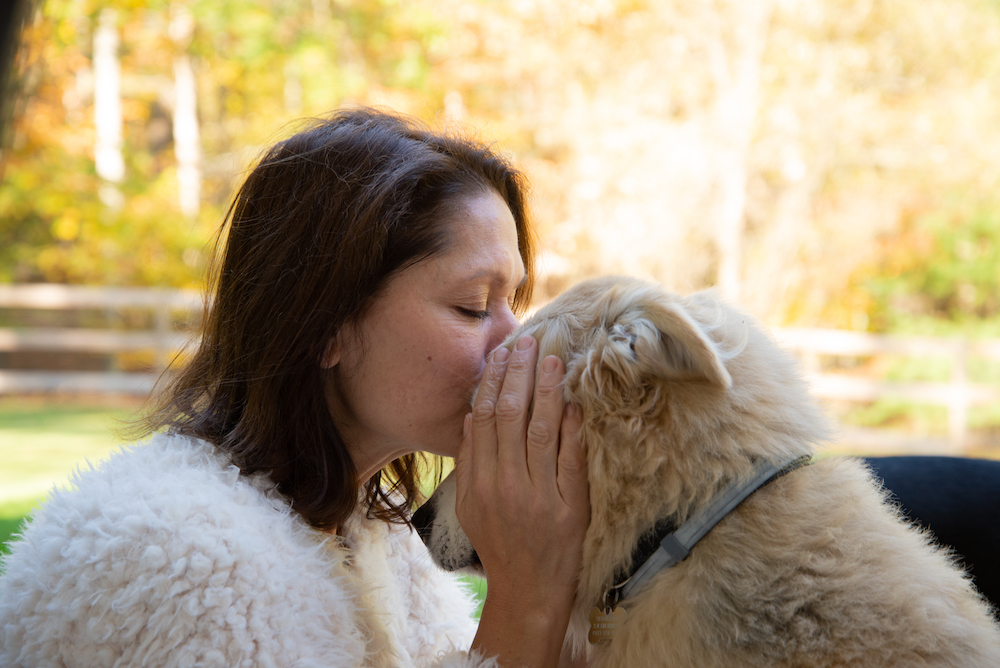
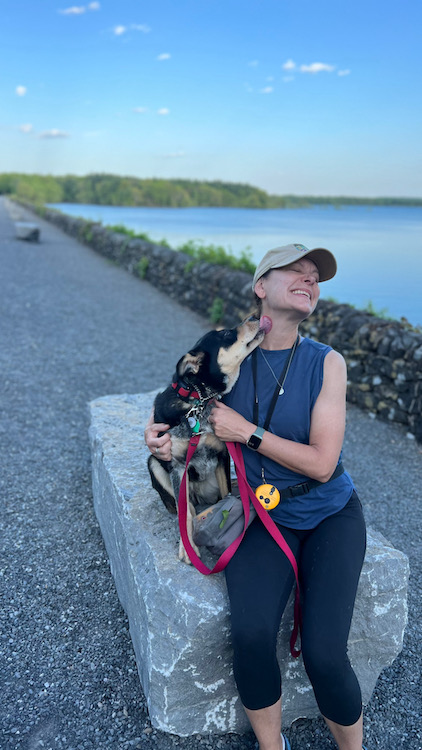
Woodstock-based Lisa Bonk is the founder and trainer at Grateful Pups Training, offering a refreshing antidote that prioritizes a dog’s internal state of mind over mere compliance. Lisa’s approach specializes in transforming anxious, reactive, and behaviorally complex dogs into balanced companions by immersing them in everyday human scenarios—from tolerating home contractors to calmly navigating bustling local farmers’ markets.
Through a highly tailored suite of services, including intensive Board & Trains and structured Puppy Foundations, Grateful Pups focuses equally on rewriting the human side of the equation. Read our exclusive interview below to learn more about Lisa, her training programs, tailored packages, and of course, her grateful pups.
INSIDE+OUT: Tell us about yourself, where are you originally from, and how did you wind up in the Hudson Valley?
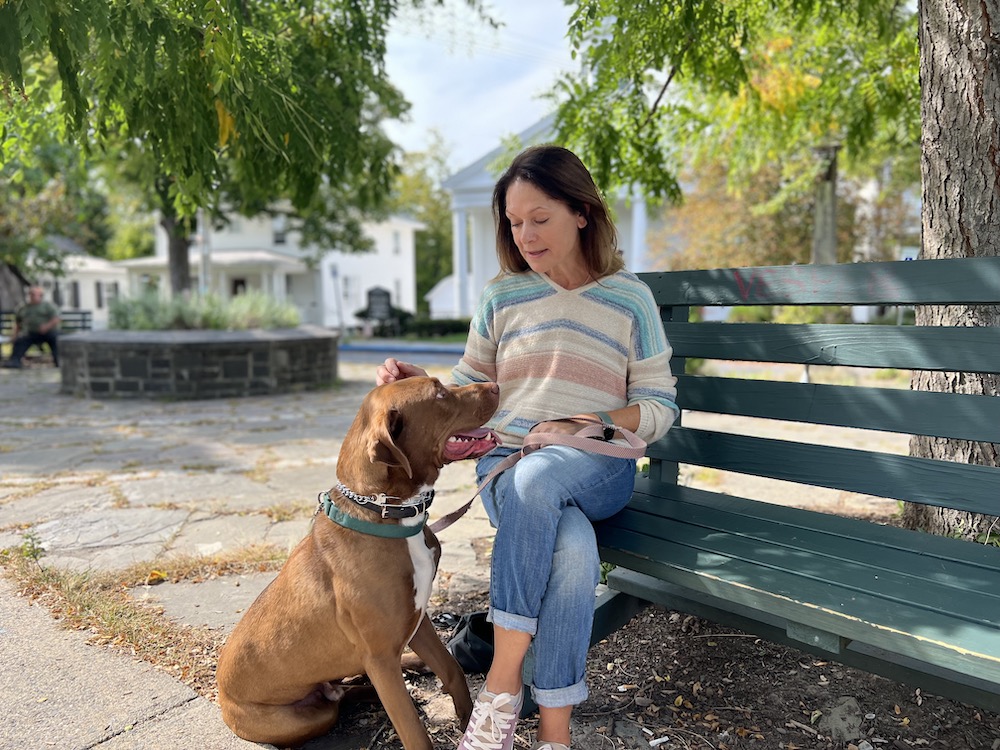
Lisa Bonk: Before moving to Woodstock, I lived in New York City. While I was working in the corporate world, I wanted a second home where I could relax and unwind outside Manhattan. I decided to check out Woodstock and absolutely fell in love with the town, the greenery, the people, and the bucolic setting. Woodstock became my sanctuary. I drove up any time I could get a few days away. Even the drive was cathartic. As soon as I saw the mountains when I was driving up the Thruway, I would feel my shoulders relax and the tension ease.
I decided to leave the corporate world; I knew I wanted to go into dog training. The question was: How would I transition from a Management Consultant to a dog trainer? So, I decided to accept a part-time Merger and Acquisition job in Kingston, which gave me some financial security while I founded and grew Grateful Pups Training. Once I started working with dogs, I knew I had found my calling. Gone were the endless meetings, the late-night calls to improve PowerPoint slides, and the continuous need to climb the corporate ladder. I welcomed the peace and companionship of the dogs, and I stopped to watch the trees bloom, the sun set, and literally smell the flowers. It was the first time in my life (other than vacation) that I could actually stop, take in my surroundings and breathe.
What inspired you to become a dog trainer and what was your journey?
Lisa Bonk: I was living in Switzerland (well before the days of doggie day care and dog spas), and I was about to go on a trip. I had my first dog, Cassidy, and I took him to Jackie’s Hunde Horte for boarding. I was apprehensive about leaving him, as our past experience with kennels was not positive. I drove up to the kennel and did not hear the usual ruckus, and the staff was so kind that I held back tears as I dropped my dog off for the week. Fast forward a week, and for me, the best part of ending any vacation was reuniting with my dog. When I drove up to the facility, I was surprised to see several dogs playing outside. I went in, and Cassidy ran up to me, gave me a quick hello, and then ran back to play. I was astonished and overjoyed. The relief I felt at that moment, knowing I could leave my dog where he would not only be cared for but also fully enriched, made me say, “That is what I want to do when I grow up.” I wanted to provide peace of mind to owners who needed help with their dogs.
When I finally decided to leave corporate life, I knew it was time to take the leap. After attending a dog training workshop, I realized dog training would be my future. Contrary to popular belief, I learned that dog training is as much about working with people as it is about working with dogs. My background in Management Consulting had me working with all kinds of people, and once I realized I excelled at the human side, I knew this was the perfect path.
Why is it important to invest in professional dog training?
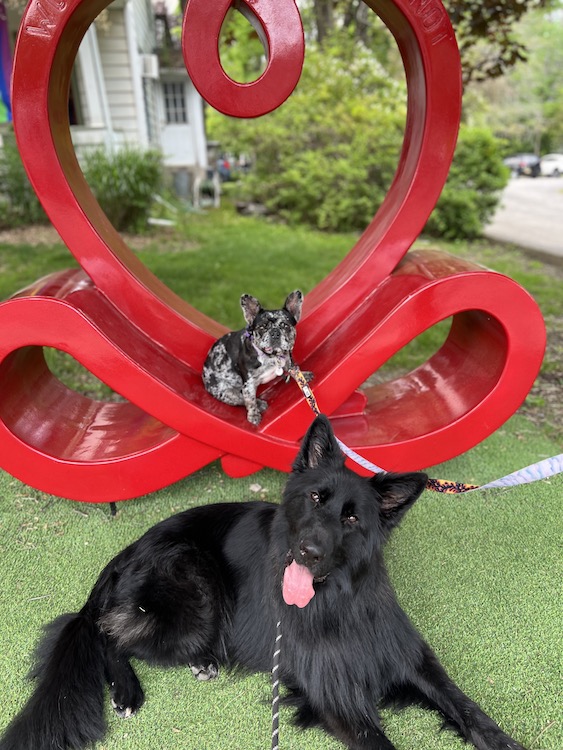
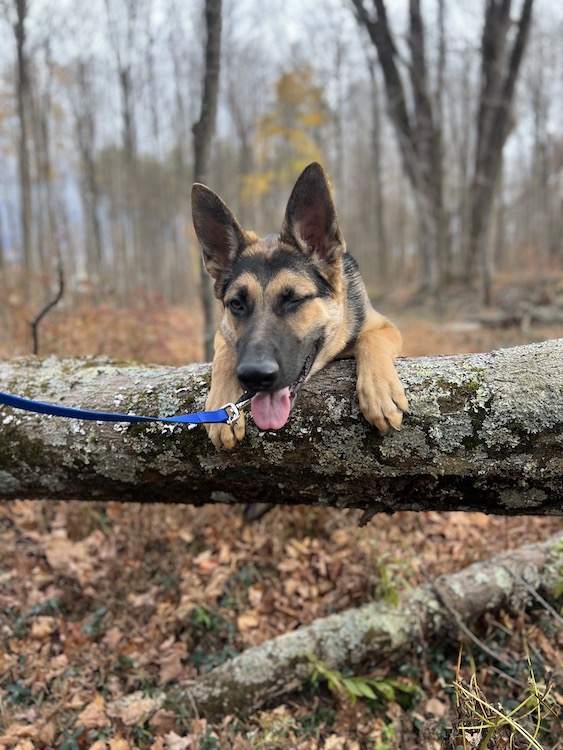
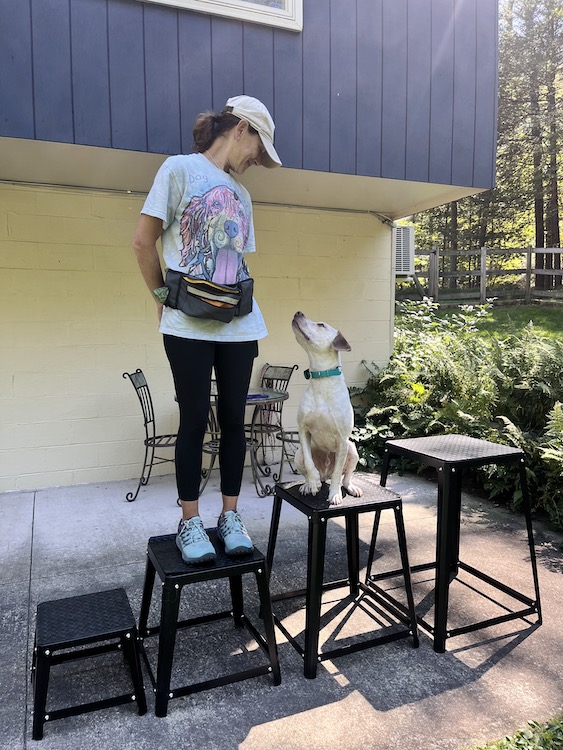
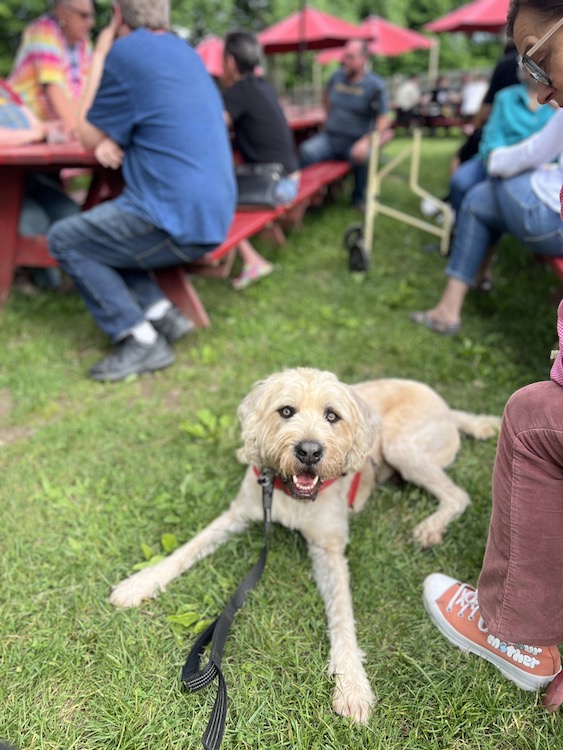
Lisa Bonk: People come to me for different reasons. Some people need help with a dog’s manners; others are dealing with more serious issues such as aggression, reactivity, or extreme anxiety. We provide real-world dog training — meaning we put your dog in the same situations they face at home. Some people have dogs that jump or lunge at guests, so we have company over for dinner and teach the dog to rest on their bed while we eat. Other people want to bring their dog everywhere, so we take dogs out to restaurants, stores, and more. Others struggle with leash reactivity, so we take the dog to places with lots of other dogs — even farm animals — and teach them to regulate their arousal around other animals. Because of our location, we can simulate many of the challenges owners face and teach the dog a new way to handle each situation.
Talk about the Puppy Foundation Program.
Lisa Bonk: Over the years, many clients came to me asking for help with their puppies — and their hands, covered in puppy bite marks, told the story. These owners struggled to balance leadership with nurturing their relationship with their dog. People often think they’re raising a puppy, when really, they’re raising a dog. Things that seem cute when a puppy is small — jumping, nipping, running around unchecked — can become real problems once the dog is bigger and stronger. That’s why I started the Puppy Foundation Program: a day-training program, 9-to-5, Monday through Friday, like school. We teach manners and basic obedience over 10 days, with four “go-home” sessions where we meet with the puppy’s parents, since first-time owners or anyone who hasn’t had a puppy in years tend to have a lot of questions.
What makes living in the Hudson Valley special for you?
Lisa Bonk: The community. Before moving to Woodstock, I had never really felt part of a community — moving here changed that completely. With every interaction, whether in town, with a client, or with friends, I felt welcome, and that feeling has only grown stronger over the years. It’s what inspired me to get involved in local causes, like keeping big developers out of Woodstock so we can preserve that warm, community feeling.
What are the most challenging and the most rewarding aspects of being a dog trainer?
Lisa Bonk: The most challenging part is letting go. I can teach a dog — and their owners — but once the training is done, my role changes to support. Some dog owners keep up with it, or even build on it. Others don’t follow through, and the dog reverts to old behaviors. As long as the dog’s physical well-being is not impacted, we can’t interfere if we are not asked for help.
The most rewarding part of working with dogs is watching a dog come out of their shell and put all the pieces of their training together. A few cases stand out; one of my favorites, and most recent, is Benny. Benny was a rescue who was afraid of everyone and everything — he’d freeze whenever he was scared, which was anytime he left the house or visitors came to his home (other than his mom). We worked with him for five weeks and took him everywhere, exposing him to new people, places, sounds, and dogs, all while building his confidence. The whole time, we advocated for him, meaning we never let people or dogs get too close. Once Benny felt safe, he moved past the fear and started exploring and enjoying the world. I am so excited to say Benny’s mom has wholeheartedly embraced the training, and she continues to expand his world, and Benny is growing more confident daily.
What do you love most about working with animals?
Lisa Bonk: You know exactly what you’re getting. You’re dealing with the dog right in front of you — no agendas, no hidden meanings behind their behavior. Once you understand what motivates them, you can help them become their best selves. Not one day in the corporate world compared to how I felt when Benny wagged his tail at me for the first time. The best part is it never gets old. Each time we transform a dog is as exciting as the first time.
What is one question you’re constantly asked or the biggest misconception about your business?
Lisa Bonk: The biggest misconception is that dogs should be treated the same as people. While dogs are absolutely part of the family, they’re animals, not humans — and treating them otherwise is unfair to the dog. Dogs don’t process information the way we do. For example, if a dog is afraid of other dogs, they may lunge and bark at other dogs. I’ve seen countless owners respond by talking to the dog — “it’s okay, baby, you’re okay” — petting and treating the dog while they are in an unstable state of mind. What the owner may not realize is that they’ve just reinforced the lunging by rewarding behavior with affection and treats. Over time, this leads to more frequent and more chaotic reactions whenever the dog sees another dog, or to owners avoiding walks altogether because the interactions are too hard to manage. This is how dogs end up running the household — jumping, lunging, and barking at guests; grabbing food off counters; charging out the door or at other dogs on the street; barking excessively at every sound or passing squirrel. That kind of imbalance can create real, and sometimes dangerous, problems. Now, I want to be clear: I am not judging…I made all the mistakes, so I try to educate owners so they avoid them.
At Grateful Pups, we believe dogs should be treated as dogs. That doesn’t mean I don’t spoil mine — of course I do. But when I call a dog to come, I want them to come, not run around the yard for ten minutes until they tire themselves out.
What impact does your business have on your community?
Lisa Bonk: We help create harmonious households. Without support, owners will sometimes reorganize their lives — or even consider rehoming a dog — because of behaviors such as biting, excessive barking, or leash pulling. Several owners stopped having company over altogether because their dogs would charge, bite, or jump on guests. This is where our concentration on state of mind, rather than obedience, comes into play. We focus on the dog’s emotional response around triggers. We teach the dogs a better way to handle these situations, then train the owners how to maintain the new process — strengthening the relationship in the process. We have trained dogs in foster care and helped find their forever home.
Well-behaved dogs also have more freedom: they’re welcome in more places. Think about the last time you were at a dog-friendly restaurant and another dog wouldn’t stop barking — it’s not pleasant for anyone; dogs, staff, owners, or other patrons included. We teach dogs manners and how to behave in public, and for the fearful ones, we expose them to a wide range of experiences so they can build confidence in the world around them. Our training isn’t limited to local dogs, either: we offer an “Out-of-Towner” package that provides visiting owners with a place to stay after the program, so we can review everything their dog learned before they head home.
We also hire locally, and we’re always looking to grow our team — if you have experience working with dogs outside your own home, we’d love to hear from you.
What local businesses do you rely on to be successful?
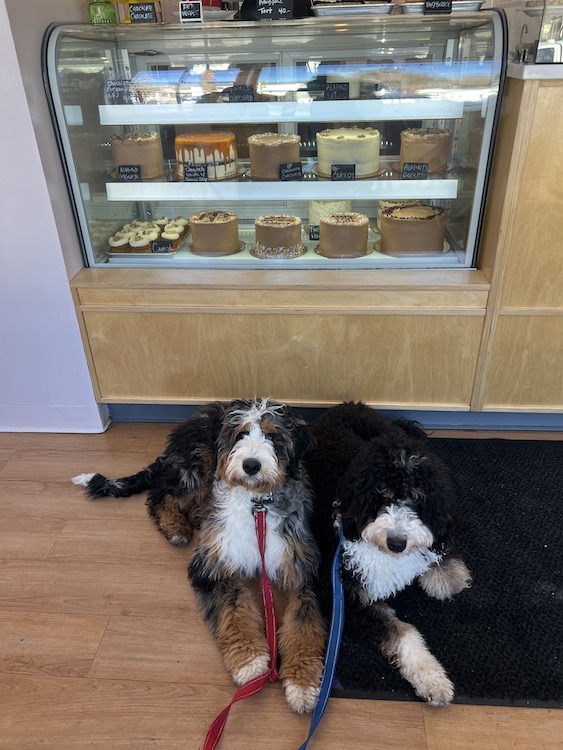
Lisa Bonk: With the dogs, we love Caffe Woodstock, Bread Alone, Timbuktu, and of course Overlook Bakery — their desserts are amazing, and their team loves dogs. We’re also big fans of Lucas Pet Supply in Kingston: locally owned and operated, with competitive prices and a genuinely knowledgeable team.
What is missing in the area that you wish we had?
Lisa Bonk: Sticking with the dog theme, I’d say options for working dogs. There are very few places nearby where dogs can learn scent work, agility, or protection work, and the ones that do exist are often full and can’t take new clients. I have several clients who’d love to deepen their relationship with their dog through dog sports.
Local Love: What local business should we know about?
Lisa Bonk: There are too many to name — but I have a pizza problem, so you’ll find me at Shelter at least once a week (sometimes much more). The other loves are listed above.
Who or what inspires you personally?
Lisa Bonk: The women in the community who had the same vision I did when I moved to Woodstock full time. So many people, women specifically, reinvented themselves when they moved to Woodstock. They opened new businesses and not only survived but thrived in their new environment. I like to think I am becoming one of those women.
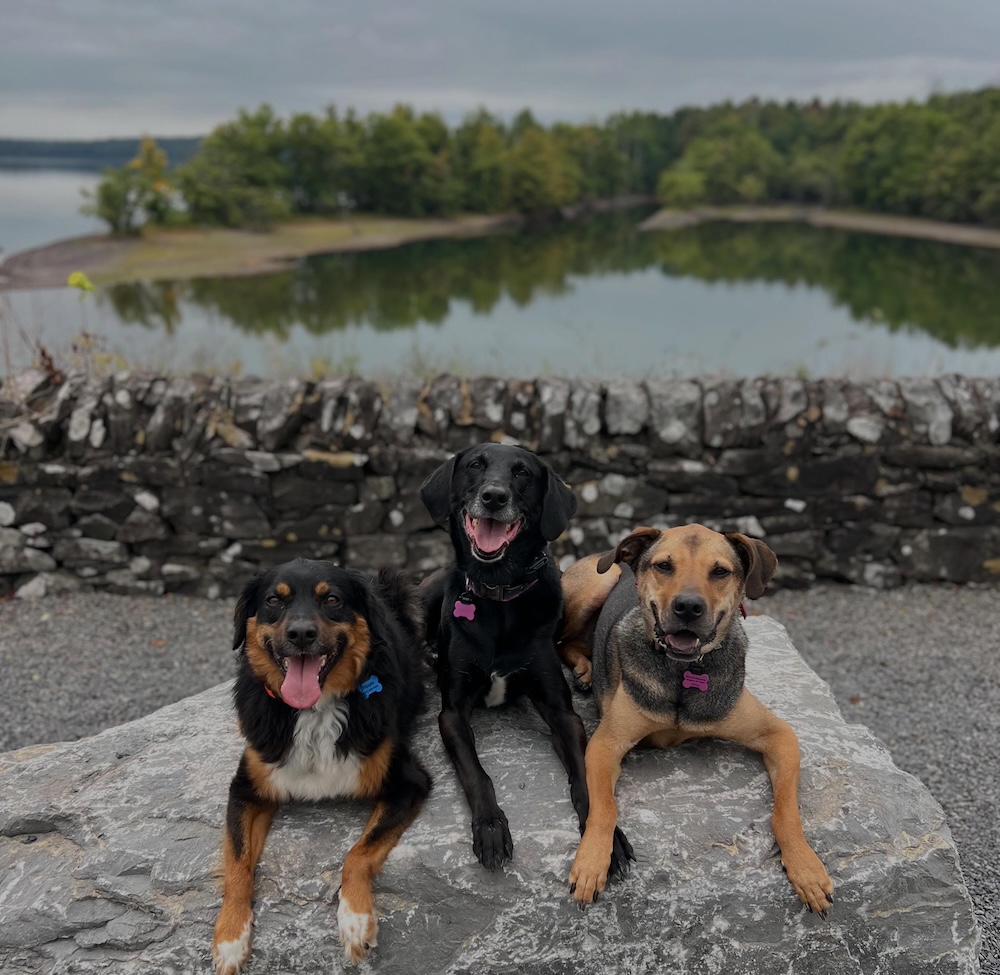 Tell us something about yourself people would be surprised to know.
Lisa Bonk: Professionally, in business school, I avoided any Entrepreneur Classes…I said I never want to be an entrepreneur. Personally, one thing that changed my life was climbing to Mount Everest Base Camp. It was a goal I set when I read “Into Thin Air,” and I achieved it (base camp, not the summit). When I reached the top of Kala Patthar (one of the best viewpoints of the summit), I realized I was capable of so much more. After that, I got my MBA and changed careers from Finance to Management Consulting and then quit the corporate world and let my life go to the dogs.
What do you do for fun? What are some of your favorite ways to unwind and unplug when you are not working?
Lisa Bonk: I’ve learned you never truly unplug while running your own business — I’m working on finding more balance. When I do manage to log off for a few hours, I play pickleball, go for long walks with my dogs (preferably off-leash), and spend time with friends.
If you could have one superpower, what would it be?
Lisa Bonk: I’d be remiss if I didn’t say talk to animals — dogs, specifically.
What is your current state of mind?
Lisa Bonk: Optimistic. I see opportunities everywhere. Opportunities for both personal and business growth. In this time of instability, focusing on dogs and the community and avoiding the nonsense grounds me.
What is the thing you want to relay to dog owners?
Lisa Bonk: Our number one responsibility as dog owners is to advocate for our dogs. When our dogs feel threatened, they take the lead, meaning they bark and lunge, and the perceived danger goes away. We’re their protectors, their lifelines. If a dog is uncomfortable with people or other dogs approaching, it’s our job to make them feel safe. In doing so, you take away the dog’s need to react, with the benefit of strengthening the bond between you. That doesn’t mean avoiding what makes them nervous — we absolutely need to help our dogs work through their fears — but it has to happen through a slow, methodical approach.
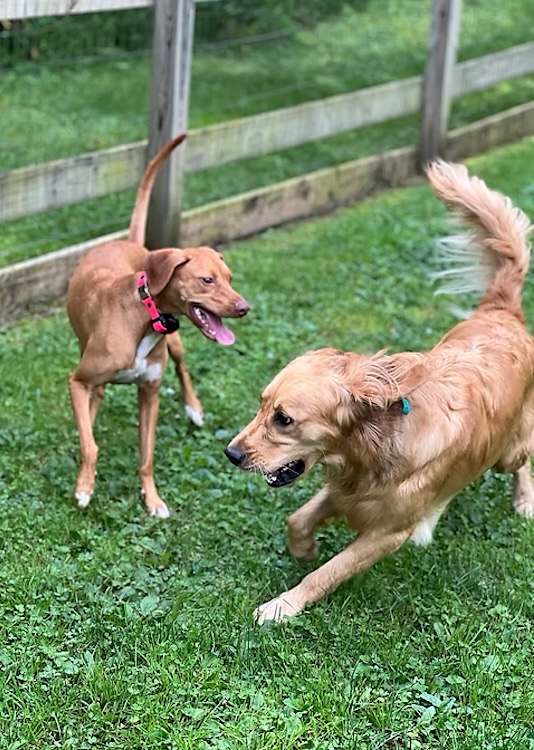

Photos courtesy of Lisa Bonk | Grateful Pups
Follow/Connect with Grateful Pups Dog Training via Website | Facebook | Instagram
+ + +
What to Do. Where to Go. Who to Know.
Start with INSIDE+OUT Upstate NY
Related Posts
Write a Comment
You must be logged in to post a comment.