


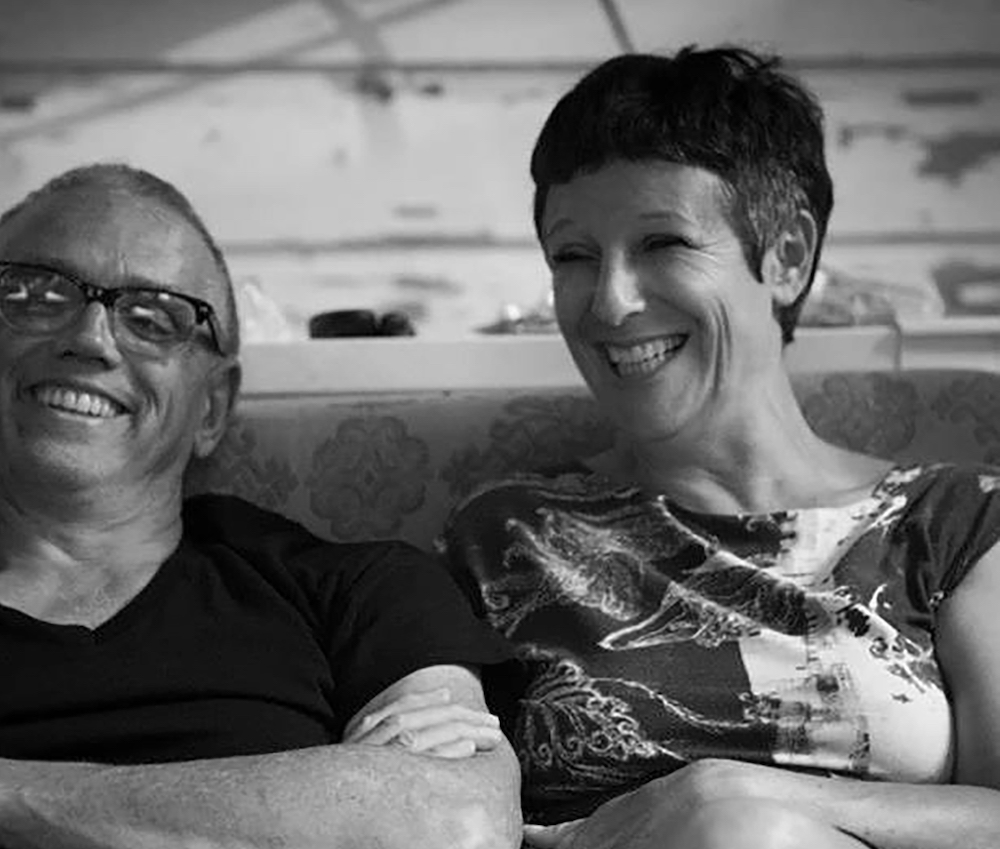
Love Frequency: Creative Living with Sharon Broit + Carl Mateo
There are creative couples, and then there are the ones who seem to build an entire atmosphere around themselves — a way of living where music, art, clothes, conversation, coffee, old textiles, flea markets, dogs wandering through the studio, and half-finished ideas all somehow blur together into one beautiful thing. Sharon Broit and Carl Mateo are very much the latter.
A Beautiful Collision of Music, Textiles, and Creative Life
Spend even five minutes talking to them, and you begin to understand that their work has never really been separated from their life. It all flows together: Sharon’s layered, painterly canvases, Carl’s music, the vintage dresses they once reconstructed by hand downtown, the cotton knits they now make in their Hudson Valley studio, powered by the sun and surrounded by wetlands, trees, and the soft, daily rhythm of the Catskills.
Long before sustainability became a fashion-world buzzword, Sharon and Carl were reworking vintage clothing simply because they couldn’t bear to see beautiful textiles go to waste. Before “curated vintage” became a retail category, they were downtown legends — part of that wonderfully gritty New York era when the Chelsea Flea still felt wild, Orchard Street still carried echoes of old Manhattan, and fashion people hunted for treasures at dawn with coffee in hand and sharp elbows.
What makes their work feel so resonant now is that nothing about it seems trend-driven. Their clothes are expressive without trying too hard and artistic without sacrificing comfort. The pieces are made for women who actually live — women who travel, work, dance, host dinners, go to galleries, throw sweaters over their shoulders, and want to feel like themselves while doing it.
For our ongoing Love Frequency series, INSIDE+OUT stepped into Sharon and Carl’s deeply creative world to talk about vintage treasures, music, artistic partnership, flea-market New York, and what it means to spend a lifetime making beautiful things side by side.
INSIDE+OUT: You both began as fine artists—how did that early creative language shape the way you think about clothing today?
-
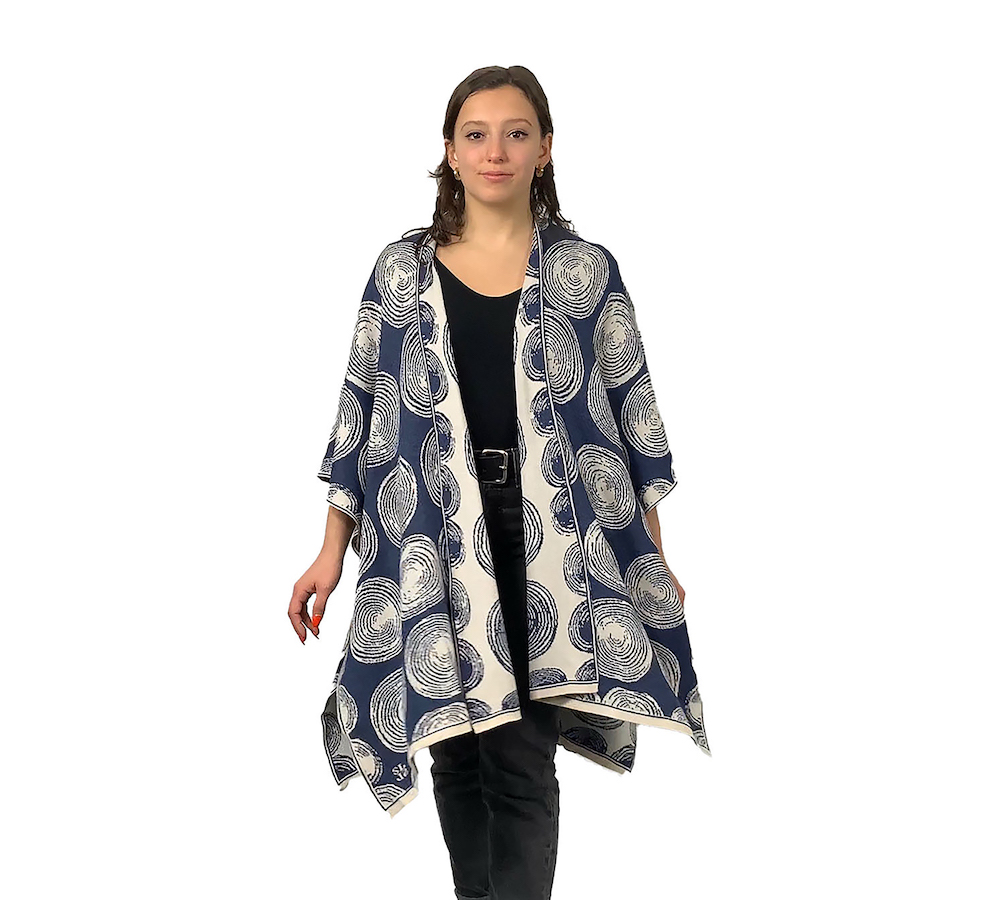
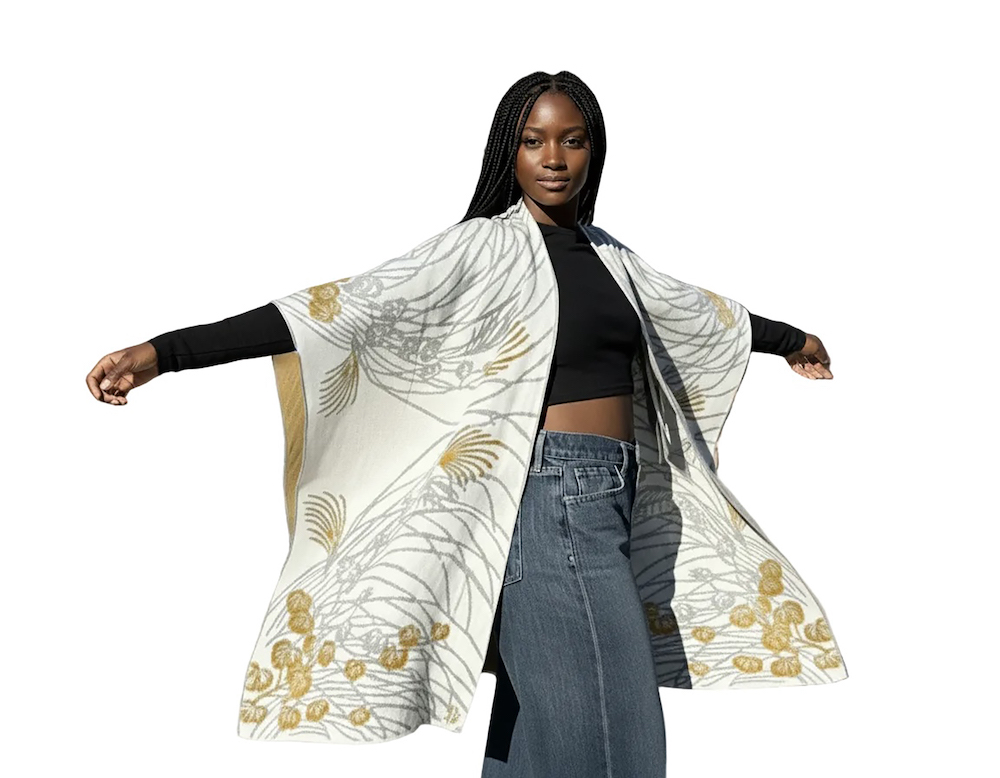
- Cape by Sharon London Designs
-
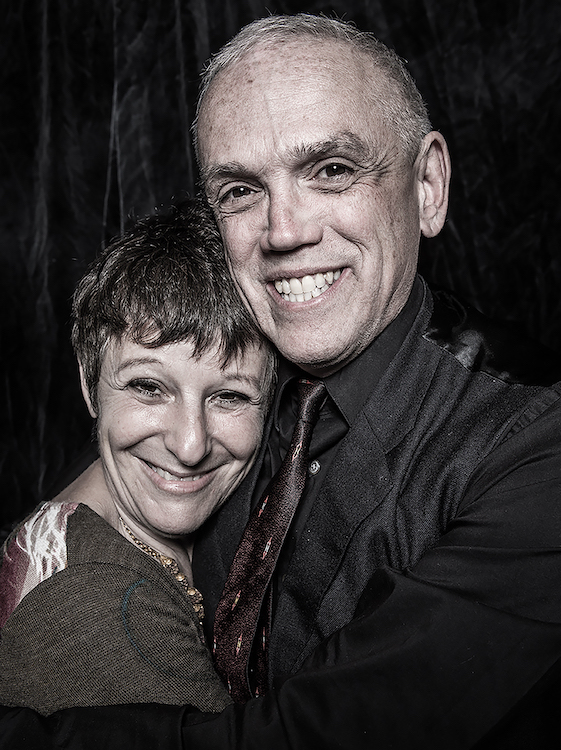
- Photo by Kristopher Johnson
Sharon Broit: We are artists first. At the heart of everything we do is a deep, lifelong commitment to creative living: painting, making music, making wearable art, and building a life where creation and expression come first and foremost. That foundation has never wavered.
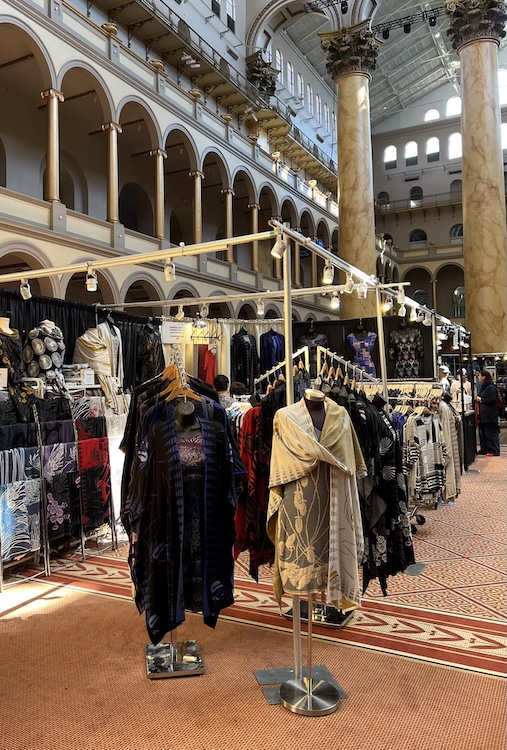
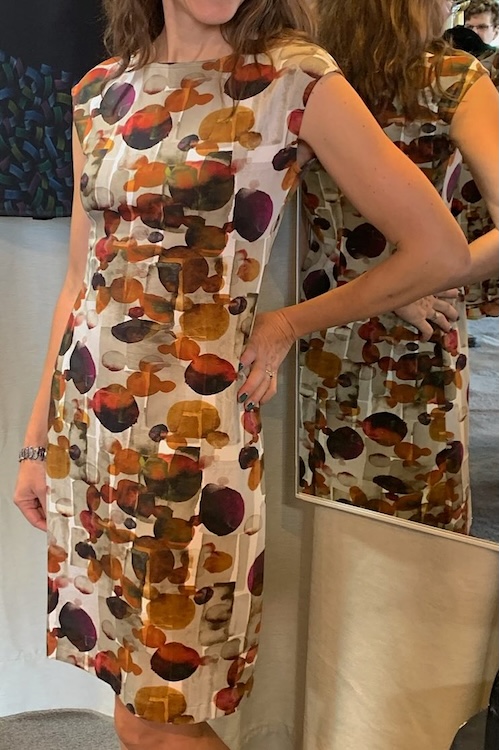
Dressing, for us, is about fun, playfulness, boldness, and the joy of discovering your own voice through what you wear. The Sharon London Collection gives women the tools to do exactly that — to be powerful, confident, and entirely themselves. Our pieces are timeless, flattering, comfortable, and washable, designed for real life without sacrificing an ounce of style.
We’ve been dressing women since our teenage years — from the funky, punk energy of Portobello Road and New York’s East Village, through vintage and reconstructed vintage at the Brooklyn Flea, to the refined, wearable artistry of Sharon London today. Our demographic has grown and evolved with us.
Sharon London’s knits, dresses, and tops move effortlessly from the boardroom to a wedding, from a dinner out to a museum, from the everyday to the exceptional. They are made for women who travel, who live fully, and who refuse to choose between comfort and beauty.
We show our work at premier fine craft shows throughout the Northeast under wearable fiber — including celebrated venues like the Smithsonian and Philadelphia Museum of Art, and among our favorites, Paradise City in Northampton, MA. For Sharon, the vibrant, fun, social energy of those shows feeds and balances the quieter, deeply personal work of the studio. It’s all part of the same creative life.
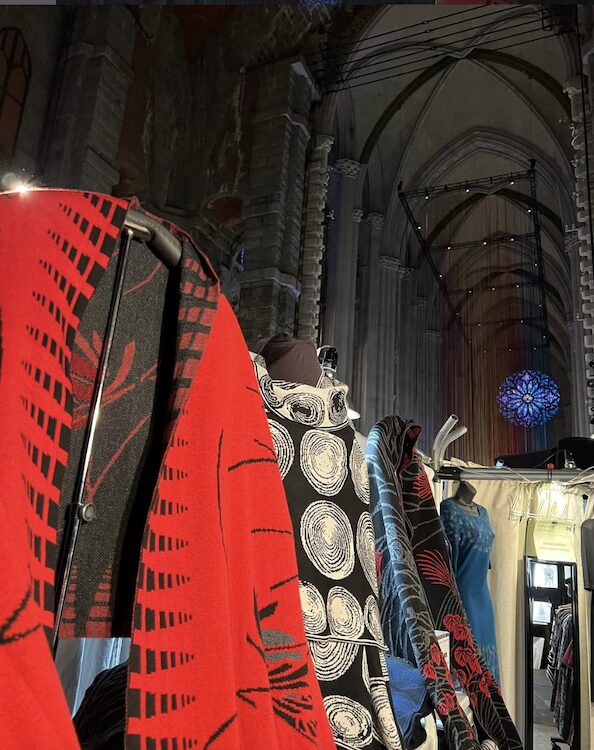
There’s a strong sense of history woven into your work. What did your years working with vintage textiles teach you about design?
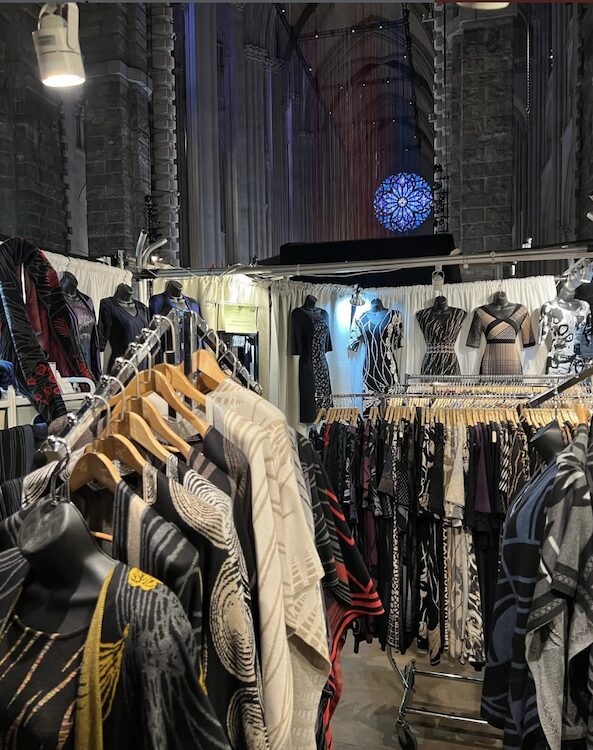
Sharon and Carl: Working with vintage textiles has been an education in art and design history — measured in touch and instinct as much as studying. We trained our eyes the way painters study the masters: through sustained looking, handling, and deep pattern recognition across centuries of making. Victorian construction, Edwardian drape, the graphic boldness of the 1940s, the exuberance of 1970s print — each era left its fingerprints in weave, silhouette, and ornament, and we learned to read them at a glance.
We became known, not just for finding and creating exceptional pieces, but for what we did with them — layering pattern on pattern, crossing eras, drawing unexpected connections the way a curator might hang a Klimt beside a Fortuny and find the conversation between them. These weren’t accidents; they were informed by Sharon’s painting practice, where historical reference, color, and compositional instinct converge. The vintage work and the studio work fed each other constantly. The willingness to borrow, subvert, and reinvent what came before has defined our career through every reinvention. It still does.
Take us back to the early days at the Chelsea Flea Market—what did that moment in New York feel like, creatively and culturally?
Carl Mateo: There was nothing quite like the original Chelsea Flea Market; four enormous parking lots were filled with everything from the strangest junk to fabulous art, vintage clothing, jewelry, collectibles, and furniture. Treasures waited to be discovered, and dealers lined up before dawn with flashlights, hoping to score the earliest finds.
In the nineties, it still carried a trace of the bad old New York—rough, tumble-down, and electric with excitement. Many of our customers came from the fashion world: Anna Sui, Marc Jacobs, Nanette Lepore, designers for Diane von Furstenberg, and Michael Kors, among others. Movie stars strolled through in classic New York fashion, largely unbothered and, at least mythically, anonymous. James Gandolfini would give a casual nod. Britney Spears came through with her mother. Hilary Swank, hidden beneath a baseball cap, once stood in our booth discussing birds.
The markets themselves operated with a distinct mafia-boss atmosphere. If you didn’t like a policy, your merchandise went straight over the fence and into the street. Operating an open-air market on Sixth Avenue made it easy to witness both the best and the worst of humanity. The marketers were street-savvy and tough, keeping their backstories close to the vest. Yet, these same vendors had incredible eyes for collectibles and deep knowledge to back it up. We learned so much there; it was endlessly interesting and infinitely creative.
You were part of the reconstructed vintage movement before sustainability became a broader conversation. What drew you to that approach so instinctively?
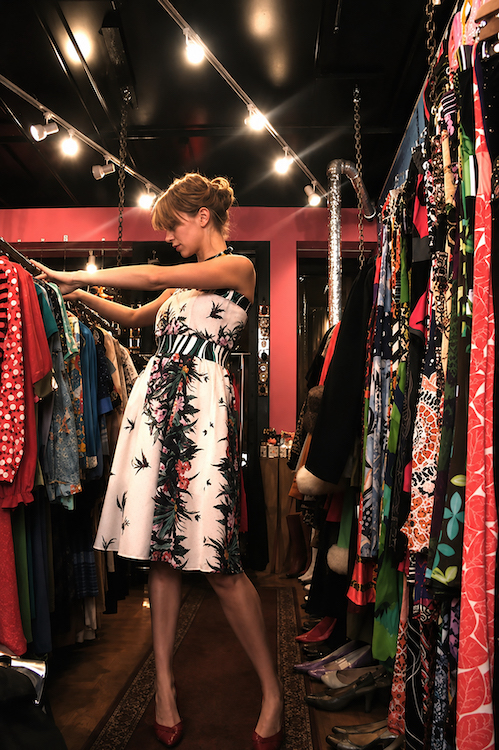
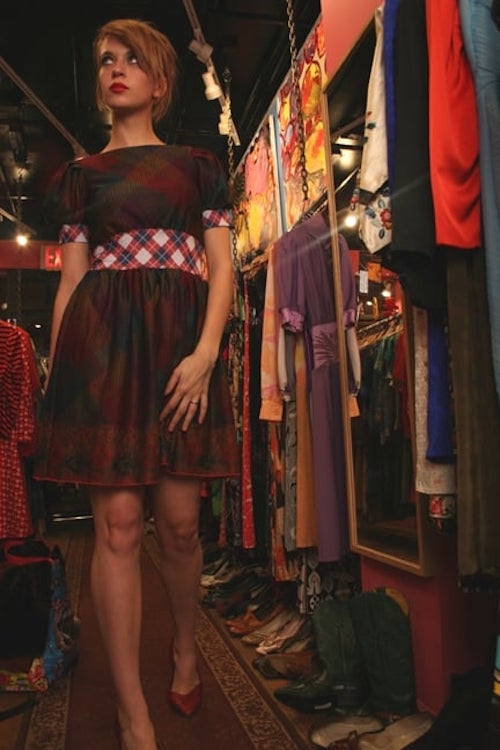
Carl and Sharon: For us. vintage clothing always held enormous potential — extraordinary textile designs and beautiful fabrics — but the silhouettes often needed reimagining to feel flattering and timeless. Sharon has always been an ideas person. We were committed to sustainability before it was a ‘thing’. As an inventive artist by nature, Sharon saw the potential of well-designed garments and remarkable textiles going to waste and sought ways to reuse them, making vintage clothing contemporary, wearable, and flattering.
Our approach to repurposing grew from a desire to recycle and elevate vintage while rescuing these wonderful textiles from the landfill. The fashion industry has long been a significant polluter, and repurposing has given us an opportunity to do our small part: to conserve, reinvent, and create something new from what is overlooked. To this day, we continue to work with sustainable fibers and make our creations in our sun-powered studios.
How did the transition from sourcing and restoring vintage pieces to creating your own line unfold?
Sharon Broit: We were at the forefront of the recycled clothing movement long before sustainability became a design ethos. We began with repurposing 1970s maxi dresses — reshaping sleeves, adding waistbands, reinventing the original garment into something new — and quickly evolved into full dress lines built from vintage fabrics, each piece one-of-a-kind while maintaining a consistent design aesthetic. Our signature tube dresses, born from the remnants of those reworked maxis, became a hit, and our people lined up for the newest score. The work caught the attention of fellow designers and major retailers — Anna Sui, Kate Spade, Jill Sander, Zac Posen, Marni, Marc Jacobs, Ralph Lauren, Topshop, Anthropologie, Free People, Urban Outfitters, among them.
When we opened Hairy Mary’s Vintage and Design on Orchard Street in the Lower East Side of Manhattan, the shop became something larger than a store. Built and designed by Carl, split evenly between curated vintage clothing, shoes, bags, jewelry, and our own repurposed designs, the space itself was a work of art. With my paintings and sculptures using colored petticoats to adorn the ceiling with surprises hidden in their folds, and my sculptural vintage shoe heel collection we drew visitors from around the world. It became a creative hub in the truest sense — a ‘go to’ place for designers, stylists, and production teams shooting editorials, films, and television. The line between art and commerce was always beautifully blurred.
Your work feels both expressive and incredibly wearable. What does “ease” mean to you when designing for the body?
Sharon and Carl: Ease, for us, is twofold: textiles that move naturally with the body, and fabrics that are effortless to care for. Utility has always mattered as much as beauty. We believe a garment can feel luxurious and look extraordinary while remaining completely practical — for travel, work, a wedding, and everyday life. Over the years, we have developed dress patterns that flatter all shapes and sizes, and that philosophy of inclusive, wearable design is at the core of everything we make.
Can you walk us through the journey of a single piece—from initial idea to finished garment?
Carl Mateo: Our designs take time, a process of trial and error, constant editing, refinement, and ongoing conversations between us about line, color, pattern, and wearability.
We frequently turn to our archive of vintage textiles for inspiration and just as often draw from Sharon’s paintings as a source for new textile ideas. Over the years, we have developed our own classic dress patterns, shapes that work across many different body types, and we carefully consider how each visual design will function within those forms.
When creating a knit, Sharon begins by hand-drawing the designs. Together, we edit and refine them. As a machine knitter, I translate the artwork into a functional knitting pattern that will produce the desired texture, structure, and fit. From there, we create test runs, evaluate the results, and make adjustments as needed.
Only when everything feels right does our production begin, always in small, limited batches. In our studios, we knit using 100% Italian Egyptian cotton yarn, pre-wash, steam block, sew, hand-shape, and heat-press all our knits. We also continue to create many custom pieces, something that keeps the process personal and deeply connected to the people who wear our work.
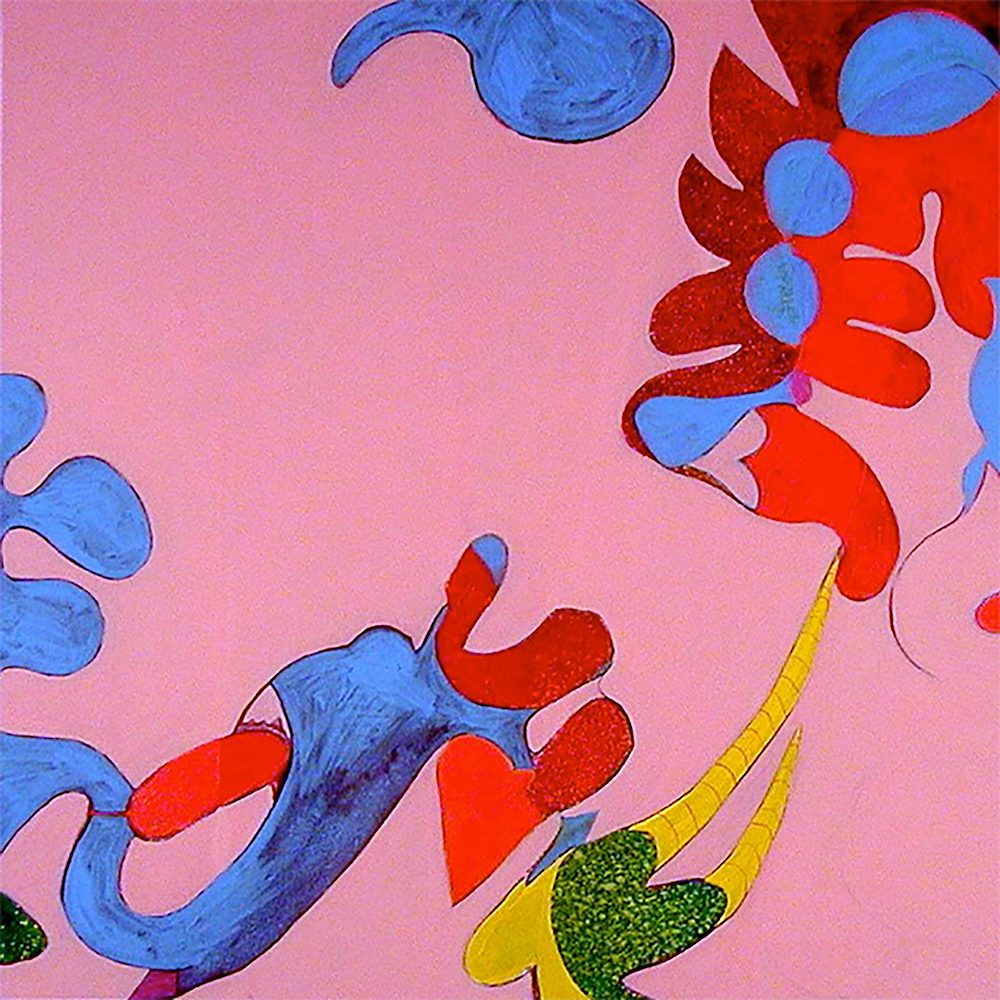
Painting by Sharon Broit
-
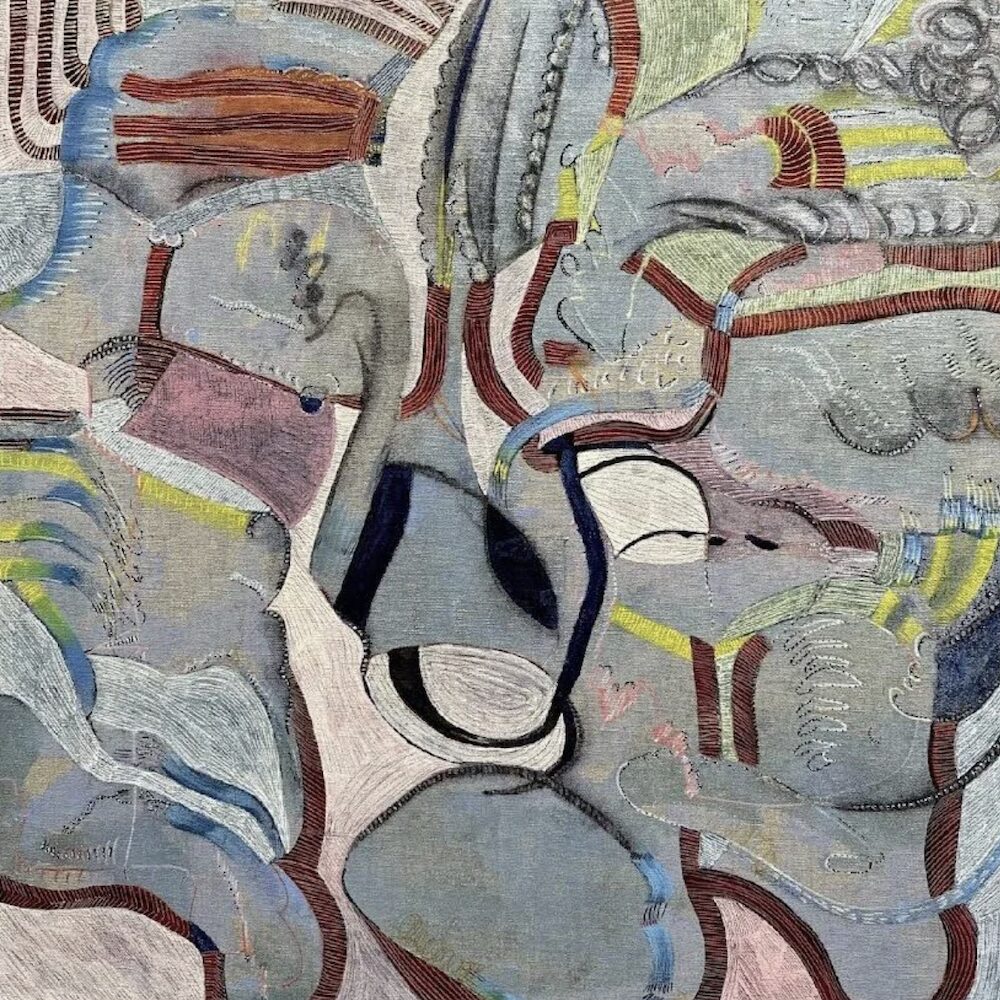
- Painting by Sharon Broit
-
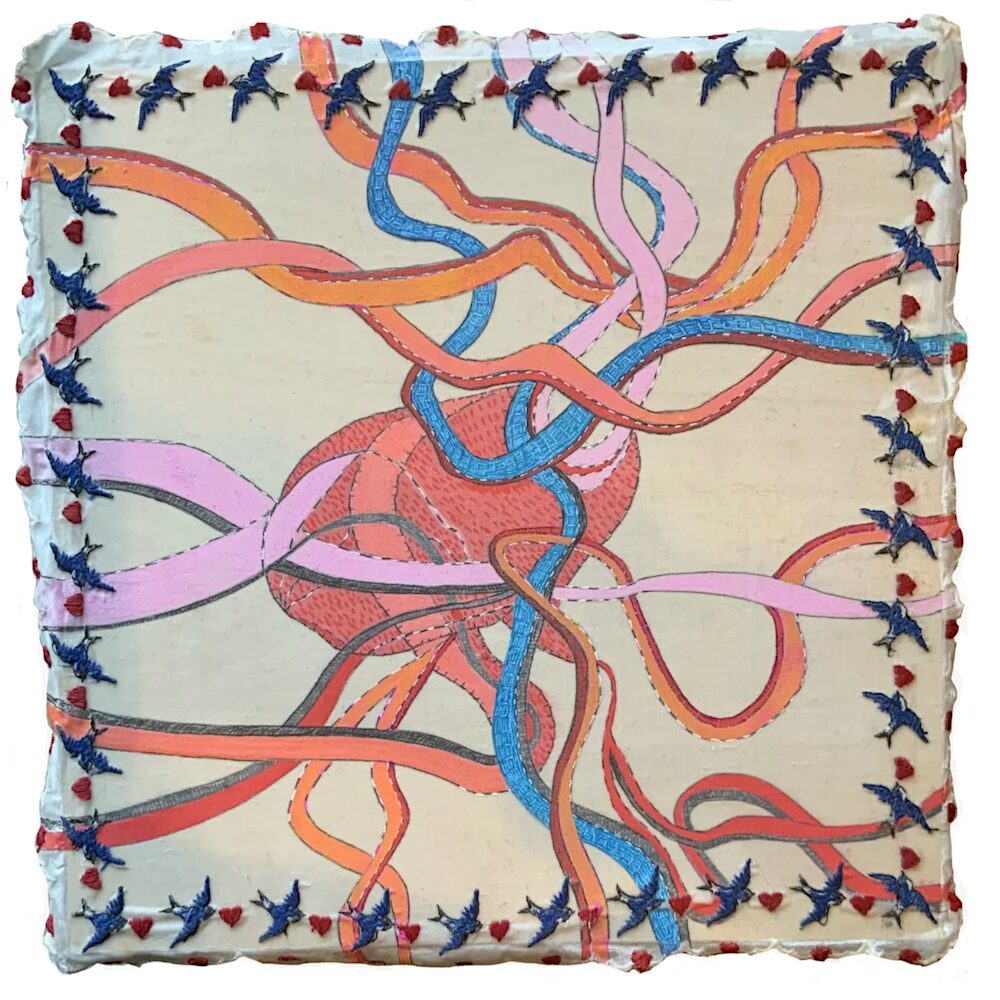
- Painting by Sharon Broit
Your prints feel painterly and personal. Where do your patterns begin?
Sharon Broit: They begin in our studios. I maintain a daily painting practice, and that process is the root of everything — the patterns, the colorways, the surface quality of the fabric itself. I center my practice on mark-making as an embodied language, where memory, sensuality, and time take form through layering and excavation. I work intuitively, building up and breaking down the surface with veils of pigment, texture, and line — allowing fragments to emerge and recede. I treat the canvas as a tapestry of lived experience.
That instinct carries directly into the designs we create. The tactile memory of vintage textiles, the structure of a weave, the history embedded in a worn garment, and the organic patterns observed on daily walks all find their way into my paintings and, from there, into the cloth. Each surface becomes a record of sensory experience: something seen, something handled, something remembered.
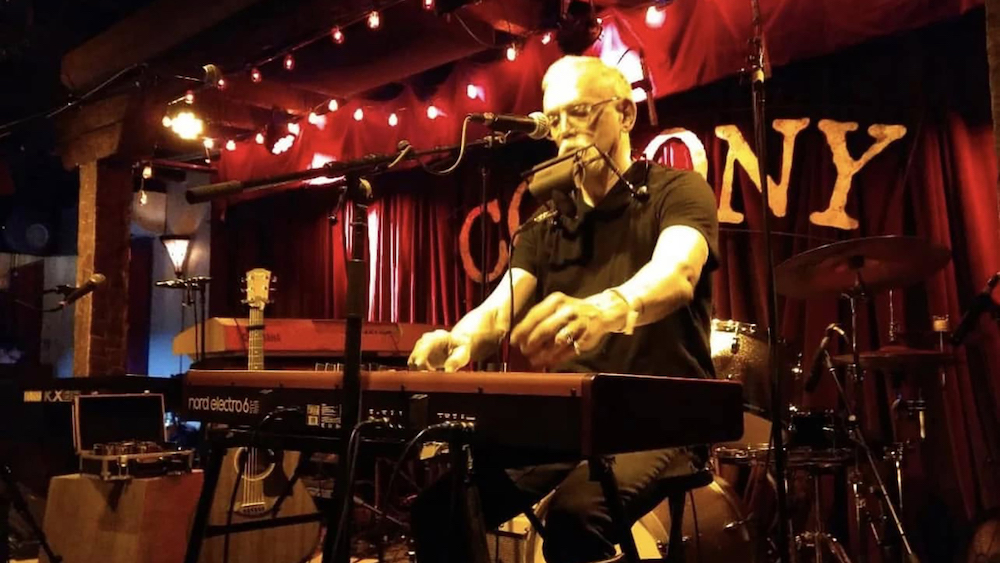
Carl, as a musician, does rhythm or sound ever find its way into the way you approach design or process?
Carl Mateo: Music is often architectural — it creates line, structure, tension, and movement, especially when recording with an ensemble, developing arrangements, or writing lyrics. I often find myself using the same mindset in both music and our process.
A textile, and the way it moves on the body, feels fluid in much the same way music does. The shape and design of a garment resemble the structure of a song: composition, balance, rhythm, and flow. The hand of our textiles — especially our cotton knits — is incredibly soft and tactile, capable of evoking an emotional response similar to hearing a piece of music that deeply moves you.
When color and design details are added, we are ultimately creating pieces meant to resonate emotionally, much like our favorite songs — the ones we return to again and again, discovering something meaningful in them each time.
How has living and working in the Hudson Valley shaped your creative rhythm and the way you approach making?
Carl Mateo: We were incredibly fortunate to find a property that, although condemned at the time, offered open living space and unfinished cinderblock structures that immediately said: studios. It was reminiscent of our Brooklyn lofts — raw, full of possibility. Our daughter Ava was still a baby, our lease had ended, and life was in complete transition. It was a chaotic and uncertain period, but we remain deeply grateful for what grew from it — a place where we have been able to live, work, raise our daughter, and build a meaningful, creative community around us.
In many ways, we fulfilled the ultimate artist’s dream: space. Space to live, to create, to experiment, and to make things with our own hands. Our solar-powered studios reflect our larger values around sustainability and independence, and the development of this place over time has become the steady backbeat of our creative rhythm. We have both the tools and the physical space to realize our ideas fully — grounded, self-sufficient, and always moving forward. We do this in a landscape that continues to inspire us daily: the Eastern Catskills outside our windows, a hundred acres of wetlands across the road, and the Hudson River nearby.
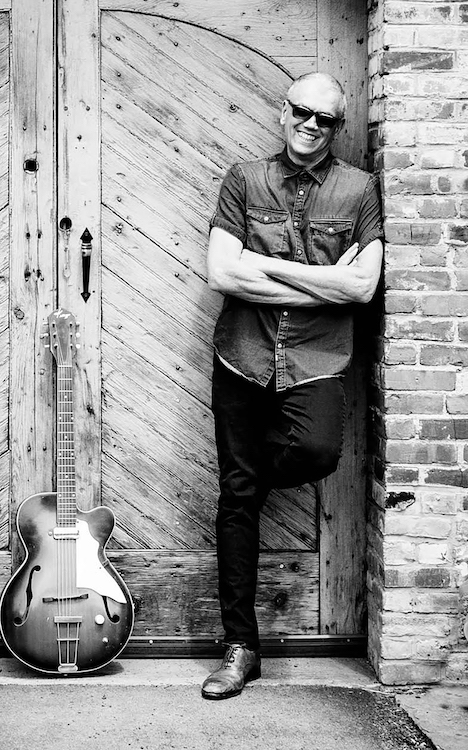
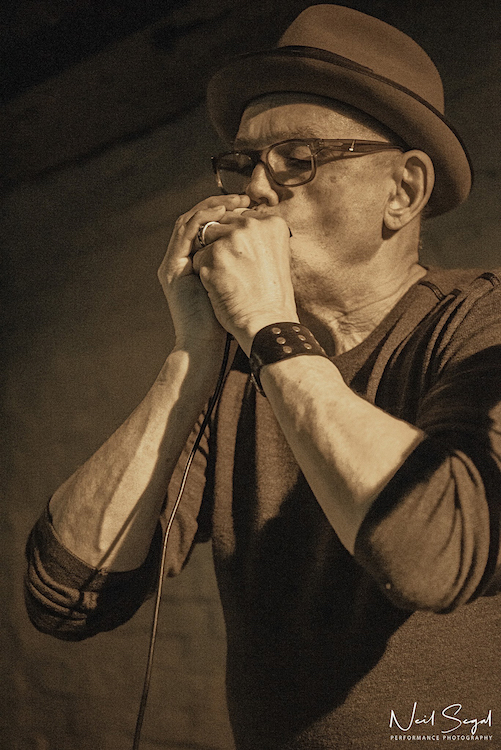
Your studio feels like a world of its own—what are you listening to lately while you work, and does it change the energy of what you make?
Sharon and Carl: Our studio is indeed a world of its own. It is calming and grounding to be makers and for us to do it side by side. Truly a happy place for us. Yo La Tengo’s chill playlists are on heavy rotation for both of us. We have also been listening repeatedly to Bill Callahan’s album “Sometimes I Wish We Were an Eagle” throughout the year. Carl has a deep love for early blues and harmonica players, so artists like Little Walter and Charlie Musselwhite are always part of the mix.
We are continually inspired by local musicians and artists as well, including Chris Maxwell, Two Dark Birds, Robin the Hammer and Marc Delgado. Sharon is especially drawn to podcasts, interviews, and audiobooks from other creators and thinkers, including Craft in America, Adam Grant, and Brené Brown. We are both avid followers of Heather Cox Richardson.
Much of our work is deeply tactile, allowing the mind to wander while simultaneously demanding focus and attention. Music serves as both an inspirational force within our workspace, while podcasts, in a sense, help keep the lights on.
Local Love: What local business should we know about?
Sharon and Carl: The first two are based on our road in Saugerties. The Underground Center, a non-profit founded by Chase Randell, whose work in education and community gardening creates sustainable food structures of which we are a part, and makes a meaningful impact, sharing its bounty and awareness, feeding people, and teaching people to grow their own food through the Boys and Girls Club in Saugerties, NY. More places we love:
- Skylight Films. Pamela Yates and Paco DeOnis, Social Justice documentary filmmakers
- Charise Isis is a documentary photographer empowering women facing breast cancer and mastectomy.
- In Mark’s Kitchen – Home-made pesto!
- Carol Washington’s Serenity Gardens for inspired landscape design.
- Full Moon Resort’s Music Masters Camps offer a truly innovative artist experience. The resort also features a semi-permanent collection of Sharon Broit’s artwork on display.
- The Colony Woodstock
- Rock City Vintage
- Dang Vintage
- The Pines
- Stockade Guitars
- Woodstock Music Shop
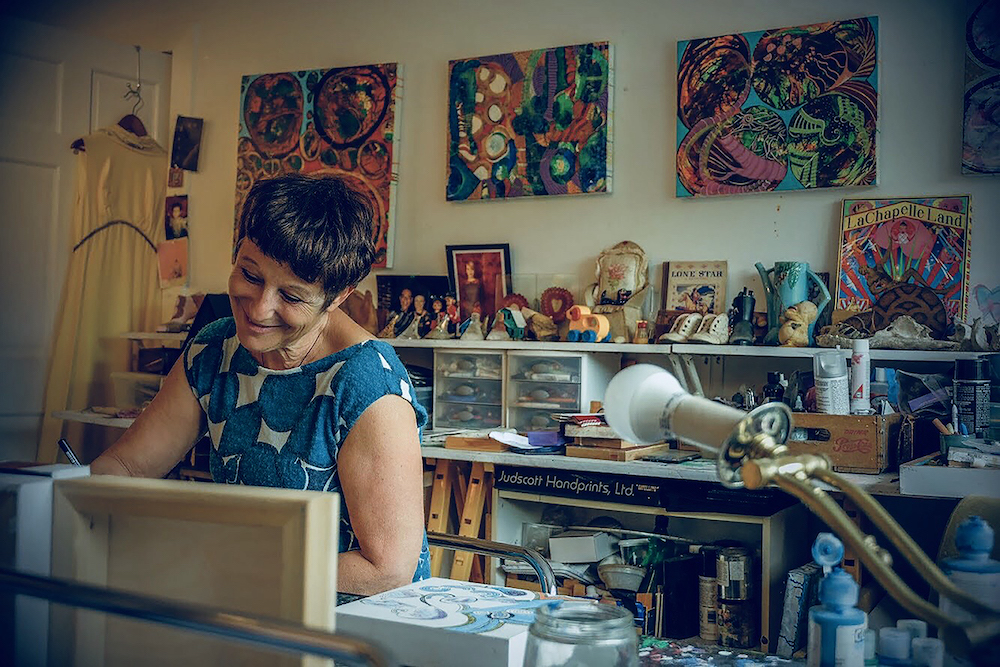
Photo by Joe Hille
Photos courtesy of Sharon Broit and Carl Mateo | Photo of Carl Music: Neil Segal | Photo of Hairy Mary’s by: Charise Isis
+ + +
Sharon Broit Art Opening at the Kaatsbaan Cultural Park, Tivoli, NY
June 6, 4 pm – 6 pm, curated by Hilary Greene
The Carl Mateo Band is performing at The Pines, Mount Tremper, NY
Wednesday, June 24, 7 pm – 9 pm
+ + +
Follow/Connect with Sharon London Designs via | Website | Facebook | Instagram
Follow/Connect with Sharon Broit Art via | Website | Instagram
Follow/Connect with the Carl Mateo Band via Website | Facebook | Instagram | YouTube
Click HERE to see exclusive interviews with the amazing people who proudly call the Hudson Valley home. Sign up for our Weekly Newsletter to keep your finger on the pulse of What to Do, Where to Go, and Who to Know.
Related Posts
Write a Comment
You must be logged in to post a comment.