


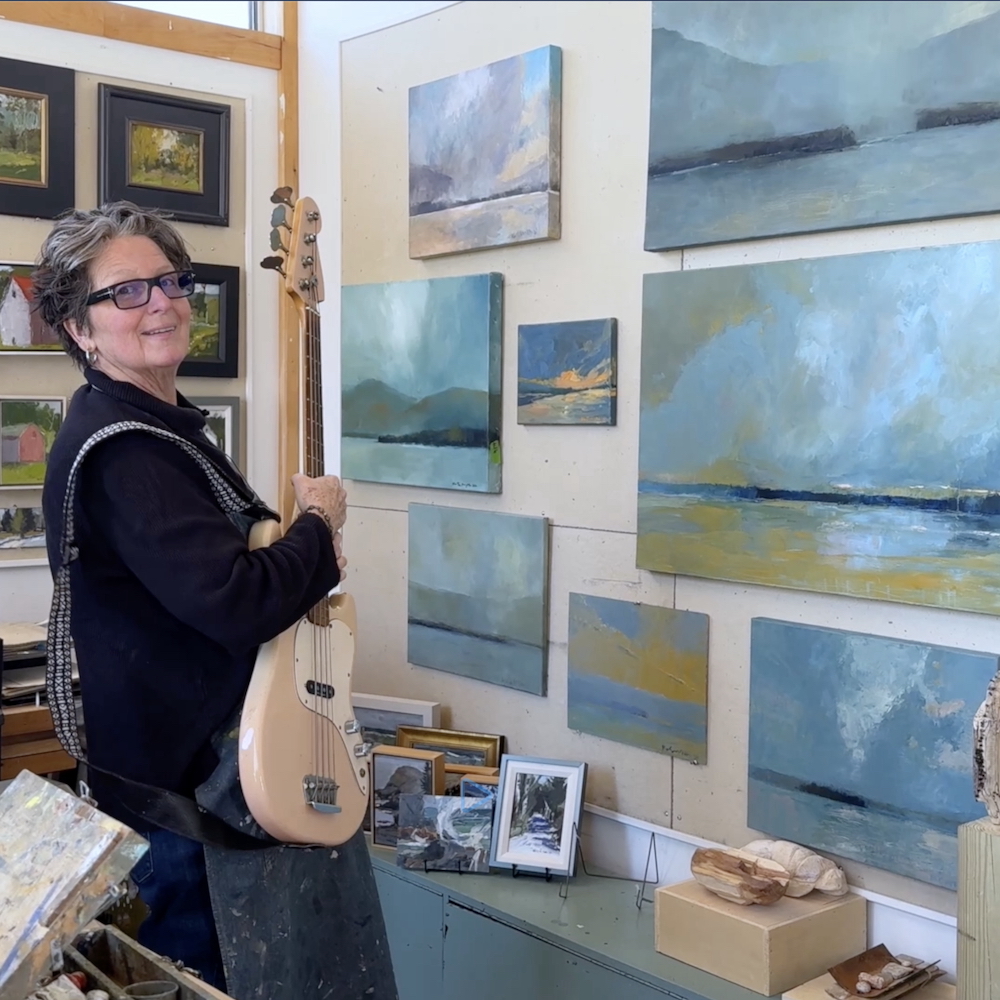
In the Studio with Painter + Printmaker Kate McGloughlin
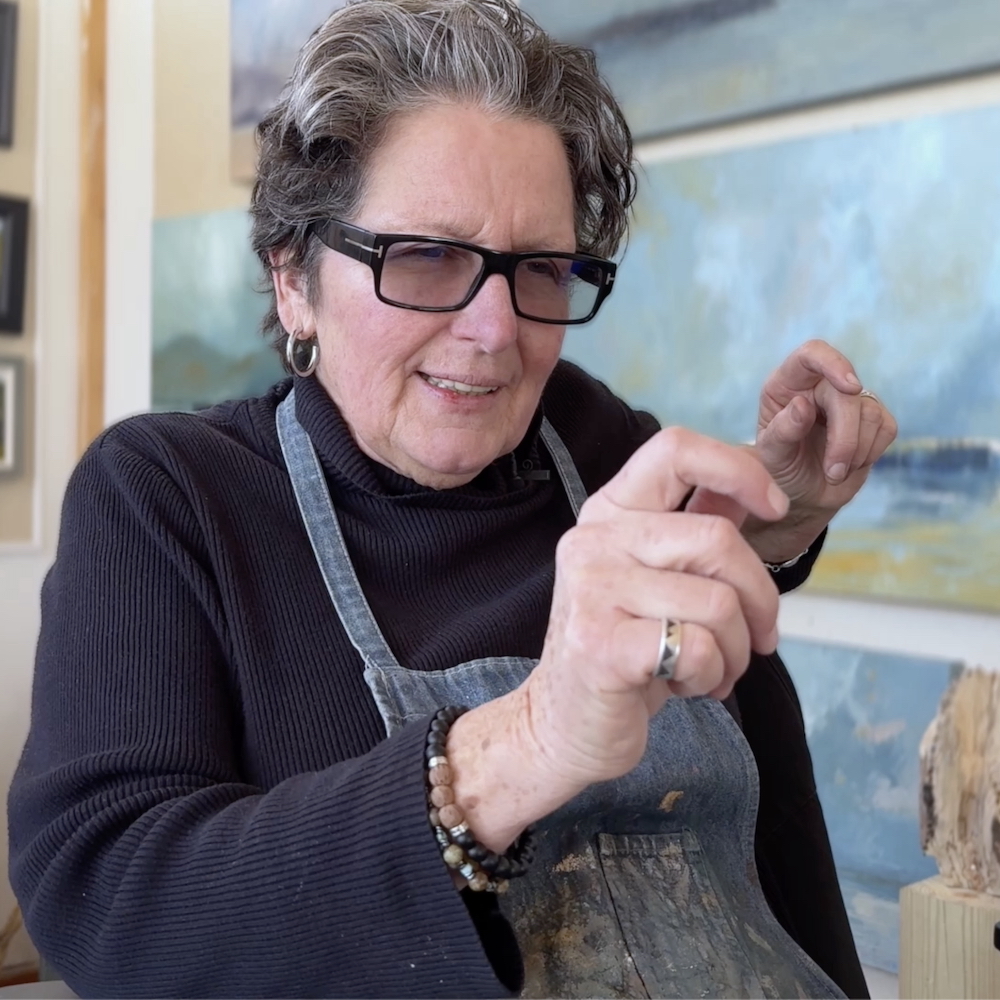
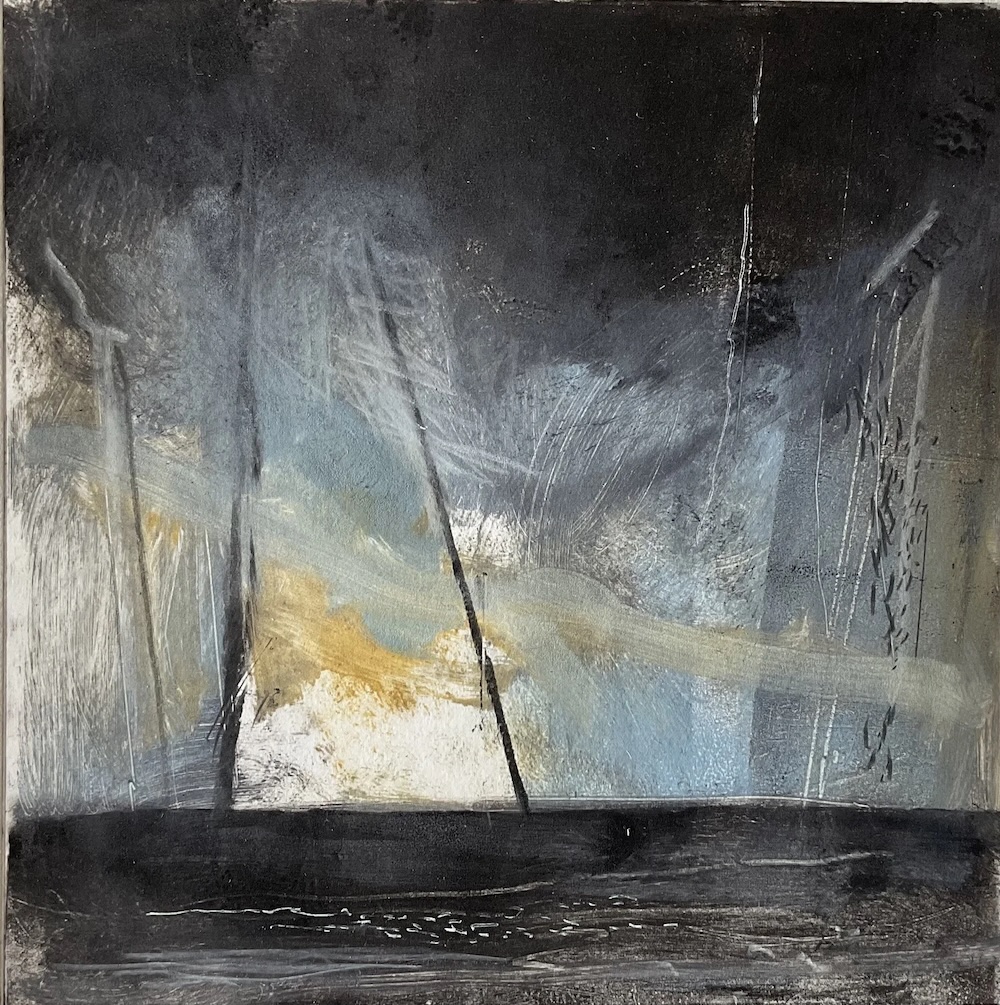
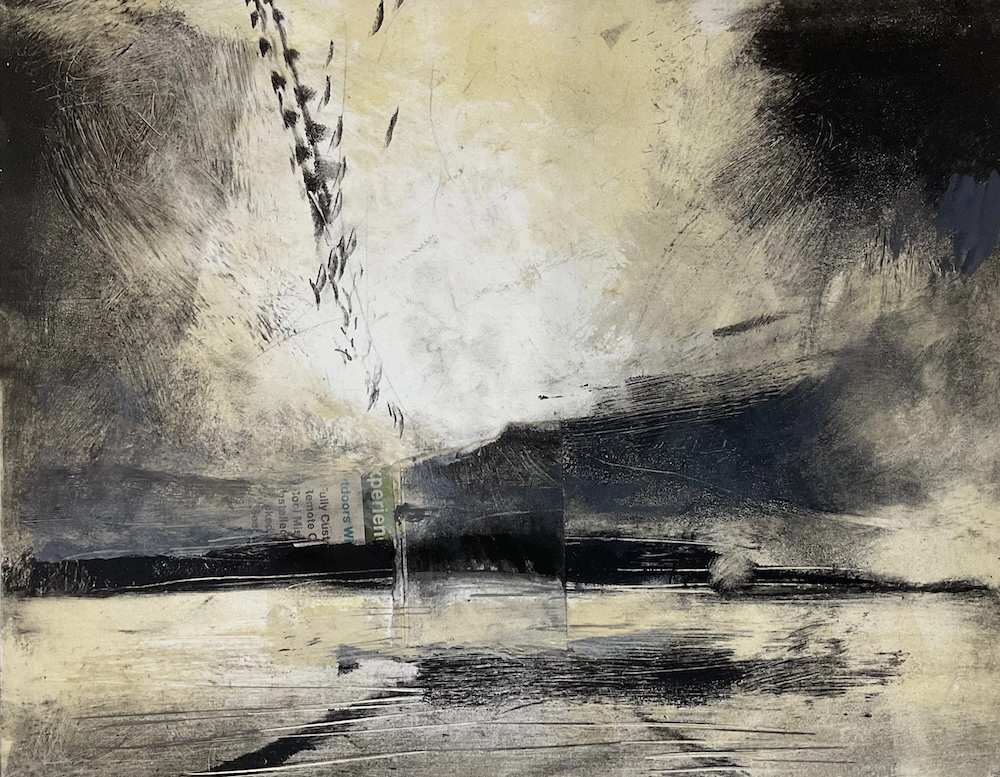
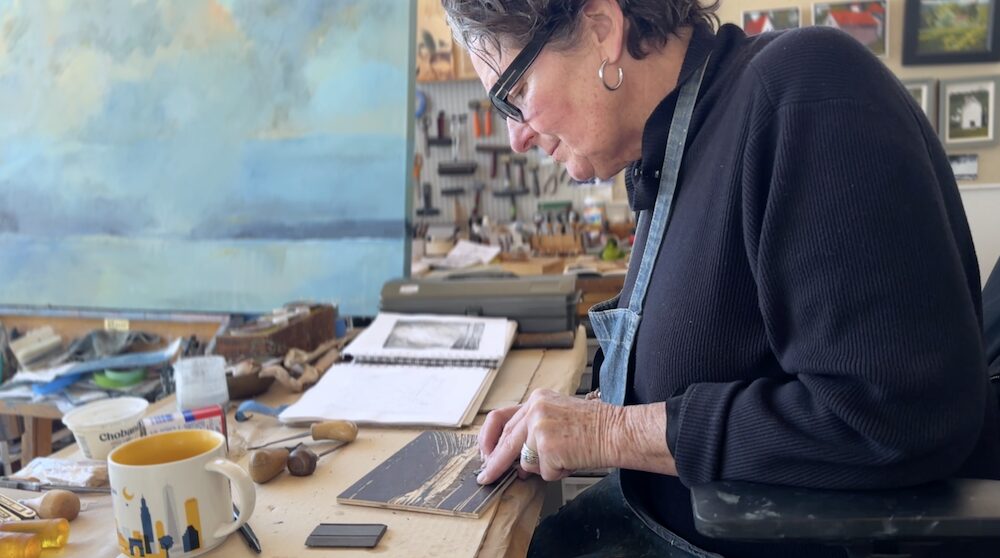
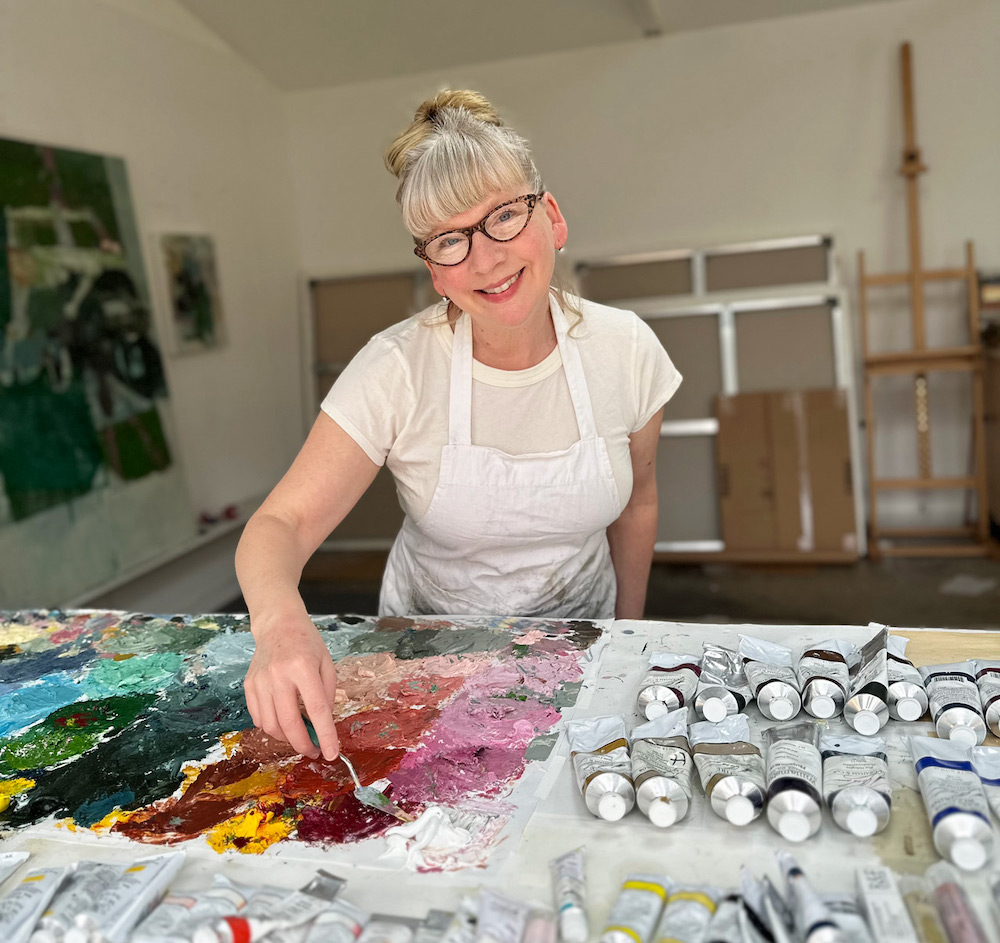
We’re In the Studio with Hudson Valley painter and printmaker, Kate McGloughlin. Kate captures the haunting, layered history of the Hudson Valley with the emotional gravitas only a 12th-generation Ulster County native can. She transcends traditional landscape art, treating the earth as a living repository of human memory. Her work blends painting and printmaking to evoke a profound sense of loss and displacement buried beneath the waters of the Ashokan Reservoir. Through her fluid monotypes and rich, textured canvases, Kate evokes a deep, visceral connection to the land and sea, transforming historical and generational grief into a hauntingly beautiful visual narrative.
Outside of her studio practice, Kate has led workshops in Ireland, Scotland, Venice, Tuscany and Spain. As a teacher at the Woodstock School of Art, Kate has inspired future artists, shaping the next generation of creative voices. With her deep reverence for nature and the tactile traditions of printmaking and plein-air painting, Kate continues to ensure that the dialogue between artist and environment remains alive, urgent, and deeply human.
Learn more about Kate in our interview below.
INSIDE+OUT: Where are you originally from and how did you wind up in the Hudson Valley?
Kate McGloughlin: I’m a twelfth-generation Ulster County resident—my ancestor Kit Davis was one of the first white guys to step onto the shores of the Rondout, which is now Kingston, NY—so, I bloomed where I was planted.
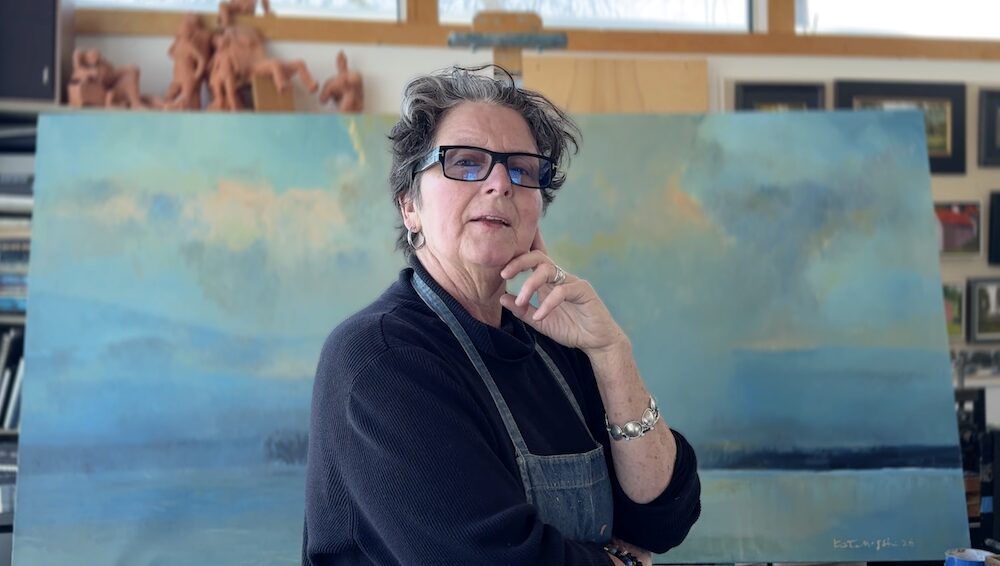
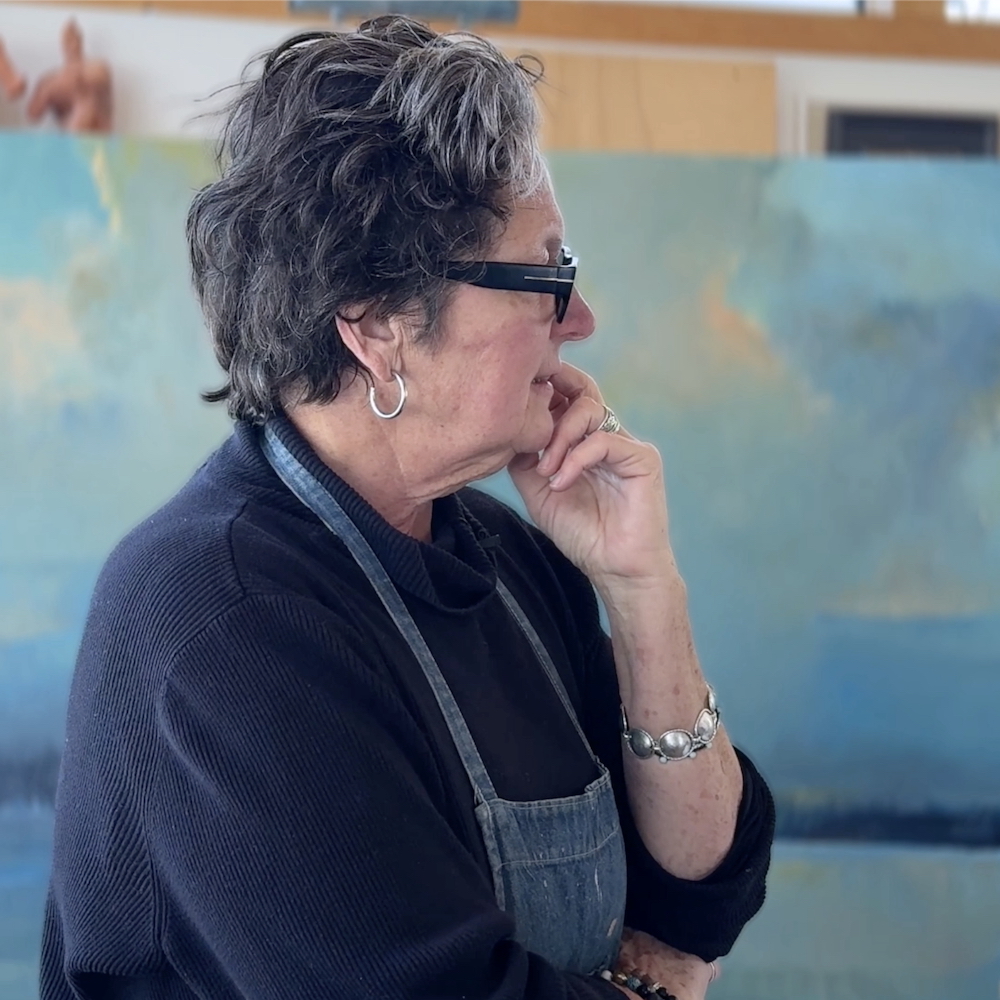
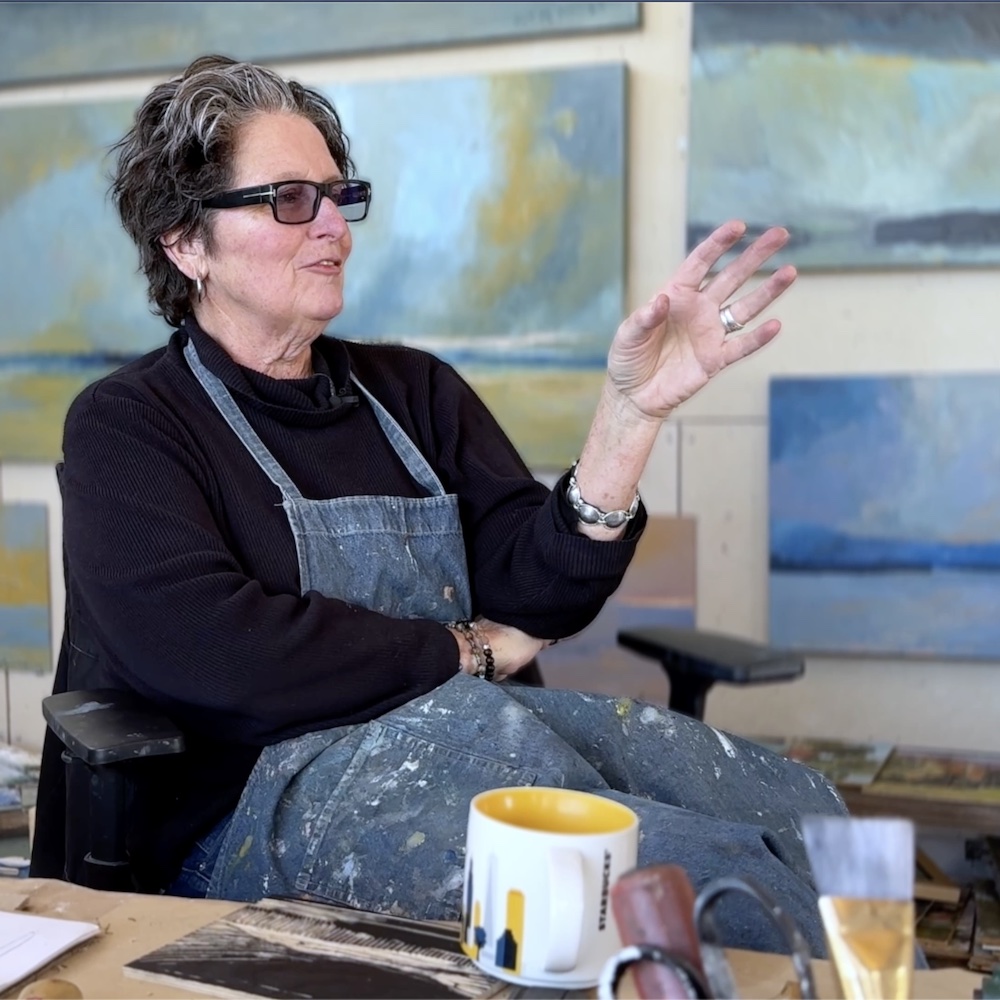
What inspired you to become an artist, and what was your journey?
Kate McGloughlin: I had a fourth-grade teacher, Joann Margolis, who recognized that I was an artist, not an artistic kid, but already an artist at that age. She and her then-husband were craftspeople and had a jewelry store in Woodstock, NY, which was still very much an art colony in the 1970s….I think she really set me on a path by encouraging me to enter art contests and by finding grants for projects with a creative aspect I could explore. So that was really my role through school—voted most artistic, among other things, I was always relied upon to design things, prom tickets, yearbook, stuff like that. When I went to the University of Arizona in Tucson, I reluctantly enrolled as a sociology major—I think I said something like, “I like people, I’ll be a sociology major,” having no idea that I could actually major in Fine Art. By my second semester, I took a painting class, and immediately found my people. I switched majors immediately, and I’ve never looked back. I had the opportunity to study with Robert Colescott, among other great artists—it was the beginning of the performance art era, which I had no interest in whatsoever, so I found a good painter and stuck with him!
Having said that, I’m so grateful for the years of exposure to the Liberal Arts that education afforded me. Nearly everything I’m passionate about, I encountered in the humanities.
“It wasn’t until I found the Woodstock School of Art and had Staats Fasoldt and Robert Angeloch as instructors, that the real journey began. I owe everything to those two artists…”
After I graduated in 1985, I did what every art major does—tended bar and traveled. Working alone in a studio that I shared with mice and my grandfather’s 1948 Allis-Chalmers Tractor, I became really frustrated and maybe even a little lost. I wanted to paint. I loved the physicality of putting paint on the canvas—but I struggled with imagery and isolation, I guess… It wasn’t until I found the Woodstock School of Art and had Staats Fasoldt and Robert Angeloch as instructors, that the real journey began. I owe everything to those two artists, and all the others who were so generous with me as a young artist in the milieu of established, serious working artist instructors.
What makes living in the Hudson Valley special for you?
Kate McGloughlin: It’s home. I get to travel a lot, and I’m very comfortable in the world because I’m so rooted here. The Hudson Valley has everything, except maybe an ocean, that I need as a human artist. Deep woods, waterfalls, farmland, great live music, fresh food and like minded people.
What are the most challenging and the most rewarding aspects of being an artist?
Kate McGloughlin: I don’t know any other way of life, so the whole thing feels really rewarding to me, especially because I’ve been able to teach all these years. Watching other artists find their voice is such a gratifying experience. One thing that I do find to be a total drag is marketing my work. I hate that. I would love it if I could just work without having to bother with a website or self-promotion. I worked with galleries for forty years, and I’m grateful those folks are willing to do that part.
Having been a painter for as long as you have, how has your relationship with oil painting evolved compared to other mediums like watercolor?
Kate McGloughlin: I’m painting better than ever. I think—what I mean by that is that I rarely struggle with the medium; scraping and wiping are as integral to my process as using a brush and knife to apply to the surface in the first pass. It’s all about the surface, it’s almost always the most important aspect of the painting. As for watercolor, I really miss that medium, it’s such a great way to work. And, you need to know what you’re doing; lay it down and leave it. I’m really out of practice. I would need a good month or so of daily practice to get my watercolor chops back to where they once were.
-
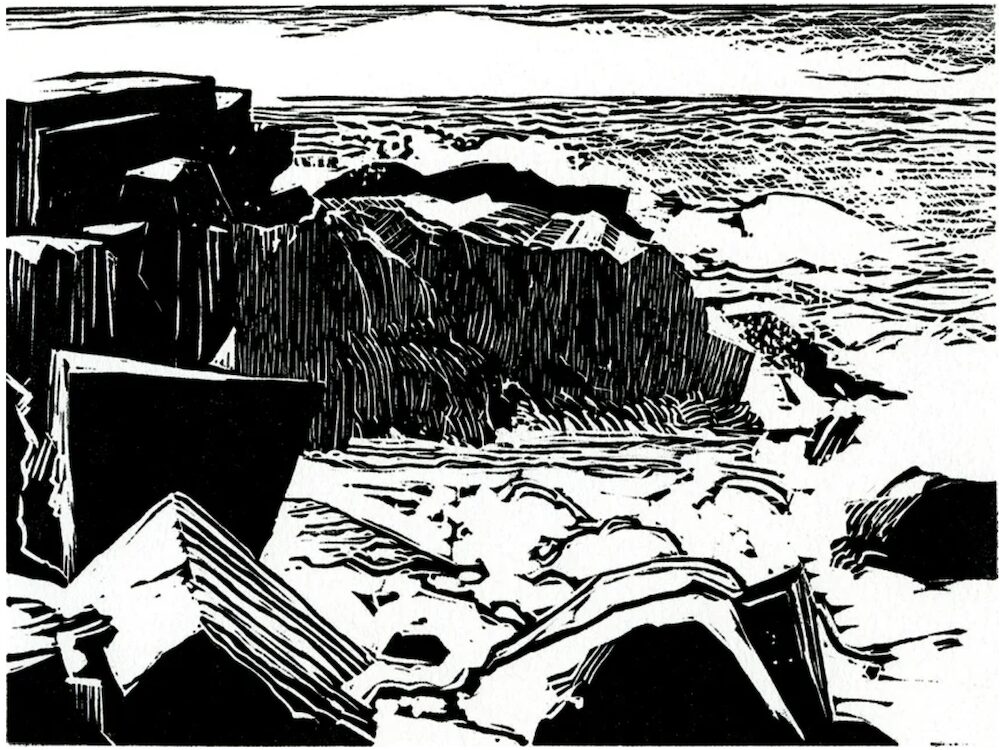
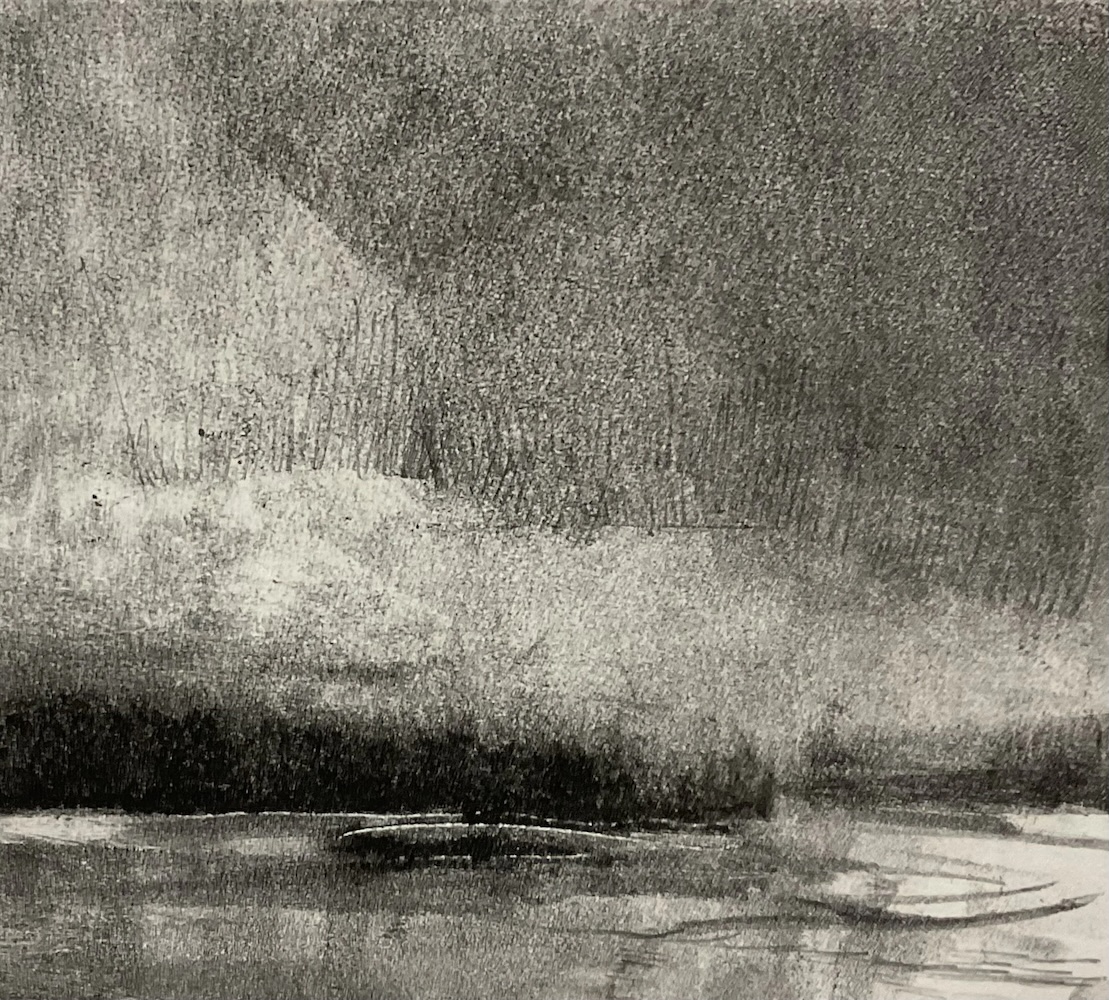
- Lobster Point. Block print by Kate McGloughlin
-
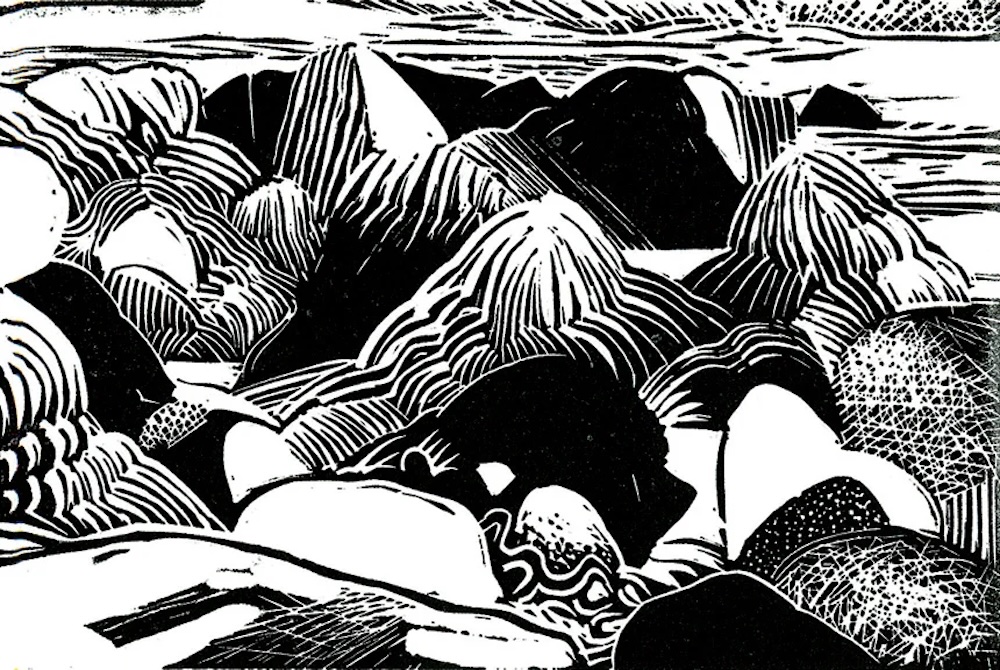
- Seaweed Block Print by Kate McGloughlin.
In the video you mentioned that you might be a “much better painter” if you hadn’t started making prints in 1991. Why do you feel these two mediums compete with each other, and what keeps you returning to printmaking?
Kate McGloughlin: I don’t necessarily think they compete with each other, except for the amount of time I spend with each of the genres. I think I was referring to the distraction of another all-consuming medium and the time and energy printmaking has taken away from my time at an easel.
Printmaking is a world of endless possibilities. It captured my heart and attention all those years ago because of the physical, manual labor, the attention to craft and the “blue collar-ness” of preparing plates and using tools and presses that really beguiled me. That’s still paramount for me, but I really love the discovery of something new that can happen in combining printmaking media.
How do you decide which sketches from your sketchbooks are ready to be translated into a larger oil painting or a graphic woodcut?
Kate McGloughlin: It’s usually a sketch that has a big shape or big idea that I can express. Highly detailed sketches I tend to skip over and enjoy as a memory of place, but a limited, bold set of marks always grabs my attention.
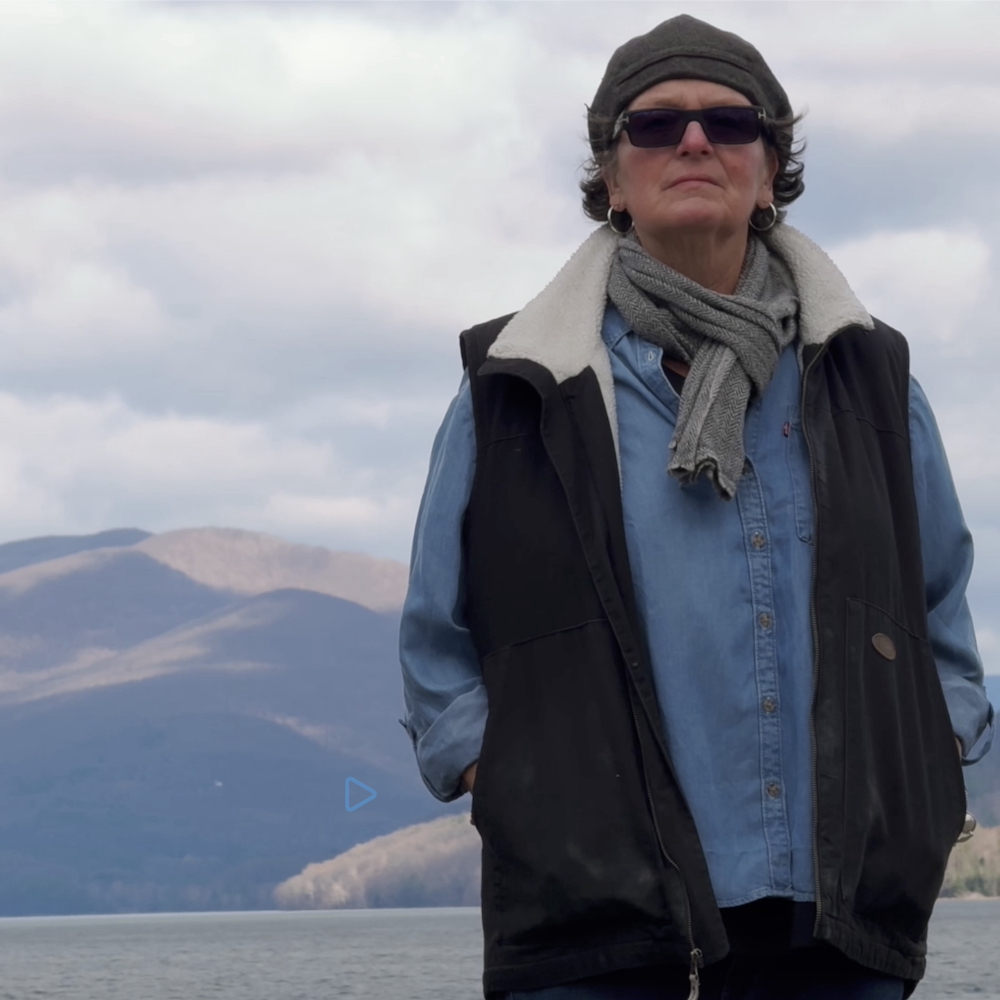
How does your work tell the story of your mother’s family being moved from the Esopus Valley for the Ashokan Reservoir?
Kate McGloughlin: In 2017, I all but devoted my life to a body of work called “Requiem for Ashokan” which explores the story of the building of the Ashokan Reservoir, which displaced my mother’s grandmother’s people from the Esopus Valley, so my fathers family, the Irish immigrants in New York City, could have clean drinking water. There’s a video on my website you can view to get a fuller telling of the story.
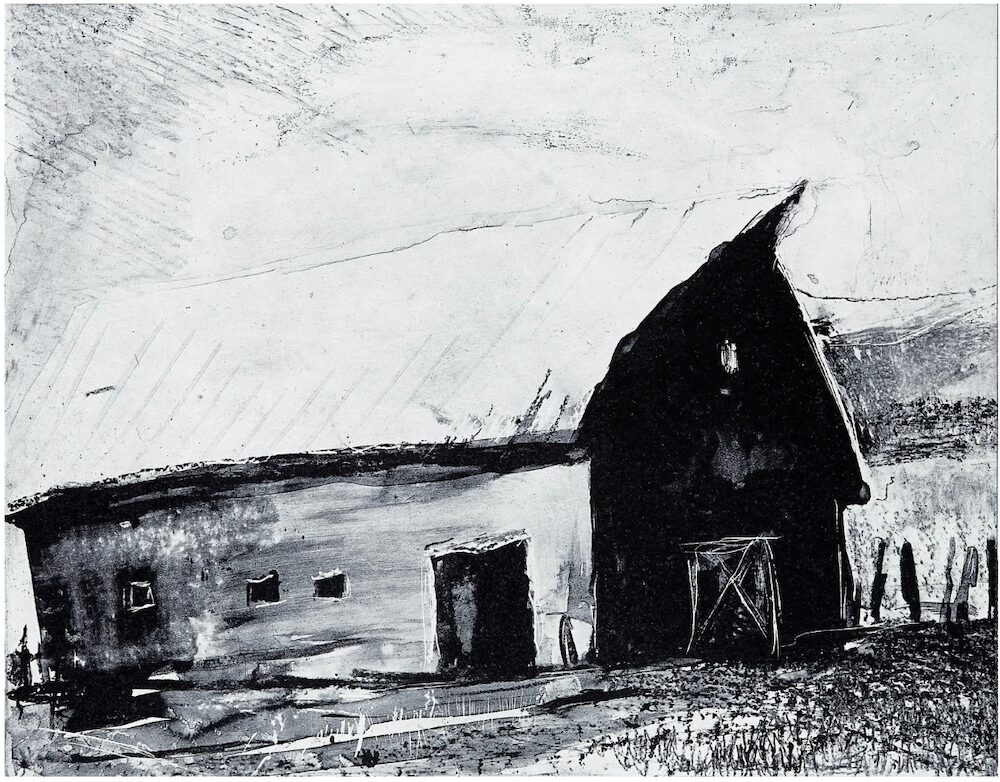
Barn Intaglio print by Kate McGloughlin.
You described yourself as being “glued to a place.” How does your connection to your specific acre of land differ from your connection to the Ashokan Reservoir?
Kate McGloughlin: I live on the former dairy farm that has been in my family since the Revolutionary War. We were outside the “take line” of the Ashokan Reservoir, so I hold tools that my ancestors held, I tend gardens they tended. I have the same view of High Point Mountain that they had—with the Ashokan, I paint not only the astounding beauty that everyone experiences when they are there, but I also know that each brush stroke is imbued with the grief that loss carries with it. I understand that the landscape has witnessed the tearing of the community and the destruction of land, and that goes into the work, too.
As a sixth-generation landscape painter in the lineage of John Carlson and Birge Harrison, how do you balance following their established “books” with doing things “your way”?
Kate McGloughlin: Being part of that lineage is like having a benevolent father figure looking over my shoulder encouraging me to remember the truth of a place. Each of the artists I mentioned had an ethos, a methodology, and an understanding of their craft. They also, the way I understand it, knew the absolute importance of personal vision and expression. If you look at an iconic example of each of their paintings, you wouldn’t see their relationship to each other, in terms of style or emphasis. But you WOULD notice a pursuit of excellence, and an understanding of the language of art. That’s what I hold fast to—our common language of line, shape, color, value, texture, and our chasing and using the principles of design to enhance everything we do.
-
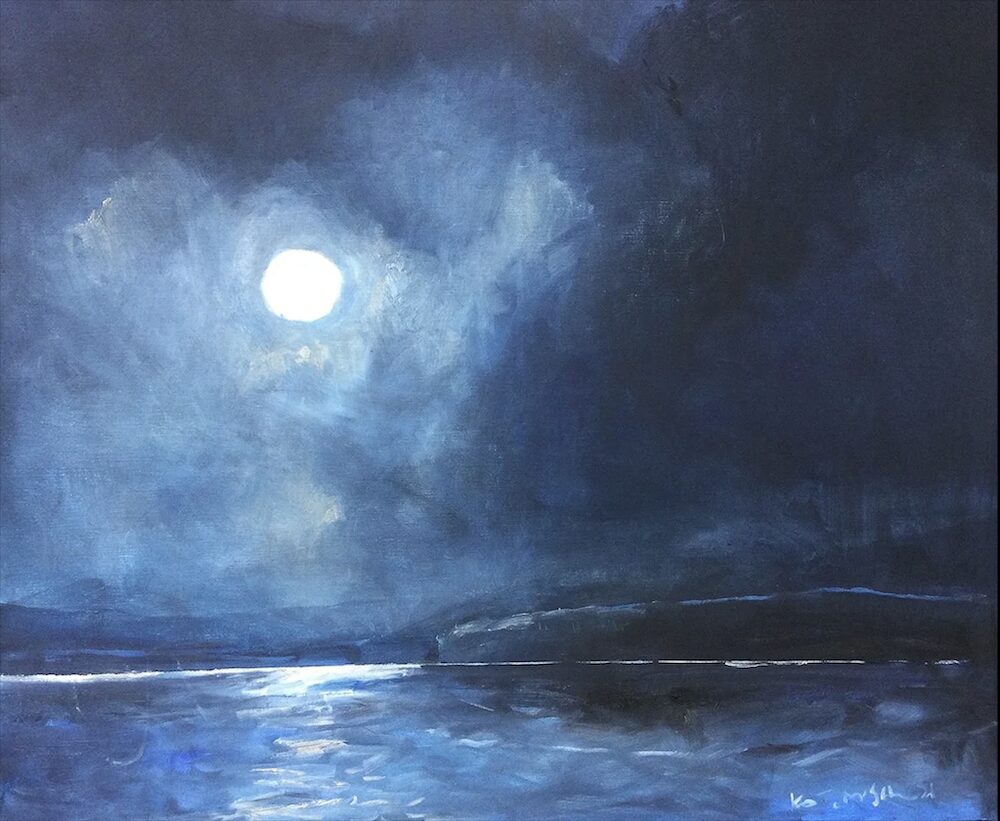
- Ashokan Reservoir. Oil on Canvas by Kate McGloughlin.
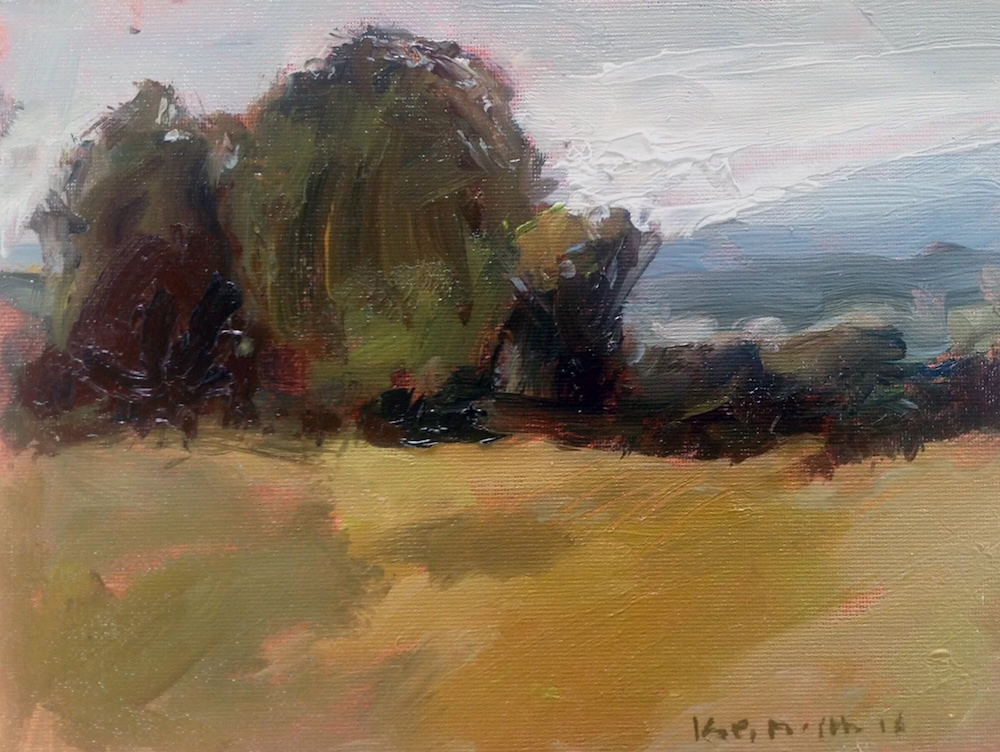
Hudson Valley Landscape
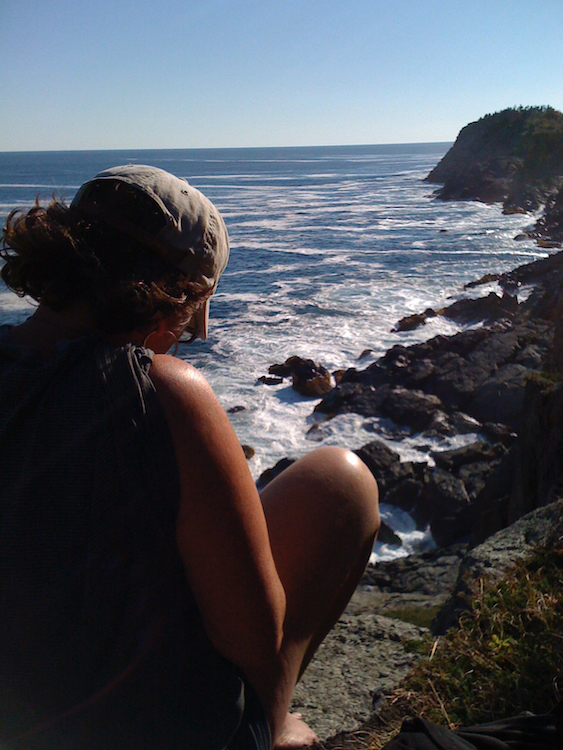
You’ve painted in extreme conditions, from freezing cliffs in Monhegan to gales in the British Isles; how do these physical challenges influence the final energy of a piece?
Kate McGloughlin: It’s all about the energy of the brush strokes and the simplicity of the composition. There is no time to dilly dally and get all detailed and worried about accuracy of contour. I’m out there trying to capture the essence of place, and that can make for a really good painting—less intellectual control, more reflective energy.
What are the specific technical difficulties you face when trying to refine woodcuts so that they resemble wood engravings?
Kate McGloughlin: If I don’t keep my tools sharp, I’m a goner. Dull tools, or being lazy and not taking a few minutes to keep them honed, can ruin a black for sure. Also using sub-standard wood to work on.
-
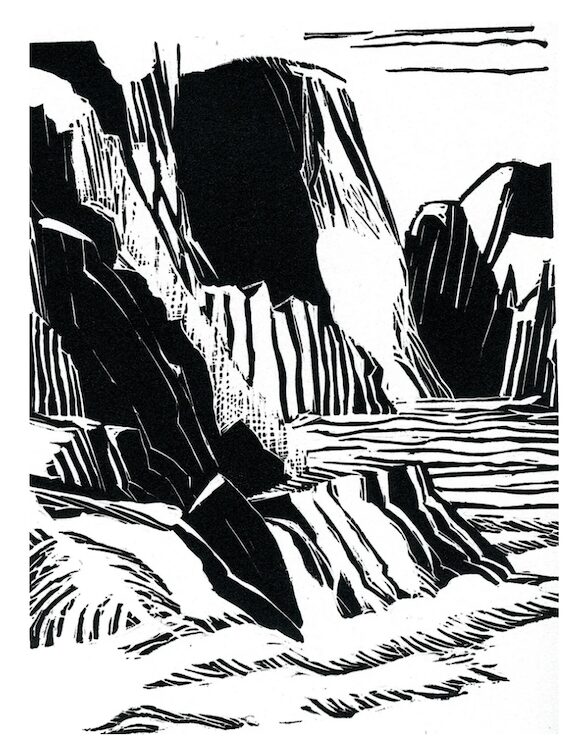
- High Tide, Lobster Point. Block Print: by Kate McGloughlin.
-
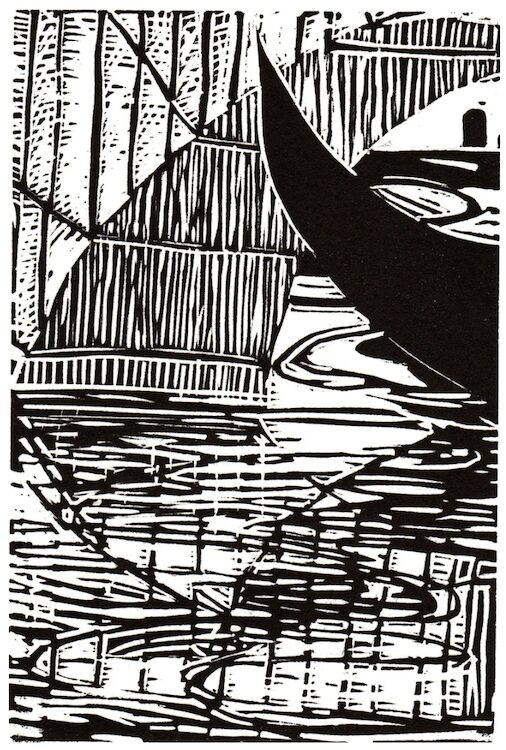
- Veni. Block print by Kate McGloughlin.
-
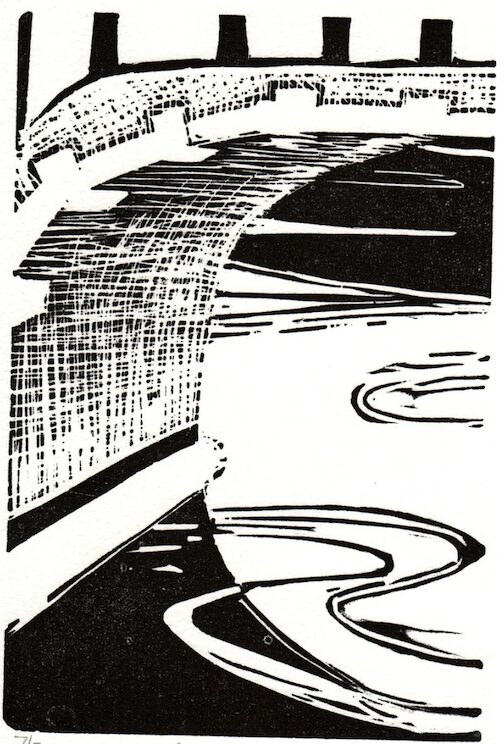
- Sotto-il-ponte. Block Print by Kate McGloughlin.
How does your process change when you are painting from memory compared to when you are painting en plein air with only minutes to catch the light?
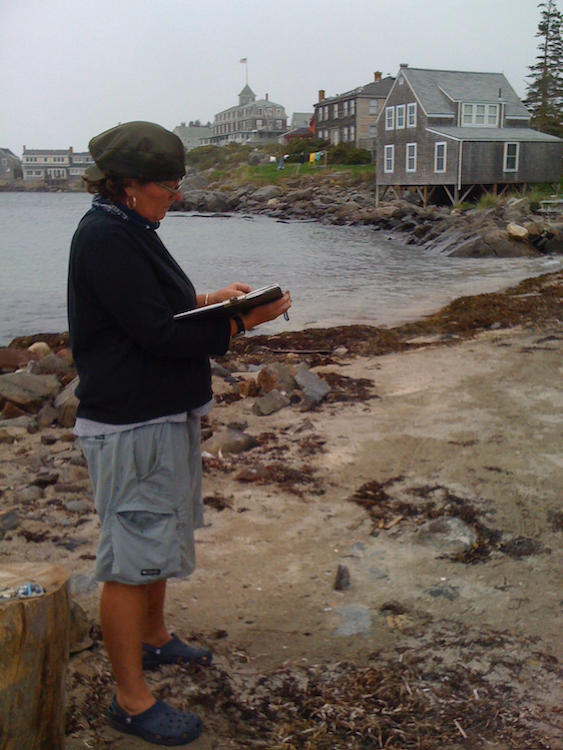
Kate McGloughlin: As mentioned, working from memory, I may be painting in a warm studio, with a perfect set of elements: controlled lighting, comfortable temperature, everything at hand or on a stationery palette. That’s time to use my head as well as my heart and hands. En plein air, you can only hope your hands remember what your head knows, and you rely on your impression and love of a place and your craft. It’s just completely different. My plein air work is much more brushy and paint heavy, bolder strokes, goopy paint, bugs, grass, brush hair, all of it might be evident in a finished piece. Easel memory paintings are much more refined.
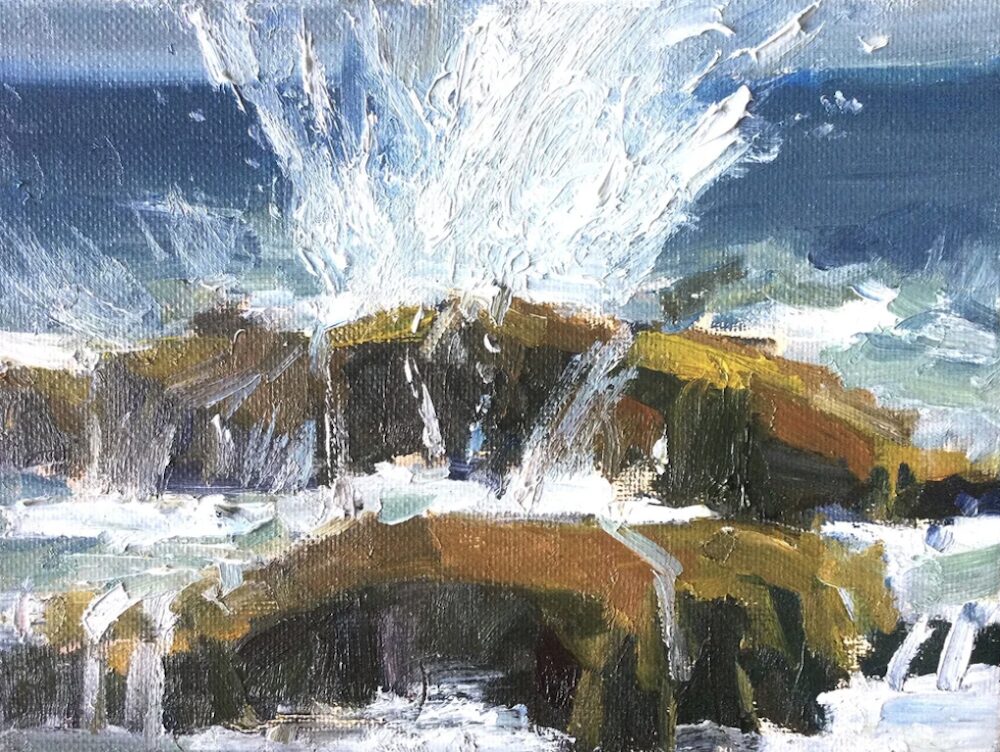
Monhegan Island, Maine by Kate McGoughlin
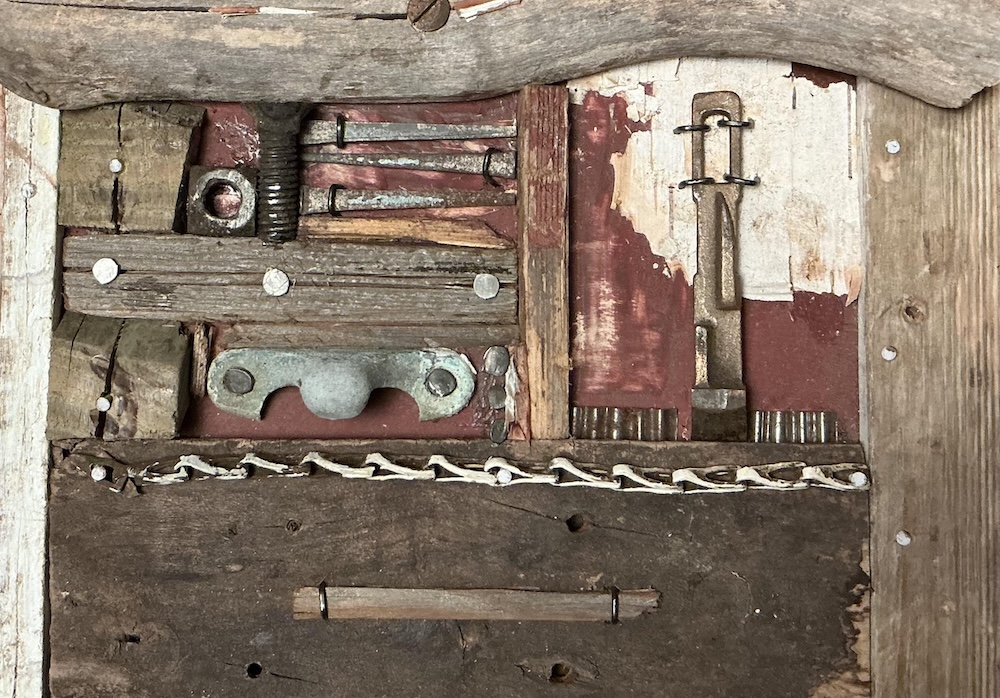
You mentioned using items that “came off of your family’s windows” while working; how does incorporating these physical remnants of the past affect your creative mindset?
Kate McGloughlin: Creating these family heritage assemblages has been such a joy. It’s very meditative and focused, sort of like working on a woodcut. And I feel like when I am touching these bits and pieces I bring my family into the studio with me. Touching these parts is like holding a rosary. It gets like that with this work. It’s so cool.
“I am about place. I am about my family. So I feel the least I can do is honor them in my work.” — Kate McGloughlin
What is one question you’re constantly asked?
Kate McGloughlin: The old, “How long did it take you to paint that?” question is the most frequent, and a quick second is “How is the art world treating you?”
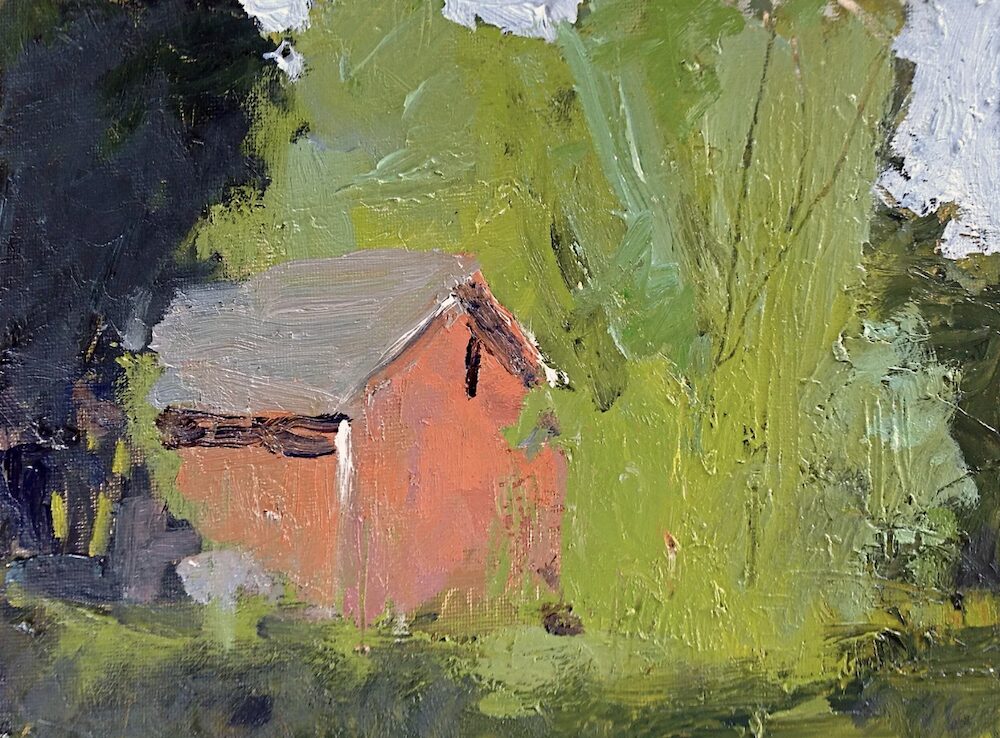
Sunlit Barn. Oil on Canvas by Kate McGloughlin.
What impact does your work have on your community?
Kate McGloughlin: Well, I suppose you’d have to ask my community for a real answer to that. But I’m humbled to know that the work I do, especially the Ashokan, has meant something to my friends and neighbors, as well as to my art family.
What local businesses do you rely on for your work?
The Woodstock School of Art, Catskill Art & Office Supply, Lucky’s Fuel Mart, Nana’s, H. Houst and Son, and Woodstock Hardware.
What are some of your favorite ways to unwind and unplug when you are not in the studio?
Kate McGloughlin: I play music with others and am an avid swimmer.
What is missing in the area that you wish we had?
Kate McGloughlin: An ocean. More heated lap lanes.
Who or what inspires you personally?
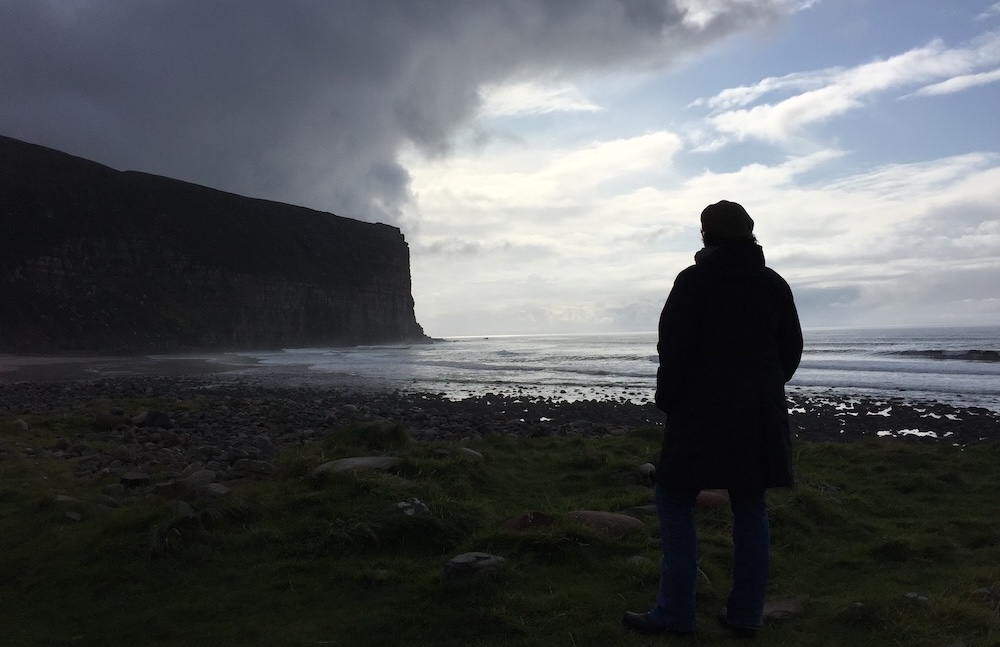
Kate McGloughlin: I am very connected to this landscape and its source, and I work at an art school. I also live with a creative, named Sarah, who continually inspires me to be a better person.
Tell us something about yourself people would be surprised to know.
Kate McGloughlin: I was born a twin and I was a Sunday school teacher for a million years.
If you could have one superpower what would it be?
Kate McGloughlin: What do you mean, “if”? Ha, kidding. I really wish I could effect more philanthropy, like smile at someone and make them want to give joyfully to things that need attention.
What is your current state of mind?
Kate McGloughlin: I am at peace. I’m so friggin’ lucky.
+ + +
Photos courtesy of Kate McGloughlin and littlebitcreates
Follow/Connect with Kate McGloughlin via her Website | Instagram
+ + +
See more of our IN THE STUDIO WITH… Artist Series:
In the Studio with Artist Elizabeth Keithline
In the Studio with Bespoke Ceramicist R.A. Pesce
In the Studio with Experiential Artist Amanda Russo Rubman
In the Studio with Multimedia Artist David McIntyre
In the Studio With Artist Olaf Breuning: Laughter in the Dark
In the Studio with Contemporary Artist Andrew Lyght
In the Studio with Mixed Media Artist Yoko Izu
In the Studio with Abstract Artist Joel Longenecker
In the Studio with Horticulturist and Encaustic Artist Allyson Levy
In the Studio with Multidimensional Artist David Kucera
In the Studio with Contemporary Expressionist Ransome
In the Studio with Trailblazing Artist Ginnie Gardiner
In the Studio with Abstract Painter Donald Elder
In the Studio with Sculptor Iain Machell
In the Studio with Artist + Material Collaborator Ian McMahon
In the Studio with Painter + Gallery Owner Jenn Hicks
In the Studio with Multi-Modal Artist Millicent Young
+ + +
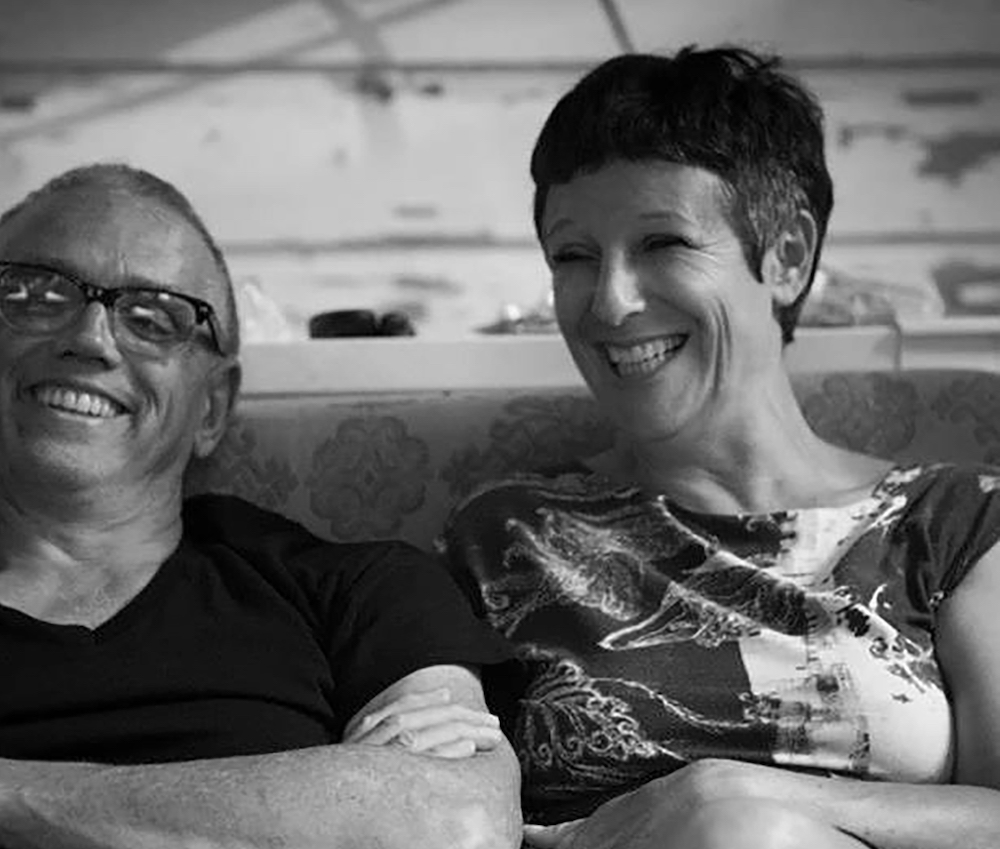
This ongoing artist series was produced in collaboration with Richard Hall and Mimi Young, founders of littlebitcreates.
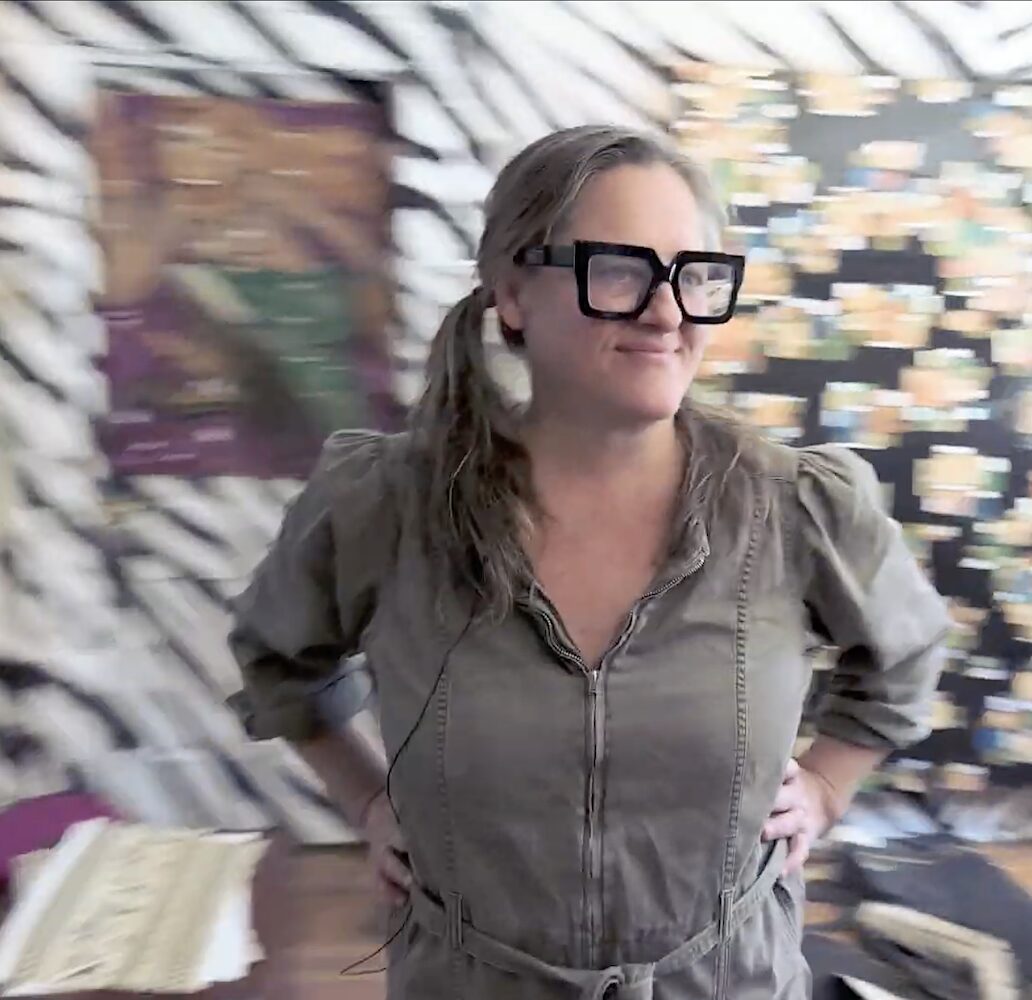
Richard Hall and Mimi Young are the creative forces behind littlebitcreates. They produce a variety of projects, including in-depth artist profiles, event-specific promotional videos, and music videos. Their approach is exciting, innovative, and contemporary. In addition to their client work, Hall and Young collaborate with other creatives to create multidimensional, neo-surreal videos as part of a noncommercial venture. Littlebitcreates emerged from the extensive knowledge Hall and Young gained over 30 years of experience in photo shoots and multimedia art. They exclusively shoot all of their videos on iPhones, appreciating the distinctive aesthetic it produces and the comfort it offers their subjects in front of the camera.
Follow + Connect with littlebitcreates via Website | Vimeo | @littlebitcreates
Related Posts
Write a Comment
You must be logged in to post a comment.