


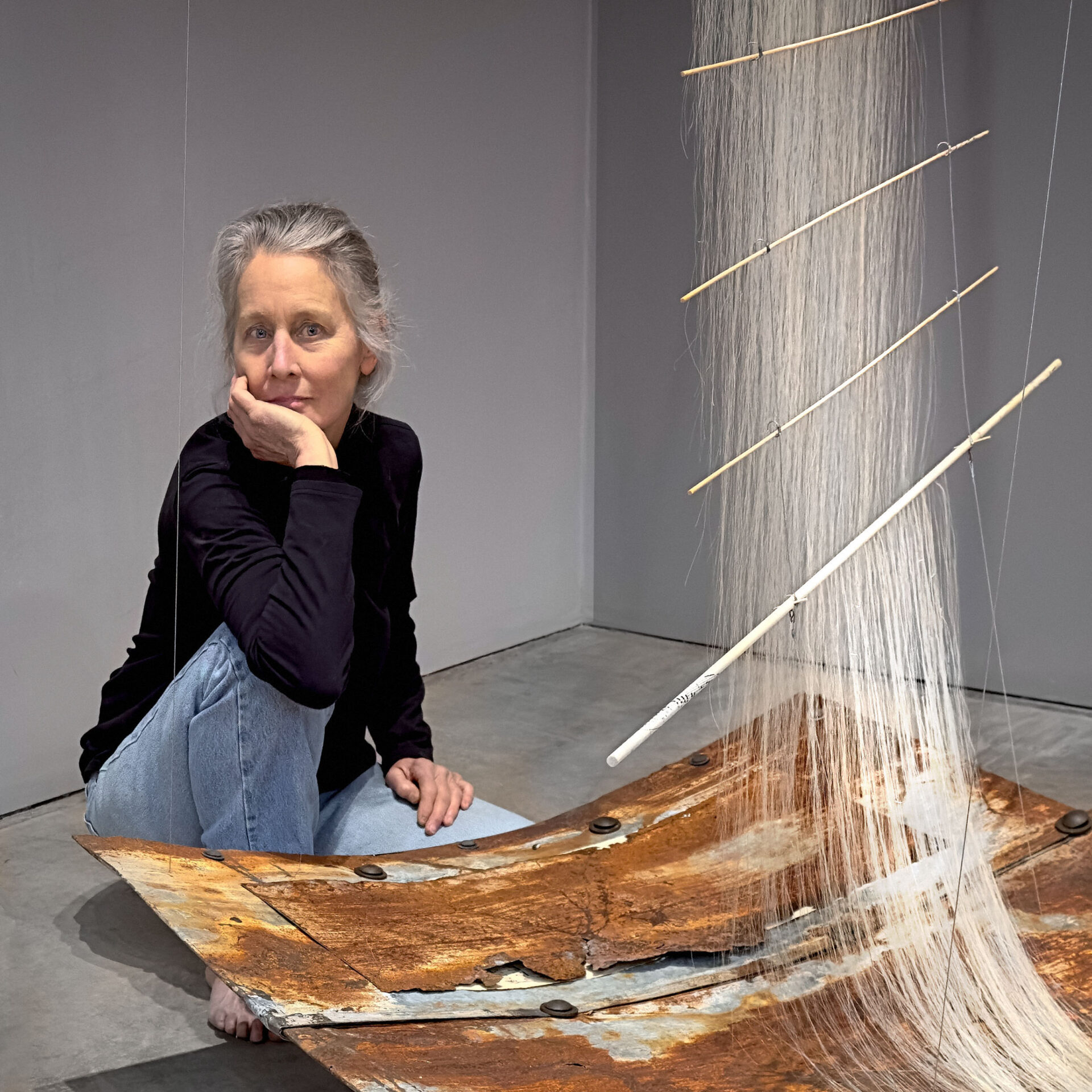
In the Studio with Multimodal Artist Millicent Young
Next up in our “In the Studio with” series, we’re thrilled to visit Hudson Valley-based multimodal artist, Millicent Young. In an era defined by ecological breakdown, conflict, and the severing of our ties to place and memory, artist Millicent Young creates work that evokes a contemplative response — where collective history merges with personal narrative, and stillness meets urgent agency. Millicent creates quiet, evocative forms, offering space for emergence, a quiet paradigm for healing and transformation.
Millicent’s work comprises immersive encounters with grief, beauty, and the profound incomprehensibility of our current moment. Her practice lies at the intersection of the natural processes of formation, trauma healing, and spiritual ecology. Her multimedia installations integrate kinetic, tactile, and light-based materials with field recordings of place, sound, and verse.
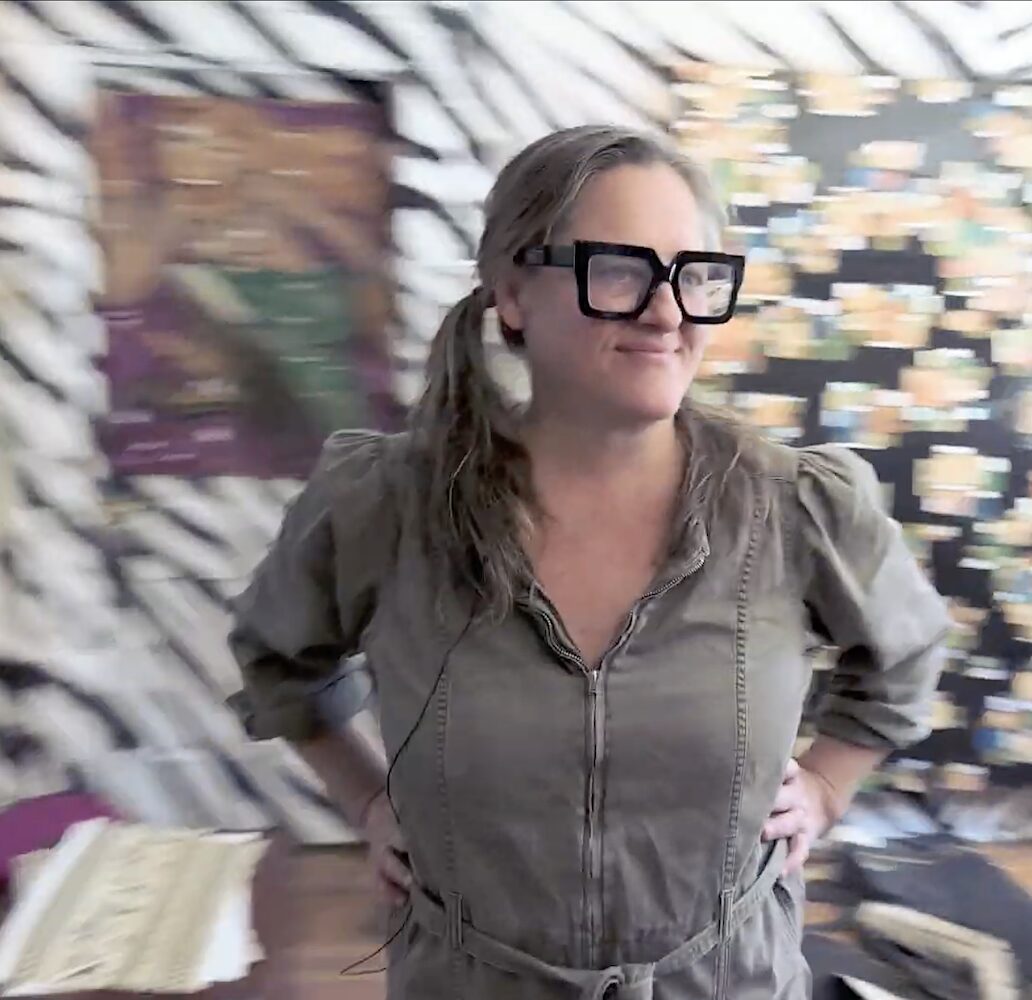
Learn more about Millicent Young and her work in our exclusive interview below. Video by littlebitcreates.
INSIDE+OUT: Where are you originally from and how did you wind up in the Hudson Valley?
Millicent Young: I was born in New York City in the late 1950’s and I spent a lot of time in the Hudson Valley with family friends on their farm. And also on Cape Cod with my extended family, who were year-round residents. Later, I understood how soul-crushing the city felt as a child, and how I had developed ways of counteracting that. One of them was riding my bicycle all over Manhattan and wandering around Central Park, as many parts of it were dilapidated and creepy during that time. I looked for lost animals and grew houseplants, turning my bedroom into a jungle. The art rooms at school and the museums and churches I frequented were sanctuaries. My father’s family was from Georgia and the Southwest, and my mother, born in Vancouver, British Columbia, was a cultural anthropologist and former student of Margaret Mead. As a child, I accompanied my mother on some of her fieldwork, and as a young adult, I traveled solo from Turkey to Ireland. So all places to me were ecosystems of nature and culture that captured my sense of wonder and curiosity about differences and commonalities, about what binds us and separates us.
In the late 70s, after dropping out of college, I ended up living in Virginia in the foothills of the Blue Ridge Mountains. That gradually became the home place I never experienced as a child. It became the place where my language as an artist matured, where I could live affordably and simply as an artist. It was also a place where my family reconvened, where I lived intentionally supporting my parents in their wish to die at home, and where I stewarded our farmland. After my parents died and my elder sister made it impossible for me to continue living in the tenant house and studio I had built, I left the Piedmont for a place to begin again. I arrived in the Hudson Valley in 2017.
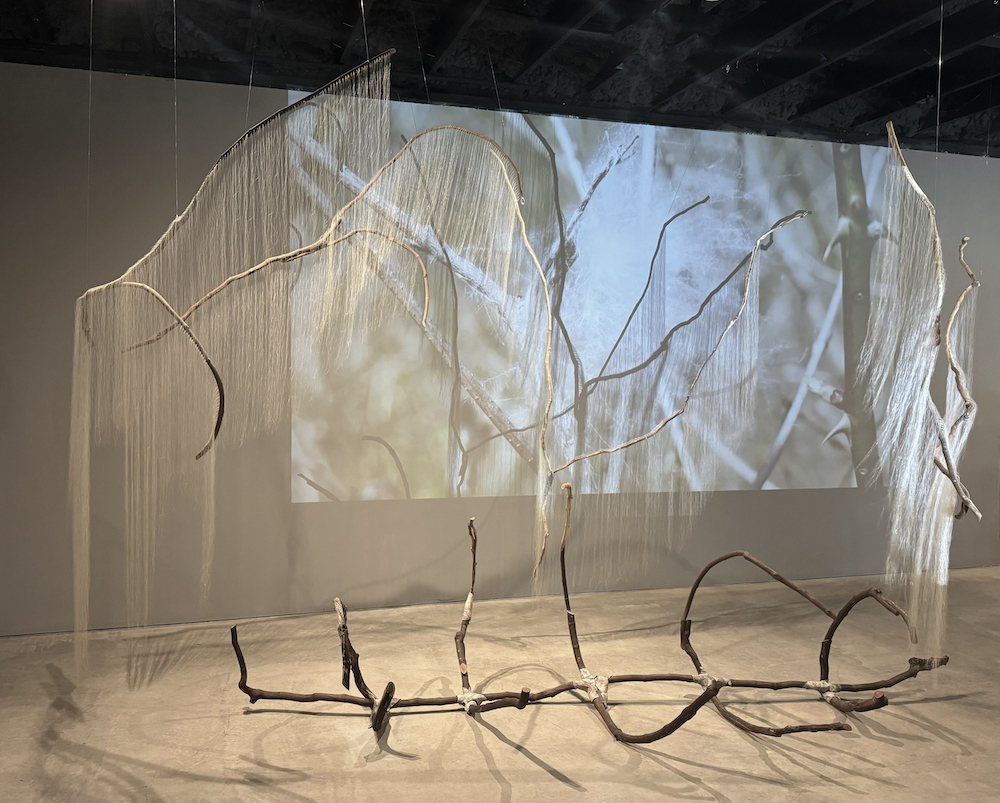
Sutra for Belonging I Millicent Young
What inspired you to become an artist and what was your journey?
Making things was a way I made sense of the world as a child. I grew up in a troubled household with a violent elder sibling and a lot of secrets, so making things was a way for me to make form from chaos and imagine something other than what there was; where I developed a sense of agency; where things worked out okay.
Making things out of whatever was at hand in our apartment or outdoors was my main means of play. I was never told to stop, but mostly I was given no direction. There was a sense of quiet feralness about me. I was also a scholarship student at the Dalton School. My teachers nurtured my imagination. My love of art, poetry, music, and the earth sciences flourished there. I received an amazing education. I was turned off by BFA programs, and deciding to study studio art in a liberal arts setting turned out to be a disaster, though the courses in art history and film were formative. The next decade was a long, circuitous, and mostly difficult path. I got on a lot of different trains in order to get to where I needed to be. All the different things I did, the risks I took, the books I read, the ways I earned a wage, the places I lived, the things I survived – have somehow informed my work as an artist. Even though I received an MFA when I was in my 30’s after I had already been a studio artist and educator for a decade or so, I see myself as a self-taught artist.
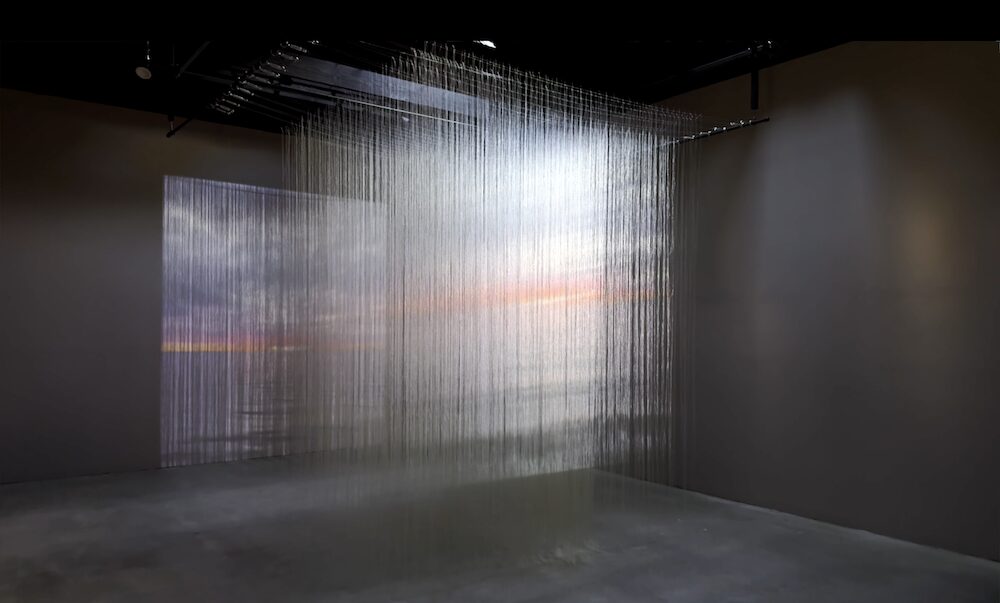
Holding Light Sutra I Millicent Young
Tell us more about your upcoming exhibition.
Millicent Young: Holding Light Sutra, my multimedia installation integrating handmade sculpture and AV projections, will open May 9 in Newburgh and run through July 12. This project is being presented by STRONGROOM in collaboration with Safe Harbors of the Hudson Ann Street Gallery at Safe Harbors of the Hudson’s Ritz Theater Stagehouse, 100 Ann Street in Newburgh. There will be a performance on May 31 with dancer Jeni Ascosi and musician Timothy Hill and a documentary screening and closing reception on July 12. This project is made possible by the New York State Council on the Arts with the support of the Office of the Governor, the New York State Legislature and sponsored by Glasshouse Project. Additional support provided by the Henry Moore Foundation, and an Arts and Culture Project regrant from NYSCA, administered by Arts Mid-Hudson.
(your) body is a porous language: (our) embodied connections is a group exhibition currently at Ann Street Gallery in Newburgh, curated by Nuyorican poet and performance artist Edwin Torres, where I have six works on view that explore language, meaning, and fragmentation, some of which are featured in the INSIDE+OUT video (link video). I am very excited to be in conversation with this rich gathering of multidisciplinary artists. The exhibition runs through May 31. New works also featured in the INSIDE+OUT video (link to video) will be included in a group exhibition curated by Marisa Espe for Opalka Gallery at Russel Sage College in Albany, opening in September.
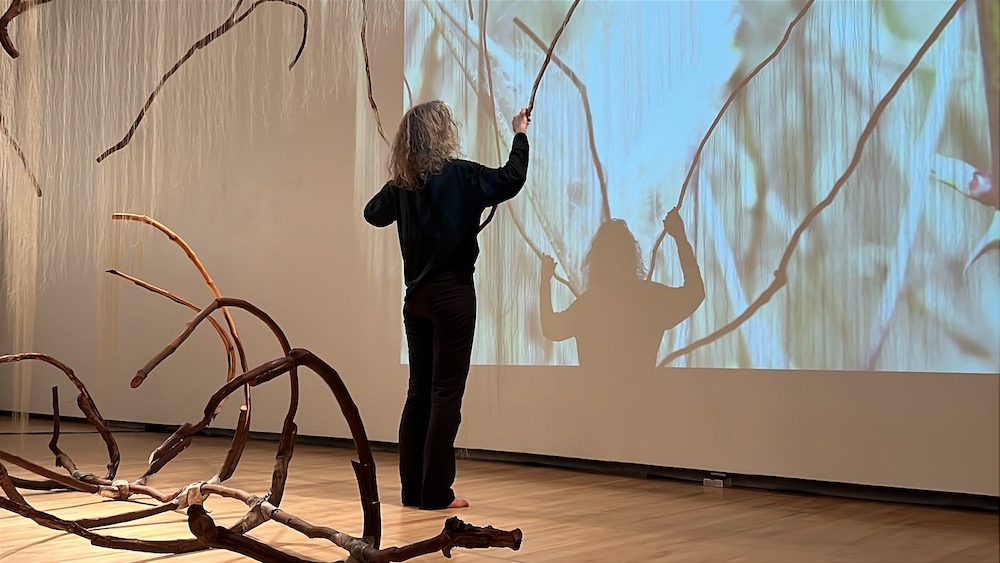
Sutra for Belonging Performance I Millicent Young
You approach your work and create as a sensory experience, utilizing light, sound, touch, and movement to transform materials into new, living forms. How did this way of working emerge for you?
It is all part of my long, deliberate dedication to crafting a visual language against fragmentation, a visual spatial language that transposes theories and principles of transformation and emergent process into art forms, what I call “Forms for a New Mythology.” I am a long-time student of transformation – telluric, ecosystemic, political, spiritual, social, conflict/trauma, somatic – and healing. My MFA thesis title was ‘Possibilities of Transforming the Paradigm.’ So I’ve been following this thread for a long time in different forms. My visual language has always been rooted first in sensoriality and the power of material. Sensory information enters us immediately, bypassing the linear mind and arriving unmitigated at the heart mind, as that felt and unnamable experience. One responsibility as an artist is to honor the intimacy and power of that pathway.
You have worked with salvaged wood and steel window frames for many years. How does the specific history or “story” of a salvaged frame influence the final artwork you create?
Millicent Young: The specific autobiographies of the materials I’ve salvaged are less important to the artworks than their role as framers or place holders for larger associations and narratives. I’ve long used architectural remnants such as structural steel, timbers, and metal roofing, and I’ve also built architectonic forms using clay. It’s more relevant that they are fragments of a built world and that I alter the salvaged materials in search of a new form. It’s clear they already carry a story. They are marked, scarred, disembodied. But they are also referents for and inseparable from the human story. Who once looked out of that window, and where? And therefore, what window/lens/frame am I, the viewer, seeing through now?
-
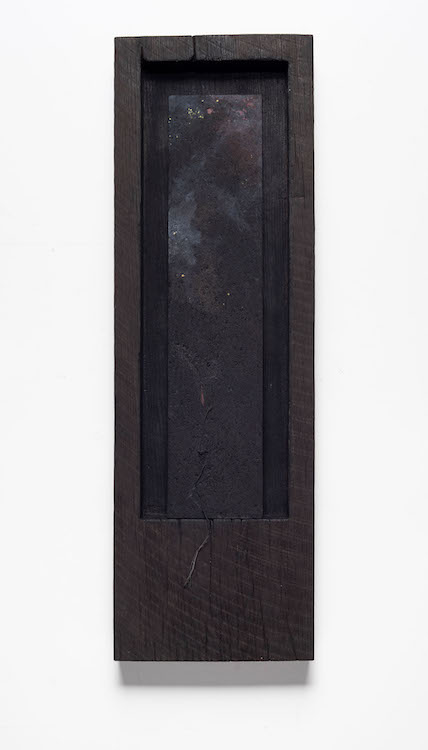
- Psalm for Listening: Umbilicus I Millicent Young
-
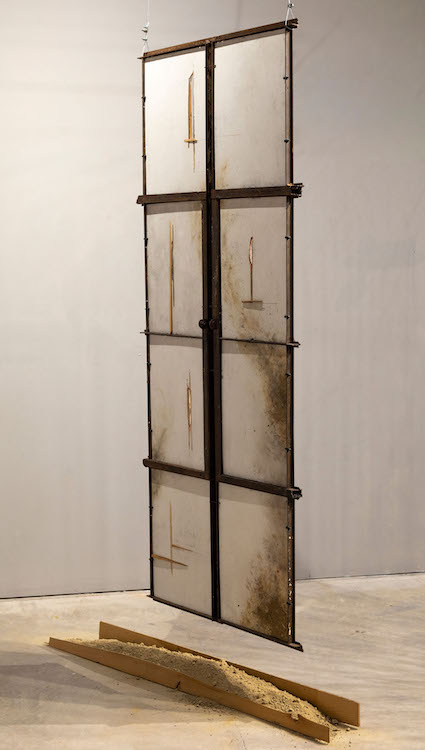
- No Buildings Were Left Standing I Millicent Young
-
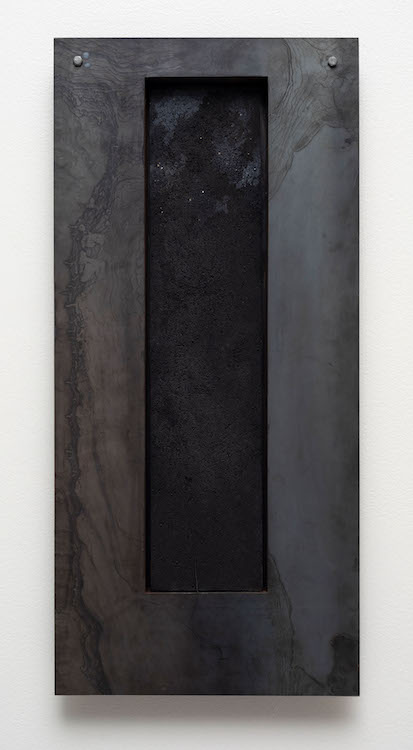
- To Enter into What is There I Millicent Young
You describe gardening as a form of four-dimensional sculpting due to “inexorable change over time.” Can you share a specific instance where a problem you were facing in the studio was resolved while you were “out on the land”
Millicent Young: I’m answering the question above and the one below as one. See below.
You have spoken about the importance of distracting the mind so ideas can enter in a “fearless” way. Do you have specific rituals or physical tasks, beyond gardening, that help you reach this state of mental openness?
Millicent Young: There are so many – it’s just so important to know when to step away – whether that’s studio work in terms of research, design, or process, or the writing involved in outreach and communicating about what I do and why. Walking on nearby Mohonk Mountain, tending my gardens, laboring on the land where I live, being in the sensorium of the outdoors, the sounds and smells and light, breathing, sweating, trying to stay warm – all of these almost immediately release me into a spacious field of awareness, an uncompressed state where things can enter – for instance as a solution, an insight, a relationship, a horizon, a conclusion, a question. Non-waking reality is also a vast place from which things arrive. Often, I will wake with an utterly clear knowing of what to do/make/write, a different experience than waking with a dream. All of these practices I’m mentioning for me render time malleable and I think that malleability invites the unknown in, befriends it.
-
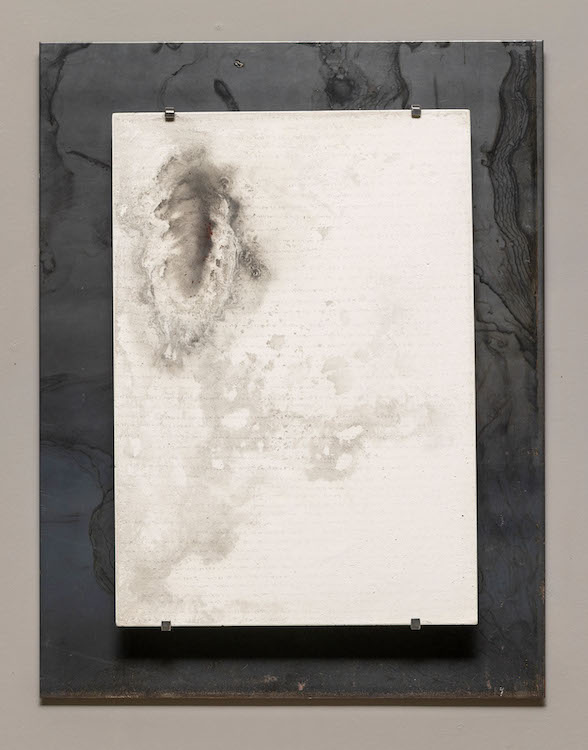
- Inaudible ii I Millicent Young
-
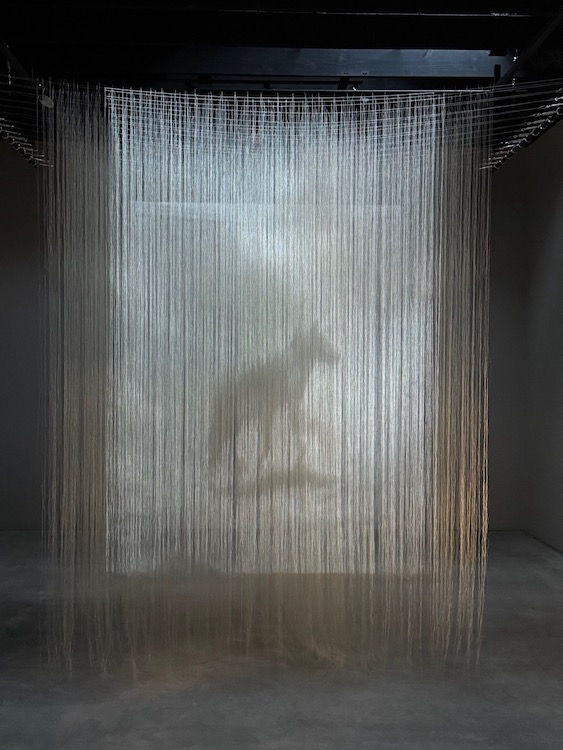
- Holding Light Sutra I Millicent Young
How much do you consider the viewer’s physical presence as a “material” when designing your kinetic works?
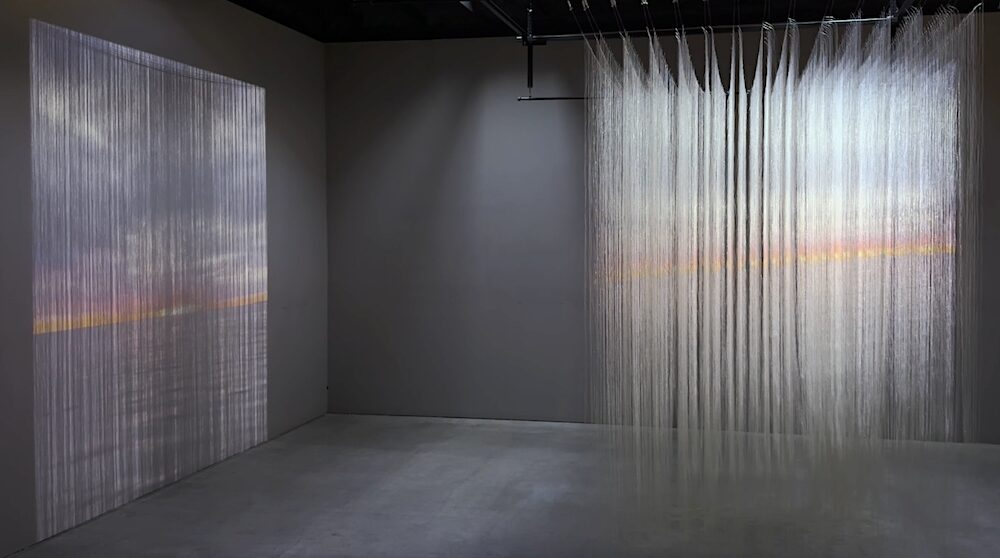
Millicent Young: The viewer’s physical presence as material is present in several ways for me. In my current multimedia work, the play of onlookers’ shadows is a formal and conceptual element. Yet also, the viewer completes the conversation as listener, the artwork being the language of the conversation. The viewer is witness, as in bearing witness, emotionally and sensorially and in that regard being willing to possibly be changed. I understand this as a part of a social contract between artist and audience. My immersive work, Holding Light Sutra that will open May 9 in Newburgh is a spatial-tactile-ephemeral-timebased installation in a formerly dilapidated space. I first encountered the space when pigeons were living there and puddles of water shimmered on the ground. I conceived of the installation as a sort of a sacred site, a momentary sanctuary and possibility in the great unraveling we are in the midst of. Like the way I would wander into a church in the city as a child and experience something I had no name for.
What are the most challenging and the most rewarding aspects of being an artist?
Millicent Young: Most tiring and least rewarding: the incessant self-advocacy and legitimizing of what we do. Most meaningful: being true to an ethos and practice of imagination, vulnerability, possibility, and creativity; participating in the urgent discourse of our time; creating beauty and fostering imagination in a time of collapse.
What makes living in the Hudson Valley special for you?
Millicent Young: Living in the foothills of the Shawangunks, the same spine of stone as my beloved Blue Ridge Mountains of my former home of Virginia. I love the long Spring and Fall and the deep winters here.
What local businesses do you rely on for your work?
Millicent Young: Universal Metal Fabricators in Kingston. A&M Hardware in Accord.
Peak Engineering in Stone Ridge. Herzog’s Building Supply in Kingston. Rhinebeck Art Supply in New Paltz.
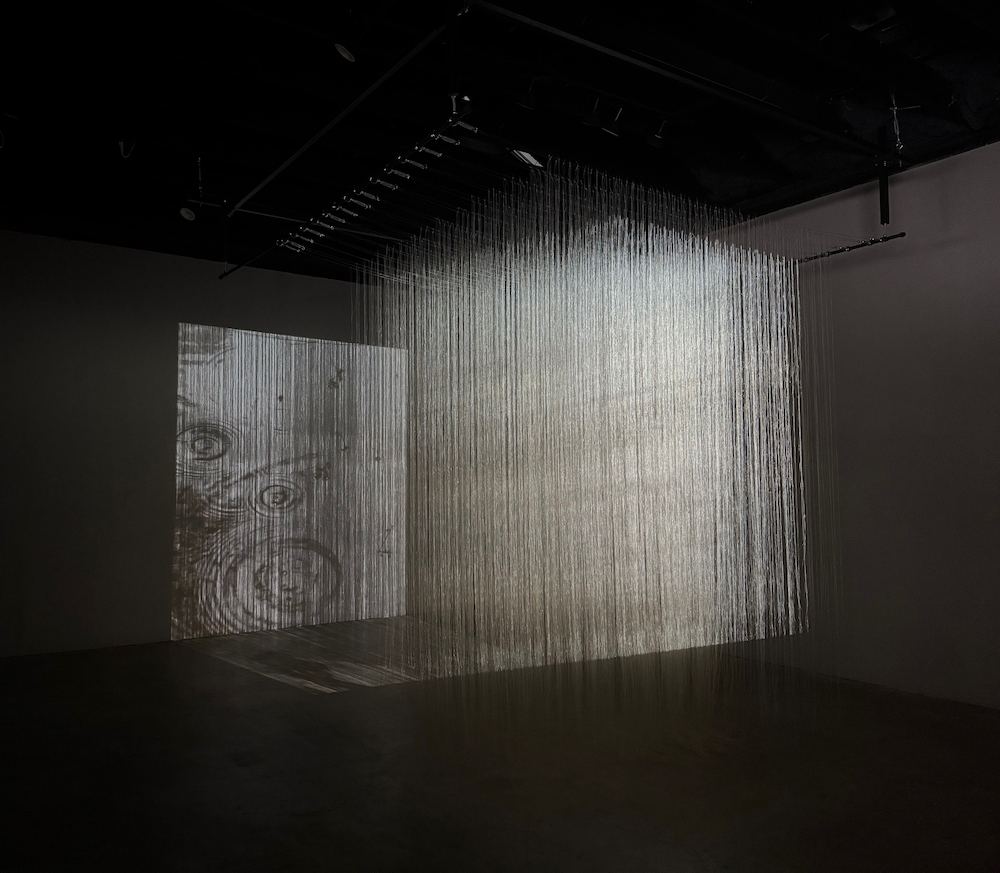
Holding Light Sutra I Millicent Young.
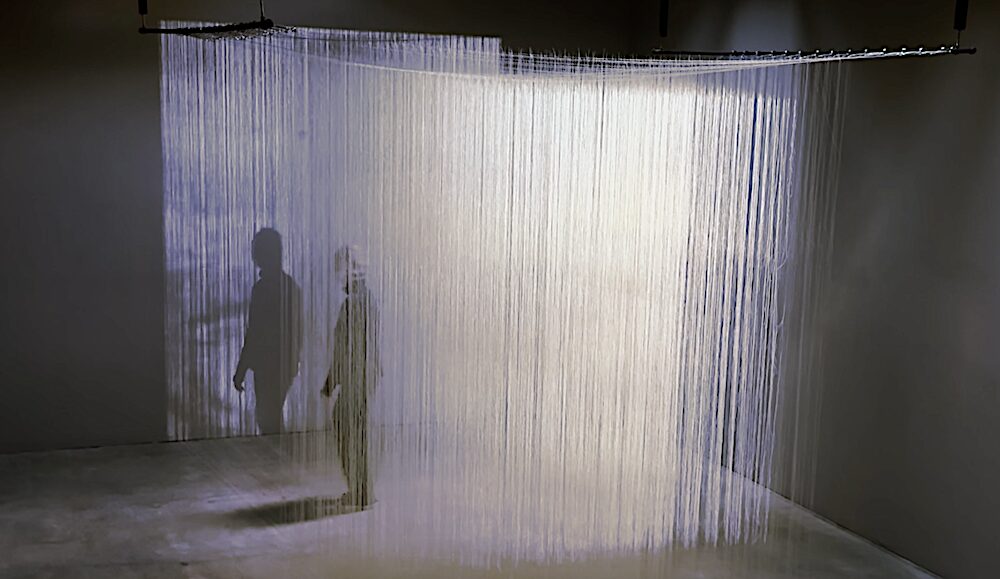
What is missing in the area that you wish we had?
Millicent Young: Wild, untrammeled land.
Who or what inspires you personally?
Millicent Young: Animals, ecosystems, dawn, the horizon, the ocean, earth cycles; post-humanist philosophy (Báyò Akómoláfé, Vanessa Andreotti), On-Being podcast; ecophilosophy (David Abram, Joanna Macy, Terry Tempest Williams, Barry Lopez); Archbishop Desmond Tutu.
Tell us something about yourself people would be surprised to know.
Millicent Young: I am a survivor of violence.
What do you do for fun? What are some of your favorite ways to unwind and unplug when you are not in the studio or garden?
Millicent Young: My life is so fulfilling and uplifting as it is. My most difficult times have passed and the challenges I encounter do not feel difficult. I guess what I do most to ‘unplug’ (though as committed to countering fragmentation as I am, the language of disconnecting from my life is hard for me to use!) is to gaze and listen in the place where I live, out the window or outdoors, to read, and to visit with friends near and far.
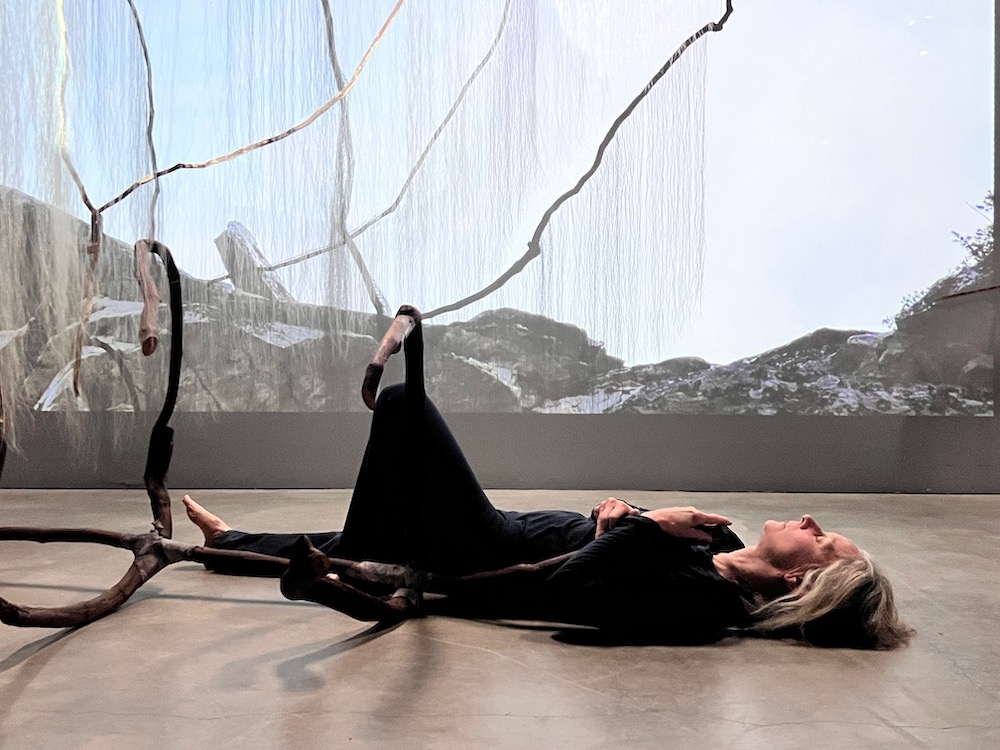
Sutra for Belonging Performance I Millicent Young
If you could have one superpower what would it be?
Millicent Young: To love bigger.
What is your current state of mind?
Millicent Young: Inspired, in awe, and rooted in the long view.
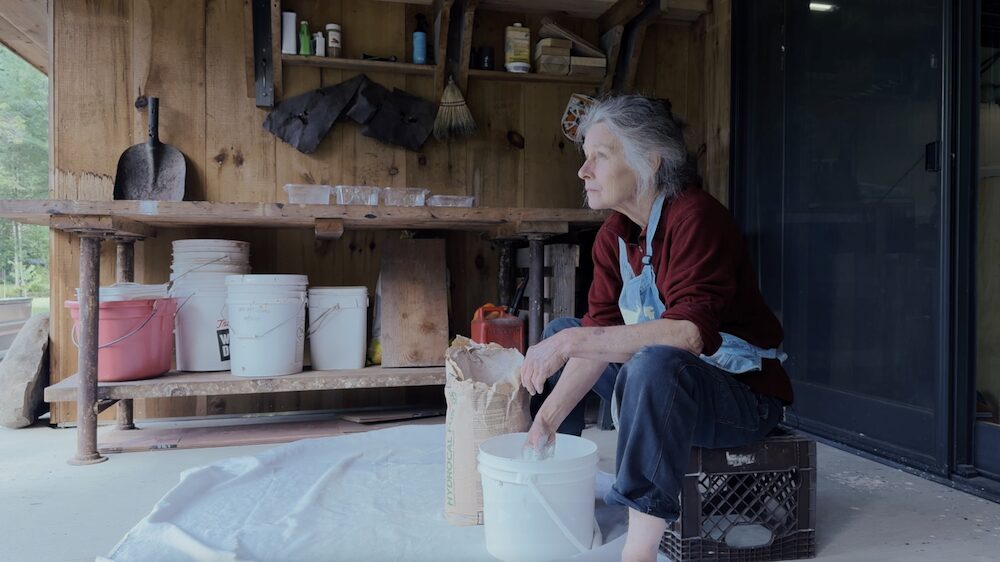
Follow/Connect with Millicent Young via Website | Instagram
Photos: Holding Light Sutra photos courtesy of Millicent Young | Photos of other artworks by @Pete-Mauney | Artist portrait by Katvan Studio | and Lilttlebitcreates
+ + +
Millicent Young Upcoming Exhibition
HOLDING LIGHT SUTRA
An immersive installation integrating sculpture, sound, and two video projections.
Opens Saturday, May 9 – Sunday, July 12, 2026
Safe Harbors’ Ritz Theater Stagehouse
100 Ann Street, Newburgh, NY 12550
Reception + Artist Discussion
Saturday, May 9, 4:00–7:00 pm
+++
See more of our IN THE STUDIO WITH… Artist Series:
In the Studio with Artist Elizabeth Keithline
In the Studio with Bespoke Ceramicist R.A. Pesce
In the Studio with Experiential Artist Amanda Russo Rubman
In the Studio with Multimedia Artist David McIntyre
In the Studio With Artist Olaf Breuning: Laughter in the Dark
In the Studio with Contemporary Artist Andrew Lyght
In the Studio with Mixed Media Artist Yoko Izu
In the Studio with Abstract Artist Joel Longenecker
In the Studio with Horticulturist and Encaustic Artist Allyson Levy
In the Studio with Multidimensional Artist David Kucera
In the Studio with Contemporary Expressionist Ransome
In the Studio with Trailblazing Artist Ginnie Gardiner
In the Studio with Abstract Painter Donald Elder
In the Studio with Sculptor Iain Machell
In the Studio with Artist + Material Collaborator Ian McMahon
In the Studio with Painter + Gallery Owner Jenn Hicks
+ + +
This ongoing artist series was produced in collaboration with Richard Hall and Mimi Young, founders of littlebitcreates.
Richard Hall and Mimi Young are the creative forces behind littlebitcreates. They produce a variety of projects, including in-depth artist profiles, event-specific promotional videos, and music videos. Their approach is exciting, innovative, and contemporary. In addition to their client work, Hall and Young collaborate with other creatives to create multidimensional, neo-surreal videos as part of a noncommercial venture. Littlebitcreates emerged from the extensive knowledge Hall and Young gained over 30 years of experience in photo shoots and multimedia art. They exclusively shoot all of their videos on iPhones, appreciating the distinctive aesthetic it produces and the comfort it offers their subjects in front of the camera.
Follow + Connect with littlebitcreates via Website | Vimeo | @littlebitcreates
Related Posts
Write a Comment
You must be logged in to post a comment.