


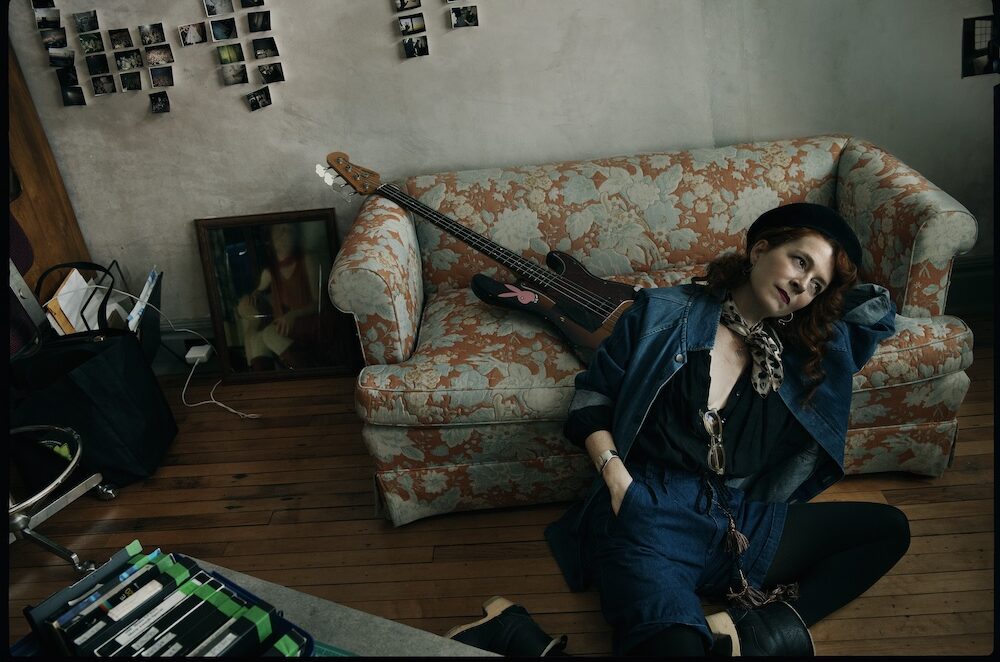
Hudson’s “Grunge Cinderella” Melissa Auf der Maur Pens A Memoir
The Hudson Valley is home to many rock stars, but none may be as talented with the pen as Melissa Auf der Maur.
These days, Auf der Maur is best known as the co-founder, with her filmmaker husband Tony Stone, of Basilica Hudson. Housed in a solar-powered, reclaimed 1880s industrial factory, this nonprofit multidisciplinary art center hosts genre-pushing music festivals, large-scale marketplace events, film screenings, art exhibits, an artist-in-residence program, and community gatherings focused on social activism and environmental causes.
But before Melissa settled in Hudson, she was a musician at the white-hot center of the turbulent rock world of the ’90s. For five drama-filled years, she was the flame-haired bassist (and “good girl“ foil) to the mercurial Courtney Love in the band Hole. Following her time with Love, Melissa was a member of her good friend Billy Corgan’s Smashing Pumpkins and a solo artist with two major label releases under her belt.
Now, Auf der Maur has chronicled her adventures in the rock world and her bohemian upbringing in her native Montreal in a new bestseller, Even the Good Girls Cry: A ’90s Rock Memoir (DaCapo Press). Auf der Maur’s book is proving to be one of the most acclaimed rock ‘n‘ roll memoirs in recent memory. She has received rave reviews in print outlets including The New York Times, Rolling Stone, The Guardian UK, and People. She has also appeared on television shows such as The Drew Barrymore Show and numerous podcasts, including The Magnificent Others with Billy Corgan. This writer had the pleasure of reviewing this “excellent book“ by this “wise observer and skilled writer“ for PopMatters. As stated in the piece, Auf der Maur’s book is not the formulaic “Behind the Music“ fame-to-fall-to-redemption template. It is something that “has gone beyond clichés to offer a truly compelling perspective on the bohemian community of ’90s rock, which was about much more than just music.“ The memoir is also a showcase of another of Melissa’s talents: her photography, featured throughout the book.
Auf der Maur recently left her nest in the Hudson Valley to embark on a whirlwind series of readings that are taking her to multiple cities in the USA, the United Kingdom, and Continental Europe.
INSIDE+OUT Upstate NY caught up with her mid-flight as she was returning from an event in London, one that reunited her with her longtime friend and fellow musician, Courtney Love.
-
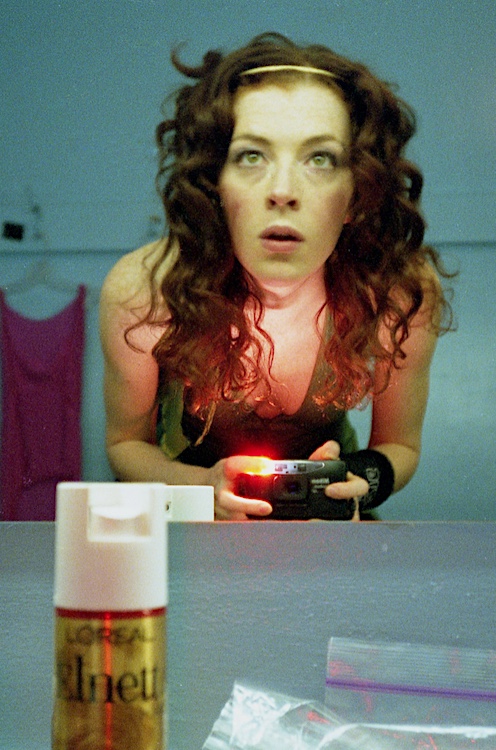
- Self-Portrait in Mirror, Backstage, USA, Spring 1998 © Melissa Auf der Maur
-
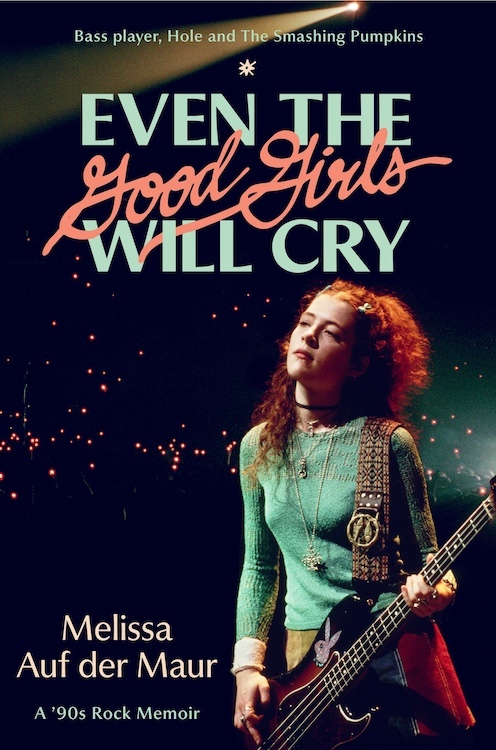
- Even The Good Girls Will Cry Book by Melissa Auf der Maur
INSIDE+OUT: You have written a wonderful memoir about not only your high-profile career but also the family and cultural scene in Montreal that nurtured your artistic aspirations. Why this book and why now?
Melissa Auf der Maur: My book is an ode to the decade that defined me and my generation, 1991-2001. Simply put, a quarter of a century seems like the perfect amount of time to have passed to offer a more objective perspective on the personal aspects of my story, and to contribute towards the cultural reflection on the last analog decade.
This is my report, contribution if you will, to the history books, about what our generation witnessed through the lens of a zeitgeist moment in counter/youth culture. It also serves as an apology to my daughter and her generation for how we saw predatory capitalist corruption take hold of our world, yet we could not stop it. Sorry. With this book, I am doing my best to raise awareness and help bring back a more analog life as a remedy for our current situation.
For me, the central figure in the book, the person who seemed to influence you the most, was your journalist/politician father, Nick. Tell us a little about him and how he was not only so important to your life but also to the city of your youth, Montreal.
Melissa Auf der Maur: You know a good daughter has done something special when her counterculture rabble-rouser father, from Montreal’s small but mighty local scene, comes close to eclipsing the biggest names in rock at the time, who are also prominently featured in my book – Courtney Love, Billy Corgan and Dave Grohl.
When my father walked into a room, he injected humor, healthy political, historical + philosophical combat and gave his all to an amazing people and city. A man of the people, fighting for the underdog via journalism, broadcasting and politics. He was one of a kind and primed me to be able to step out onto a global stage with a bunch of creative alpha maniacs! He died too young, and this book is a tribute to what he gave me: fire, commitment and storytelling.
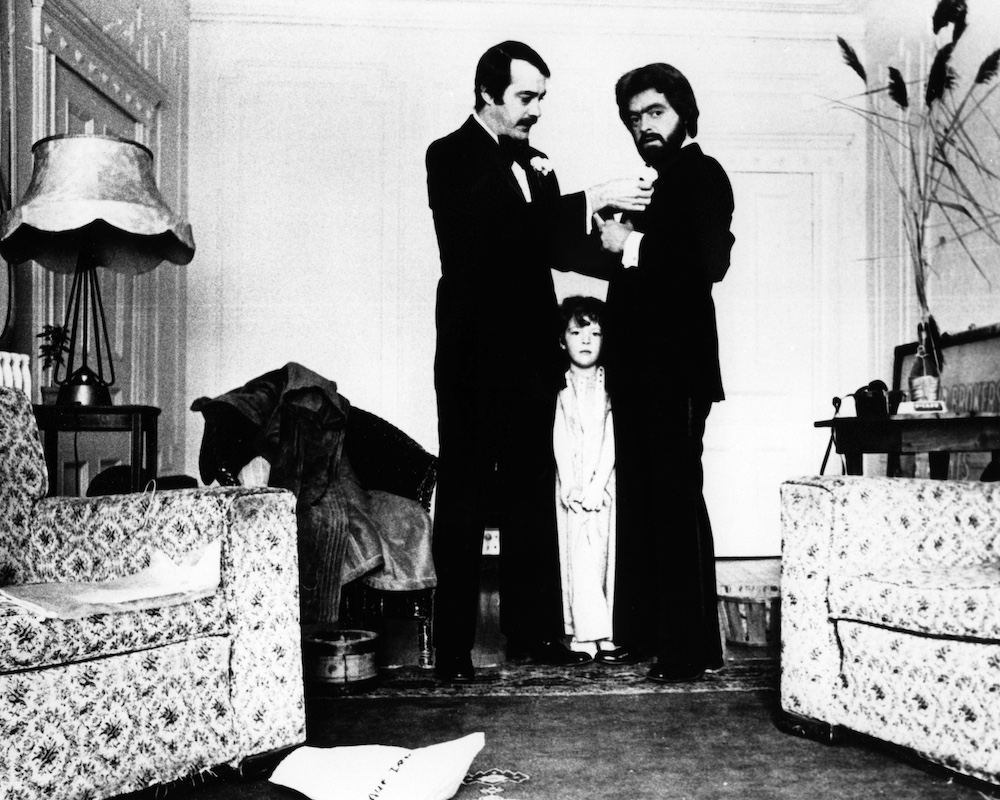
Nick & Melissa Auf der Maur, with best man on wedding day, 1977. Family archive
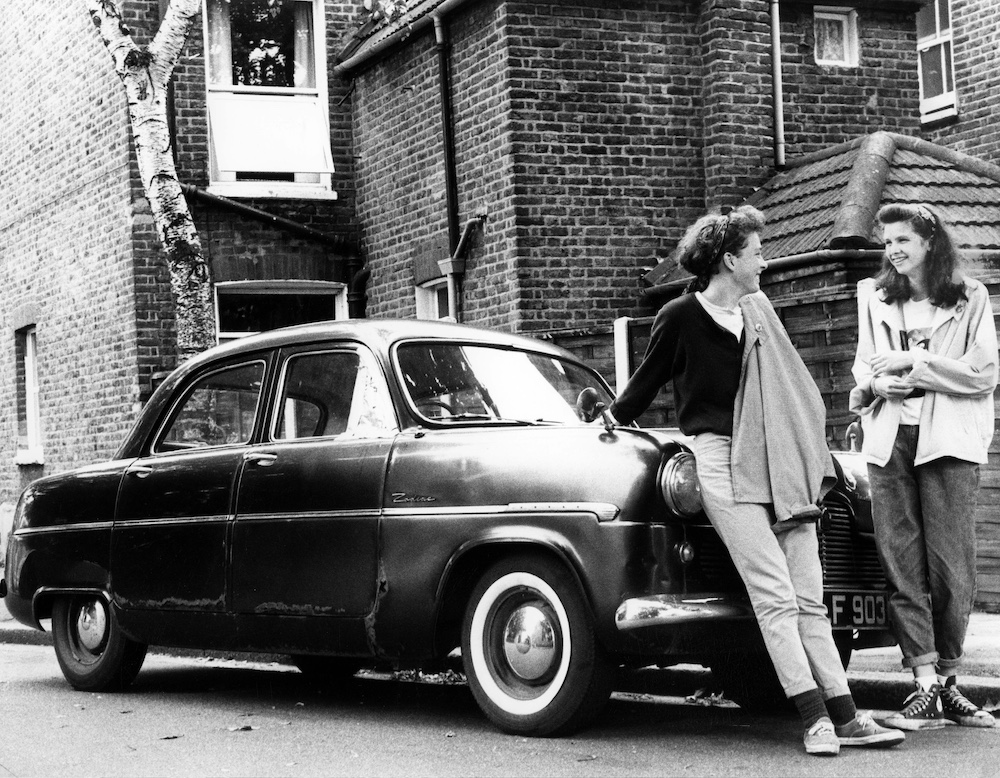
Melissa Auf der Maur & Alice Rosenbaum in London, 1986. Photo by Martin Rosenbaum. Family archive
Your beautiful “hippie mother,“ Linda, also greatly influenced you. She was a journalist, the first female rock DJ on Montreal radio, and a strong, independent feminist. How did she nurture your interest in music and prepare you for the nomadic life of a musician?
Melissa Auf der Maur: What my father offered me in healthy rebellion, standing your ground and fighting the good fight for independent values, my mother gave me in feminism, grace, and finding your place in your generation’s music scene.
My mother wanted to be a single mother and selectively chose my father, a lifelong bachelor, to have a child with… without telling him about my existence until I was two years old! My conception was a political act of fierce, independent feminism. She raised me on her record collection: the Rolling Stones, Leonard Cohen, and Frank Zappa. They were the fairy tales that enchanted me as she played their songs and told me about her encounters as a journalist interviewing them all. I was going to find my guys, only I mashed myself up as the woman who loved the bands, to be the woman also in the band.
You have called the Smashing Pumpkins’ Billy Corgan your “spiritual f*cking cowboy,“ the person who has had the most influence on your life aside from your parents. How did he change the direction of your life?
Melissa Auf der Maur: It all began when the sounds of a then-unknown Chicago band illuminated my insides. Seeing Billy’s band play for $1 in the summer of 1991, in front of 20 people, was the night that changed my life. I was so struck by the band’s power that after my roommate’s boyfriend threw a beer bottle at Billy for having a “fucking attitude,“ I introduced myself to the band after the show and apologized on behalf of my city, Montreal. I was a shy but polite girl, and that act changed my life forever.
We became pen pals, and I was inspired by them to pick up the bass. My local tiny band, Tinker, opened for them a few years later, when they returned as a huge band, as stars. He watched me play, and when Hole’s bass player, Kristen, died, Courtney called on her trusted friend to help find a replacement. Melissa from Montreal was his primary recommendation. There is a thread of fairy tale and Grunge Cinderella in my story that I clearly weave for readers, but Billy is most definitely my fairy godmother who turns pumpkins into chariots and beer bottles into glass slippers. A jealous ex-boyfriend came up with the term you reference in your question for Billy, and it stuck.
For those unfamiliar, your first love was photography. How did you combine this with your passion for music, especially with the works included in this book?
Melissa Auf der Maur: The internal world meets the external world. They are a counterbalance to my duality as a woman who dances on the precipice between ether and Earth. I always have, and these two tools have served me in my desire to express both sides.
My passion for both came to light together in my teens. One was how I interfaced with the outside world, as a cassette DJ, a ticket girl at a punk club, and eventually by learning to play bass with the older boys in the scene. The other was me alone in a darkroom, taking agency over how I wanted to see the world and see myself in it. I studied photography at university while learning music through life, late at night. They merge beautifully, and when I got the one-in-a-million opportunity to join global touring acts in the ’90s, I turned my camera on the scene, obsessively documenting what I felt was history in the making: the last analog decade. Now, in 2026, at the age of 54, I am fortunate enough to reemerge as an author and photographer to tell the tale, so I can join the dialogue of NOW and HOW THE FUCK DID WE GET HERE?!
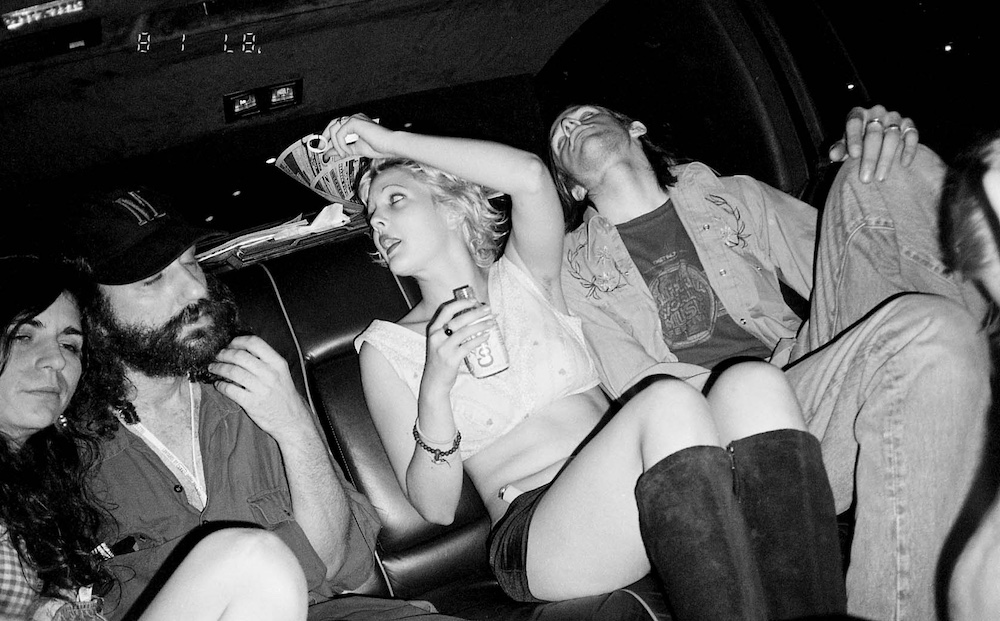
Hal Willner, Drew Barrymore, and friends in a limo, NYC, 1995. © Melissa Auf der Maur
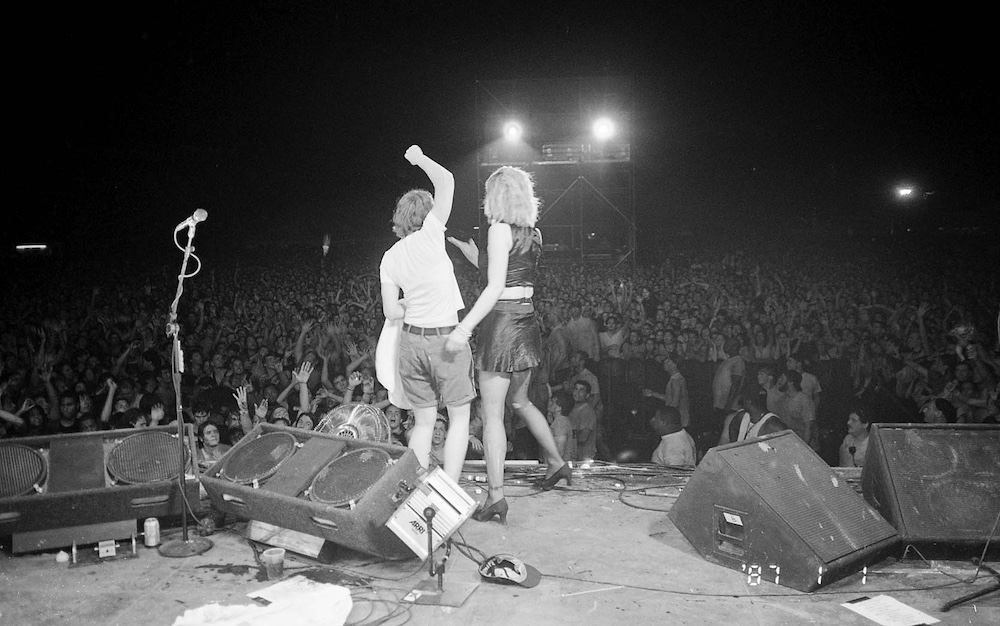
Patty Schemel and Courtney Love onstage, 1995. © Melissa Auf der Maur
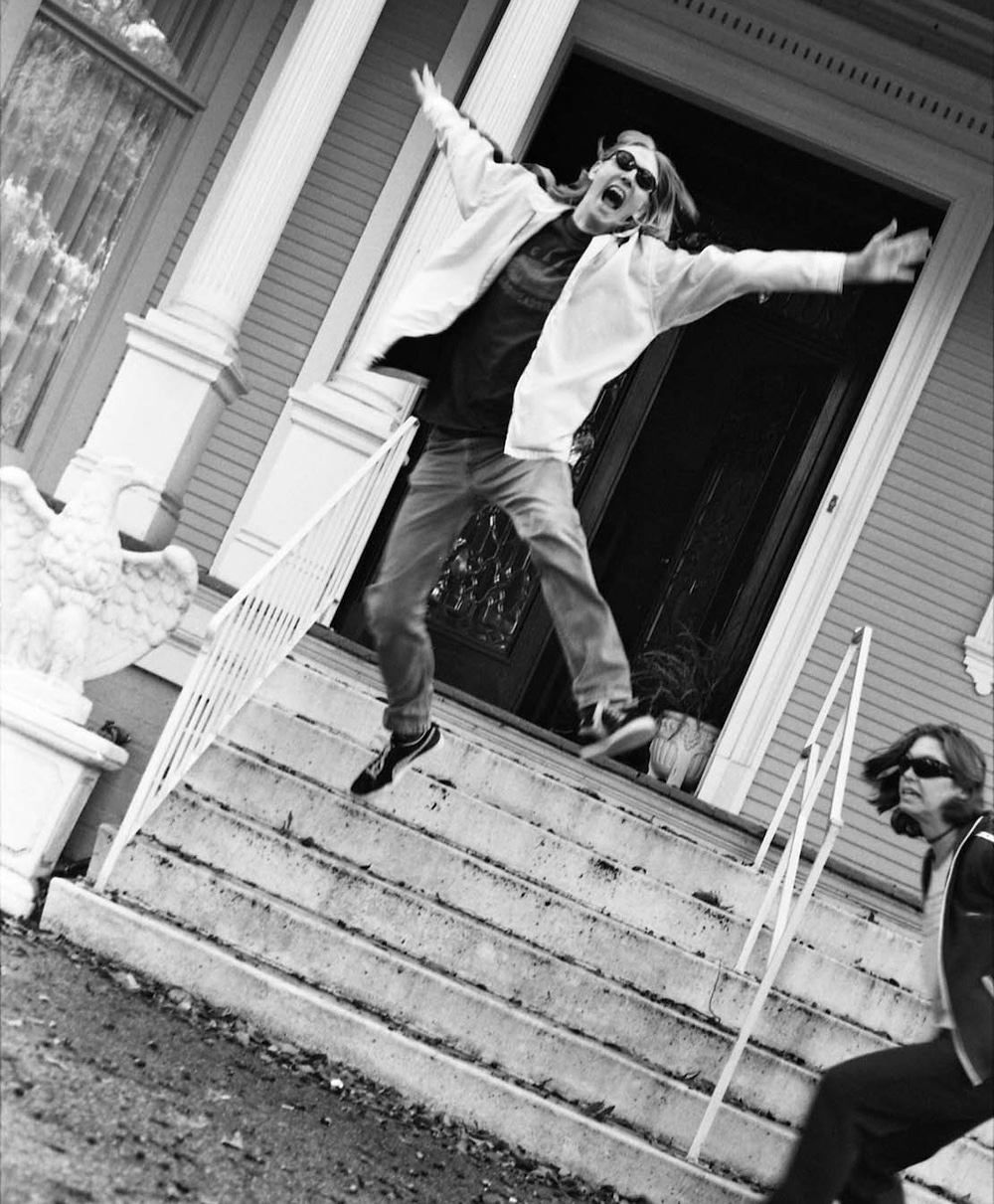
Eric Erlandson, and Patty Schemel on front steps of haunted house, New Orleans, 1996. © Melissa Auf der Maur
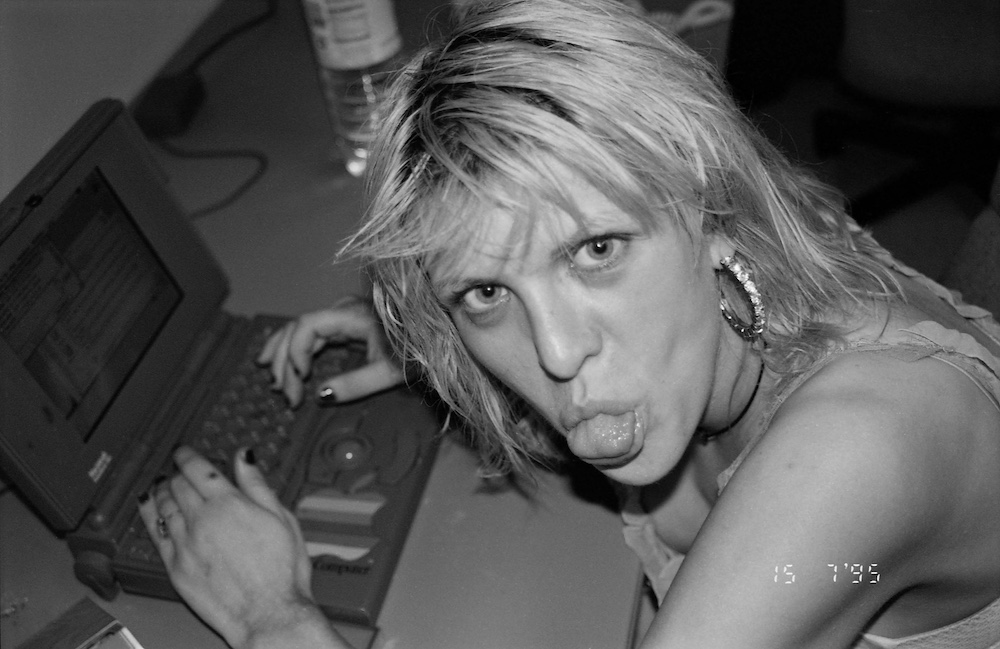
Courtney Love at a laptop, backstage, Lollapalooza, 1995. © Melissa Auf der Maur
Obviously, your experience with Courtney Love and Hole is a key part of the book. It was a relationship that had its difficulties, especially when you joined her band after her husband’s and her bass player’s deaths, during a time when addiction was widespread. But she is also someone you greatly respect. How do you think people misunderstand her? And how did she respond to the book?
Melissa Auf der Maur: I witnessed with front row seats, a woman-hating/fearing, misogynistic world, their desire to burn her at the stake.
Blame her, a single mother with a drug addiction, for her husband’s death when it was he who abandoned her and their daughter? They elevate him to “Jesus of Our Generation“ status and claim he wrote her songs. They criticize her for being ambitious, challenging, and strong – look at the women in music today. Notice the similarities? She was ahead of her time and paved the way for women in music today. I am not saying she is a perfect specimen (but who is!), but she is a frontline feminist warrior of our generation. She paid her dues and a high price for all of that. It’s time to reframe her and our band’s place in the history of music and women, not just in honor of the band Hole’s legacy, but for ALL WOMEN.
You are also open about your views on love and sex in this book, from your first puppy love as a school kid, Rufus Wainwright, to your two-year relationship with Dave Grohl. Was this something you were hesitant to share?
Melissa Auf der Maur: Honestly, I wasn’t hesitant to share any of it. My father’s dramatic death was far more intimidating to write about and share. Matters of the heart are sweet and easy for me. I wrote this coming-of-age story for future women, and if there is one thing that remains true, the history of women (especially our biology and sensuality) has been mostly written by men, for men. So, I needed to contribute, for the record. Orgasms are not spoken about enough, just as death. Sex and death make the world go round!
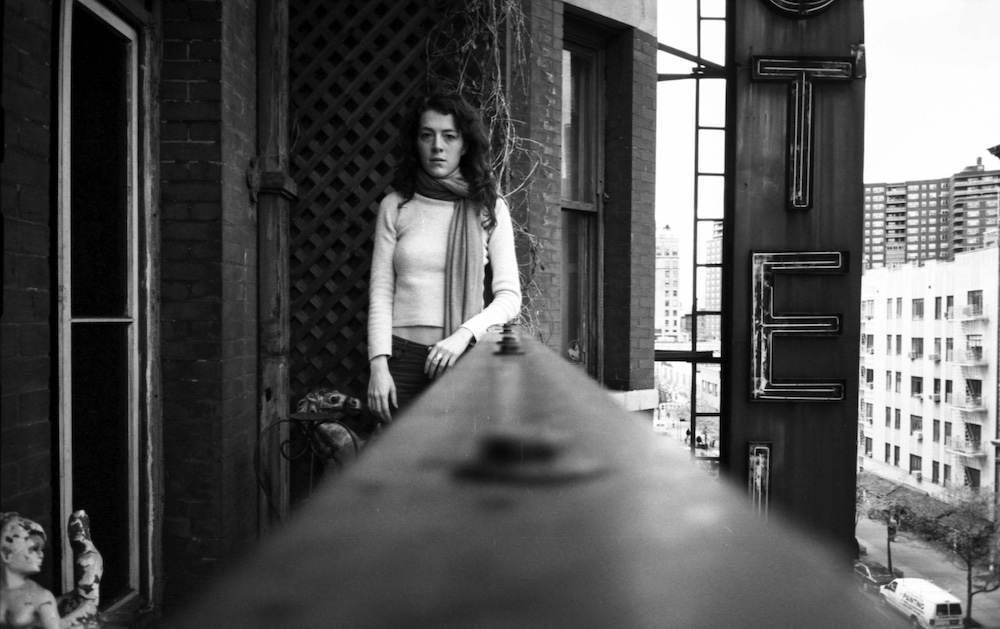
Self-portrait at Chelsea Hotel, NYC, 2001. © Melissa Auf der Maur
You often talk about your disdain for the corporate side of rock and how you believe it corrupted much of the purity of punk and the Seattle scene in particular. What influence did this have on your decision to leave the music world to become a mother and to focus more on curating and supporting other artists, especially here in the Hudson Valley with Basilica Hudson?
Melissa Auf der Maur: The predatory capitalism that has taken hold of the world, stolen our elections, coopted our magic and souls, mined our attention, waged a raging war on all sides of the globe, and has locked us in our addiction to fossil fuels and digital reality. It is ENTIRELY why I left the big rock bands and settled in small-town USA to start a mom-and-pop art center. SAVE THE WORLD with art and local community, it’s all we’ve got.
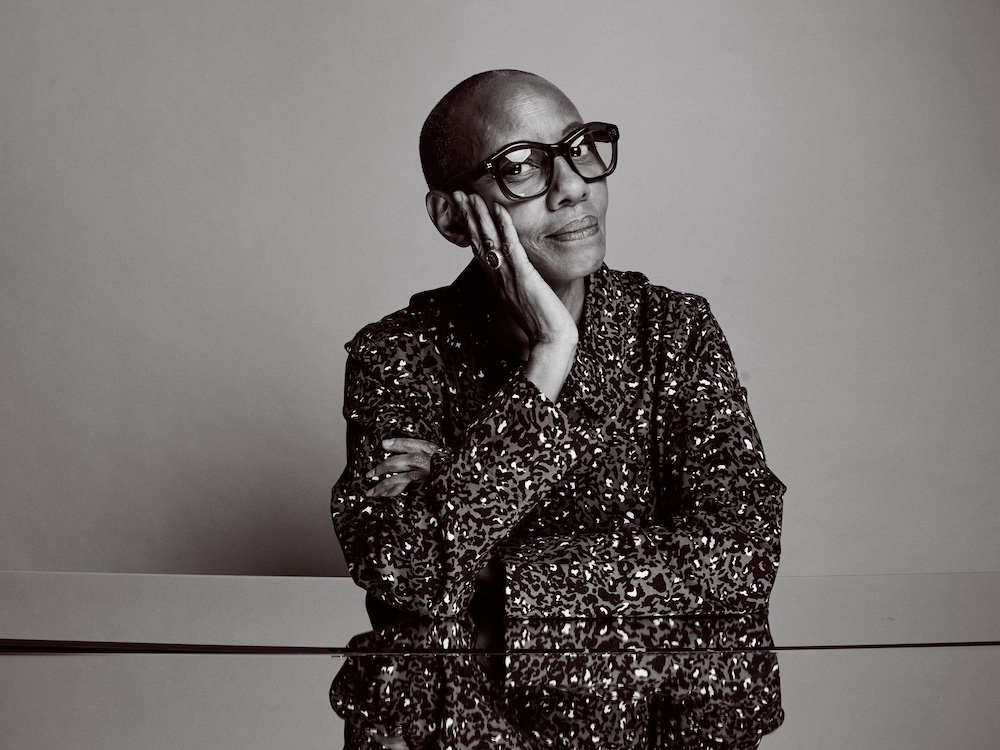
Photos courtesy of Melissa Auf der Maur + Norman Jean Roy (Featured)
Follow/Connect with Melissa Auf der Maur via Website | Facebook | Instagram | YouTube | Spotify
Contributing writer Sal Cataldi is a musician, writer and former publicist living in Hudson Valley NY.
Related Posts


Write a Comment
You must be logged in to post a comment.