


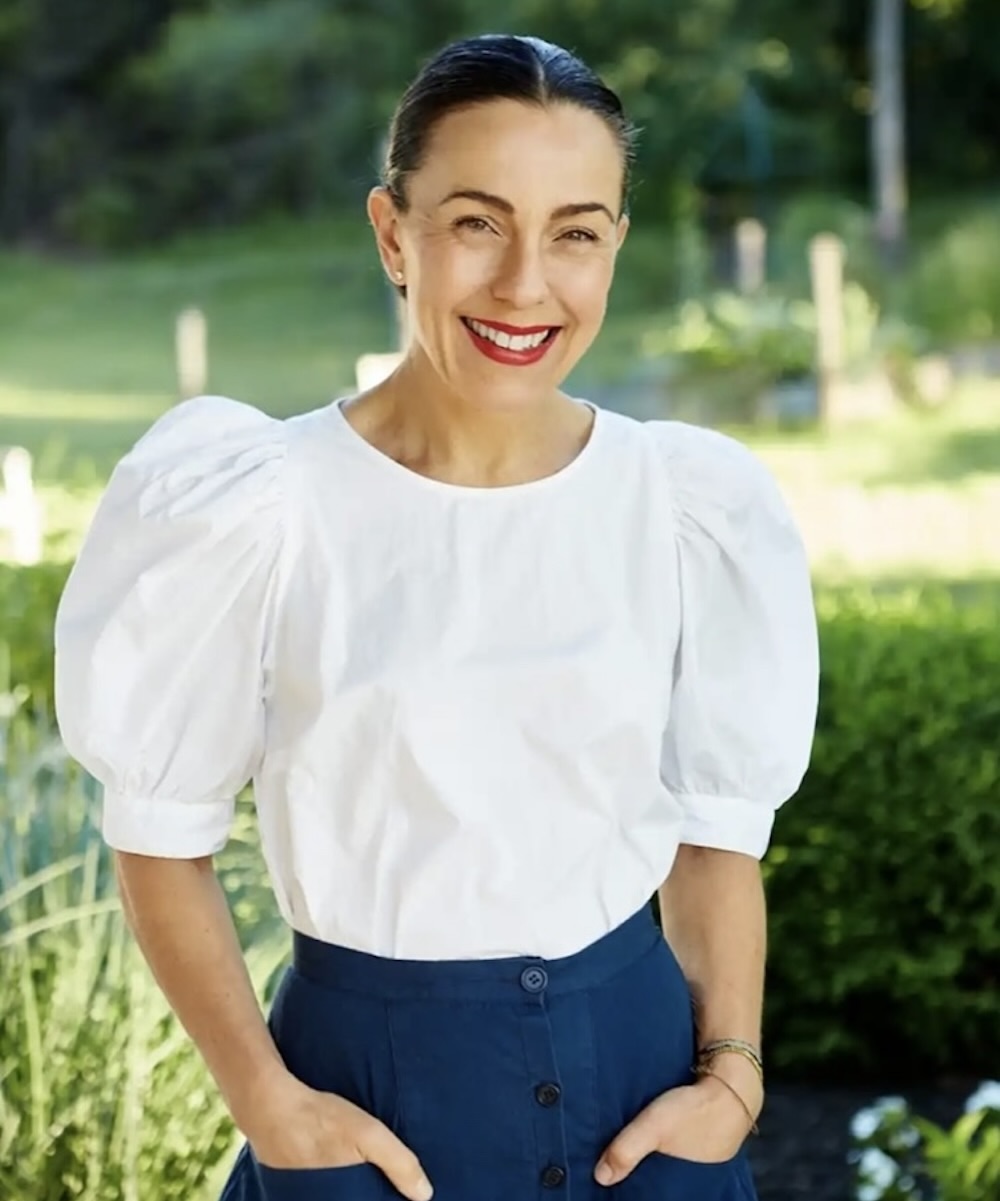
Trusting Instinct: The Beautiful World of Martina Arfwidson
Martina Arfwidson walks into the room like something is already happening. There’s an immediacy to her—bright, quick, entirely present—that makes you lean in without quite realizing it. She talks fast, thinks even faster, and within moments, you’re not just listening, you’re keeping pace. It’s the same energy that seems to shape everything around her—her brand, her spaces, the life she’s built.
She chose a place, and from it, a whole life unfolded—the Hudson Valley less a backdrop than the quiet force behind everything.
Nothing feels overworked. Nothing feels forced. Just followed. “I always trust my gut,” she says. “Face Stockholm has been a life journey for both my mother and me —but for me in particular.”
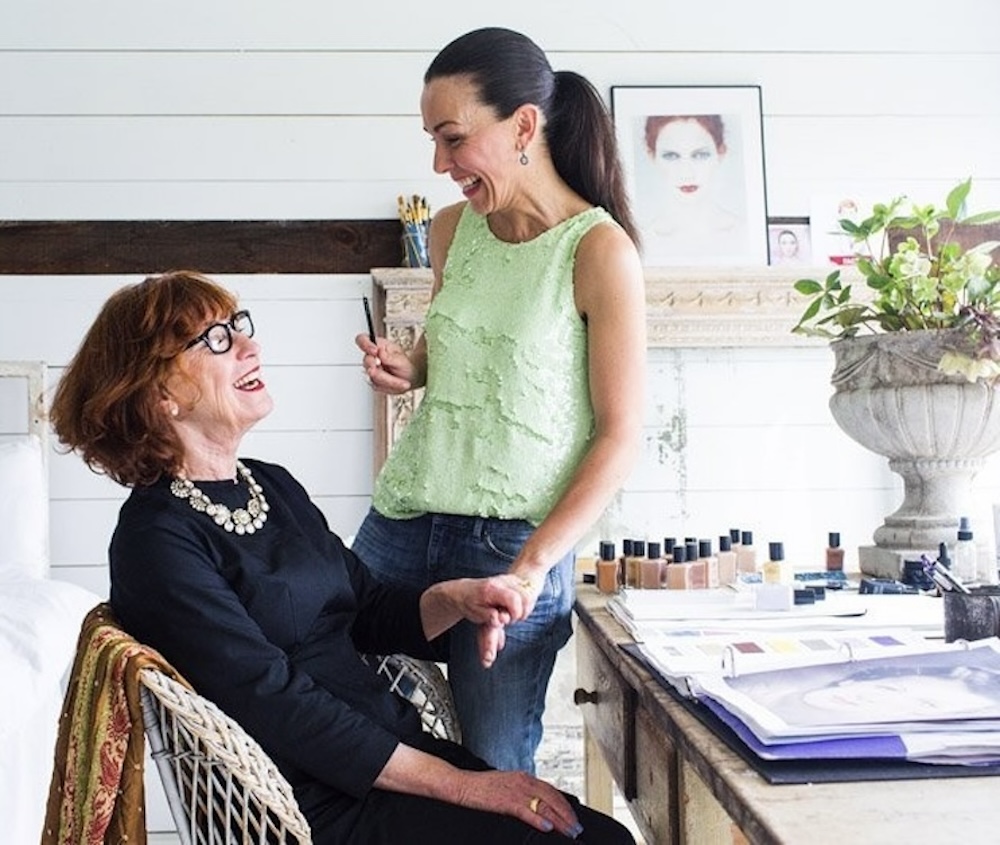
Photo by Bryan Derballa
Long before Face Stockholm became what it is now—before Hudson, before New York—there was her mother, Gun Nowak, in Sweden, brimming with creative energy and a distinctly fashionable point of view. From the start, it was a shared vision—mother and daughter, closely aligned, building something together almost instinctively.
In the eighties, when neon ruled everything—from clothes to mood—Nowak was running some of Stockholm’s most sought-after boutiques, dressing women who wanted to be seen. The clothes were bold, expressive, full of personality. The makeup, less so.
“There wasn’t anything to match,” she recalls. “So I just did it myself.”
In 1982, Face Stockholm was born—not as a brand in the modern sense, but as a response. A belief that beauty should meet you where you are, not ask you to become someone else. Or, more simply: an invitation.
While her mother was already shaping a world in fashion and beauty, Martina arrived in New York in the eighties to study theater, convinced she wanted to act, chasing something she couldn’t quite define.
“I lived the Fame movie life,” she says, laughing—late nights, small apartments, that specific kind of scrappy glamour that only really makes sense in retrospect. And then one day, walking with her mother, arms linked on the Upper West Side, they passed an empty storefront.
“We saw the space and just looked at each other—should we?” And they did.
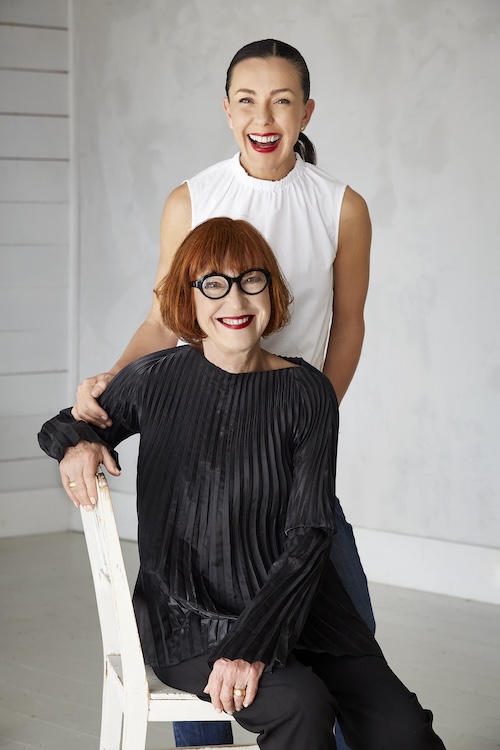
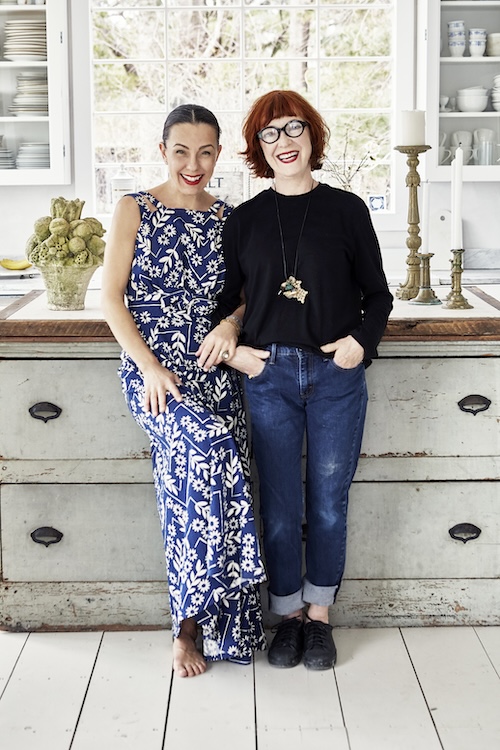
Photos courtesy of Paul Brissman
The first Face Stockholm opened on 79th Street in 1990—ten lipsticks, a point of view, and no real sense that they were building anything resembling a business plan. There wasn’t one. “We didn’t even think of it that way,” she says. “We were just doing it.”
The space itself quietly rewrote the rules. No counters. No hierarchy. Just tables—open, inviting, democratic. You stood beside the person helping you, not across from them. You could touch everything. Now it feels obvious. But at the time, it was revolutionary.
The early customers came for curiosity and stayed for the feeling—a flash of bright blue nail polish, an unexpected shade, details that made everything feel just ahead of its time. Artists, writers, neighborhood regulars—some of them far more famous than Martina realized at the time.
“I didn’t always know who people were,” she says. “I just knew I liked them.” Recognition wasn’t the point. Connection was.
What followed wasn’t a strategy so much as momentum. Barney’s. Soho. International expansion. Japan, Europe, Hong Kong. Growth that, even now, she describes with a kind of bemused distance “It was overwhelming,” she says. “We just rode the wave.”
There were offers along the way—serious ones. The kind that might have changed everything.
But something never felt quite right.
“It was never about the money,” she says. “It was about expression. About the journey. ”So they said no. Again and again.
That independence remains today—not as a talking point, but as a quiet, defining truth. That instinct—to do things their own way, without outside influence—became the foundation of everything that followed.
Martina was pulled north long before the city of Hudson became what it is now. A weekend house in Germantown in the mid-nineties, when upstate still felt like a secret. She came alone at first; her mother wasn’t convinced yet. It was eerily quiet compared to Stockholm and New York City, but in a way that felt expansive rather than empty.
“I just fell in love with it right away—the peace, the interesting people, the sense of community, everyone helping build something together,” she says, smiling. “It felt very un-Swedish.” And it is—the Hudson threading through everything, steady, persuasive, quietly shaping decisions.
The weekend house became something more. A warehouse followed. Then a building—two, actually—on Warren Street, one of them acquired in a way that still makes her laugh. “I bought one, and I got the one next to it for free,” she says. “It was an old mental health building—pink carpet, cigarette burns, drop ceilings… the whole thing.”
You can picture it. And then you look at what she’s made, and it feels almost improbable.
Little by little, everything moved north—the business, the offices, the center of gravity of her life. She met her husband here. Built something that felt less like a plan and more like a rich life.
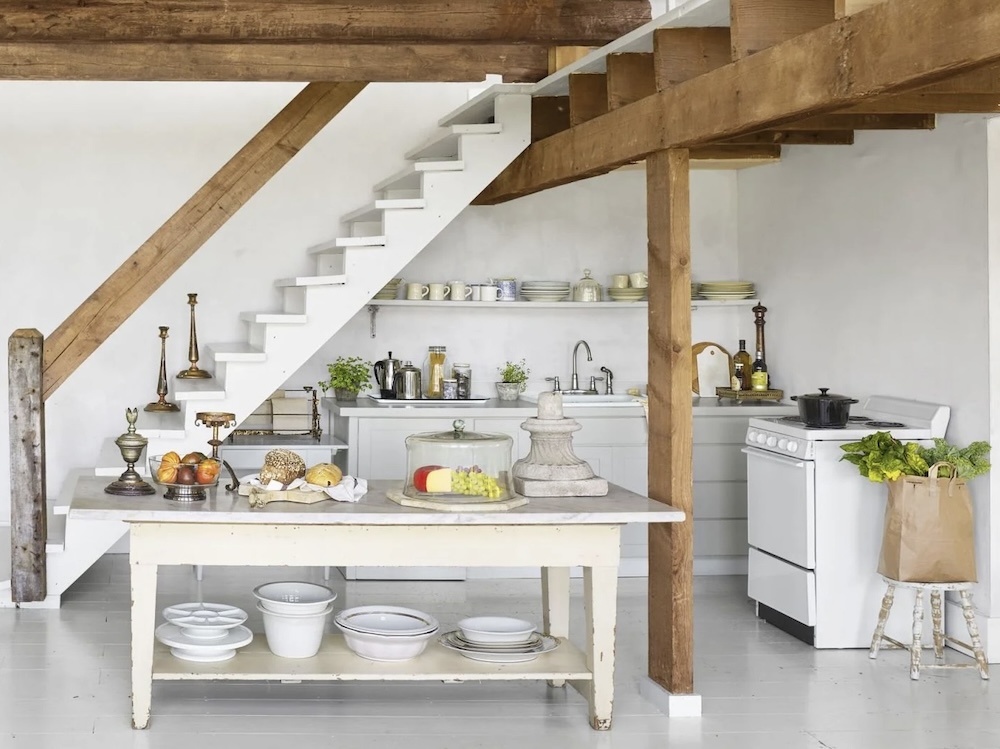
And then there’s the gorgeous portfolio of rental homes aptly named Martina’s Places. Five of them now, scattered through the Hudson Valley and the Dominican Republic—though calling them rentals feels beside the point. Each one is considered without feeling overstyled: pale woods, soft light, nothing unnecessary, everything intentional. “I didn’t know how to do it,” she says. “It just… happened.”
Which, by now, feels like a pattern.


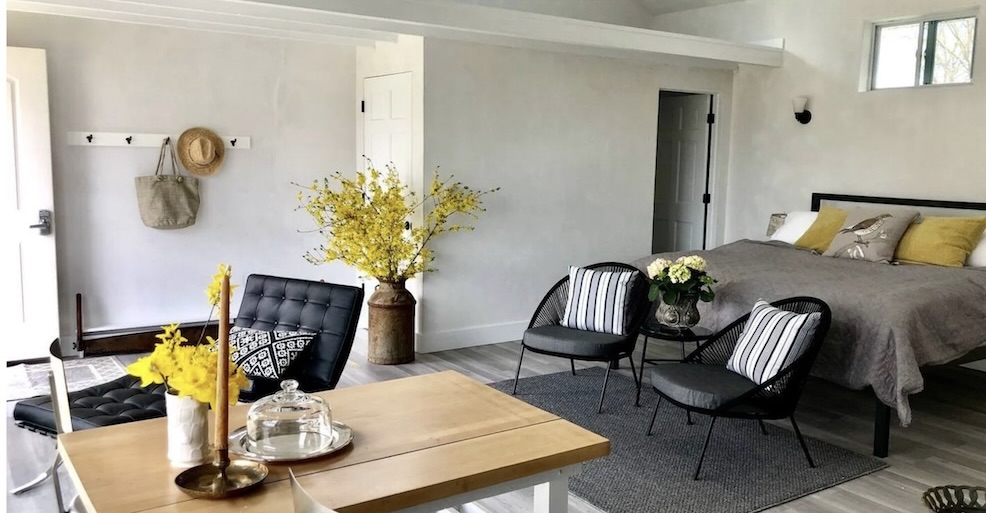
You get the sense you could arrive with almost nothing and leave with something intangible but real—a slightly better understanding of how to live, how to edit, how to notice. They’re not precious. They’re just right.
Martina’s life here has softened in ways that feel earned.
Her mother, now in her eighties, is still deeply present—opinionated, involved, part of the rhythm. There are lunches, long conversations, and rituals that feel charming and faintly European in the best way.
There’s a “half hamburger club,” Martina says—her mother’s female friend group. They meet once a month, split a burger, have a martini or a glass of wine. It feels, somehow, like the entire philosophy of Martina and Gun’s life distilled.
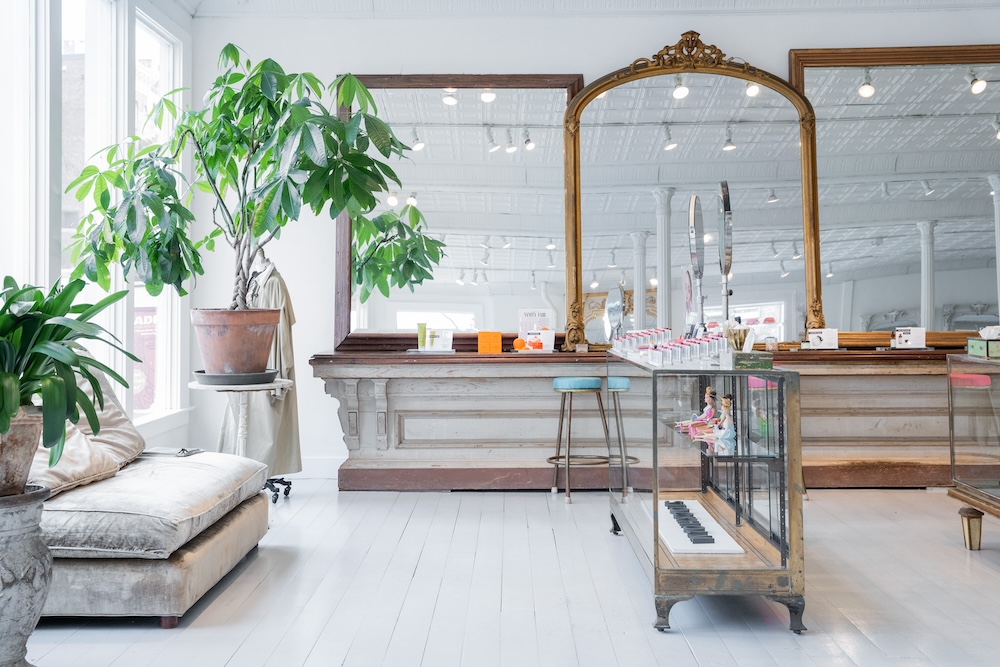
The store reflects all of it. It’s larger than you expect, filled with light—more Paris atelier than beauty counter. Tables instead of displays. Space instead of urgency. You can wander, try, change your mind. It is, in its quiet way, a rejection of pressure, of excess, of the particular strain of modern beauty that insists on more: more product, more steps, more correction.
“We built this company with the understanding that everyone already has beauty,” Martina says. “We’re just adding color to it.” She pauses. “What is beauty anyway?” It’s not rhetorical.
There’s a noticeable lack of urgency—which, these days, feels like a kind of luxury.
“I don’t wake up and think about being in front of the camera or how to get numbers on social media,” she says. “I’m not willing to become that.” In a moment when beauty is so often about visibility—constant, curated, performed—her refusal feels less like resistance and more like clarity. “It’s my life,” she says. “What’s more important to me?”
Inside the store, that philosophy becomes something you can feel. Women come in and stay. They come back.
And then there’s the element of occasion—the way the store quietly becomes a place to gather. Not just to shop, but to learn, to sit, to be taken care of. Bridal parties come in and settle around the table, turning preparation into something softer, more communal. There are small group sessions—friends together, experimenting with color, technique, whatever they’re curious about—less a class than a kind of guided play.
It’s makeup, of course. But it’s also something more—time carved out, attention paid, a moment to feel entirely like yourself, just slightly elevated.
“It’s about showing people what they can do,” says Anne, the incredible Hudson location makeup artist. “Something that feels attainable.”
Attainable—not lesser, just real.
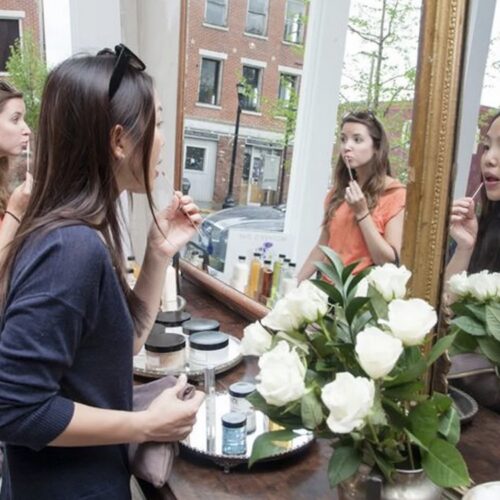
“Our products are tools,” Martina adds. “There are no mistakes. No hard rules.”
A little highlighter where the light already hits. A wash of color that reads as energy, not effort. A lipstick you swipe on without thinking and then notice later.
“We get all kinds of people,” she says. “And they get to play.”
That word—play—lands.
“Even though I wasn’t obsessed with makeup, it became the vehicle for so much growing and learning.” She laughs, almost in the same breath, admitting she’s not, by her own account, a devoted makeup wearer. What she loves is the possibility of it—the fun, the finish, the small but powerful transformation that can happen in a few minutes at a mirror.
“And I love watching people have a moment with it,” she adds—seeing something click, something lift.
Then she laughs again.
“I have a whole warehouse of makeup,” she says, “and I still sometimes forget to bring it home.”
There’s another layer to the store that reveals itself more slowly—something less visible than the light or the gorgeous layout, but just as defining.
Martina talks about her team the way some people talk about family—by name, with affection, and a kind of easy familiarity that doesn’t feel performed.
It’s not unusual, she explains, for people to leave and then return—sometimes years later, slipping back into place as if no time has passed. Others stay for decades. There’s a sense of continuity that feels rare, especially in a business that so often thrives on turnover.
“They’re my family,” she says simply.
And it doesn’t read as sentiment. It reads as structure.
You see it in the way she moves through the space—checking in, pausing mid-conversation, circling back. There’s warmth, yes, but also attention. A steadiness. The feeling that everyone is being held in some quiet, consistent way.
There’s no hierarchy in the traditional sense, no hard edges. Just a kind of shared rhythm. People come, people go, and often, they come back again—drawn not just to the work, but to something harder to define.
A feeling, maybe.
Or simply the experience of being in Martina’s orbit—held together by her warmth, her generosity, and a way of working that feels, unmistakably, like home.
And then, as it tends to happen with things that have always been quietly right, the world catches up.
A recent viral moment—sparked by Ryan Murphy’s Love Story—has sent Carolyn Bessette-Kennedy fever back into the cultural bloodstream, bringing Face Stockholm into sharp, unexpected focus. Nineties restraint—that particular kind of polish that never tries too hard—suddenly feels new again.
And one of Carolyn’s signatures—a barely-there crimson lip—turns out to be Face Stockholm’s classic Cranberry Veil.
“It’s been incredible,” Martina says. But she doesn’t linger there. What interests her is what comes next. “The relationship,” she says. “That’s what matters.”
And just like that, Martina is up again—laughing, moving, already halfway to the door.
Things to do. Places to be.
The energy doesn’t stop. It simply carries on—through rooms, through people, through everything she’s built.
You realize, watching her go, that it was never about a plan.
Just instinct.
And the bold confidence to follow it.
The Face of Spring
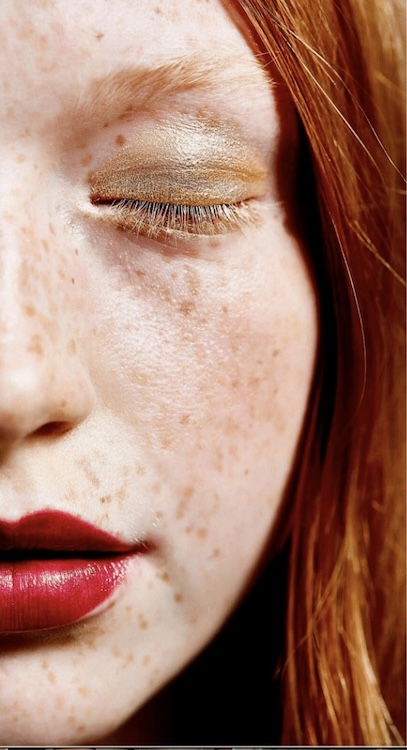
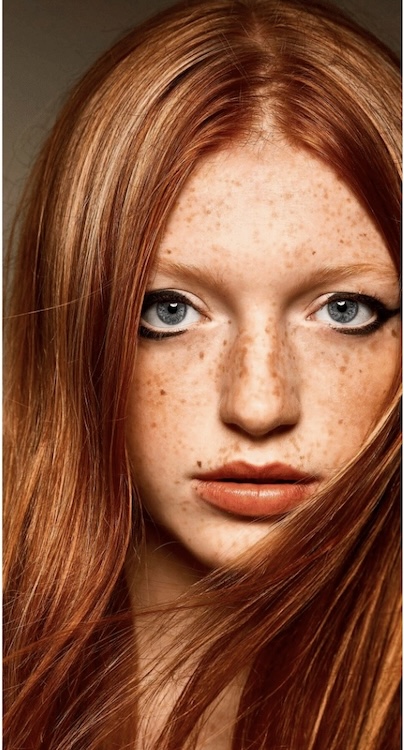
Photos courtesy of Paul Brissman
The Essentials
If there’s a theme to Martina’s approach, it’s this: nothing should feel like too much.
Her go-tos for Spring are quietly effective—the kind of products you reach for without thinking, and then wonder how you ever lived without.
The Perfect Pot is exactly what it sounds like: a modern, do-it-all base that evens skin without masking it. It moves easily between concealer and foundation—sheer where you want it, buildable where you need it—and melts into skin in a way that feels more like skincare than makeup. The finish is natural, and, most importantly, undetectable.
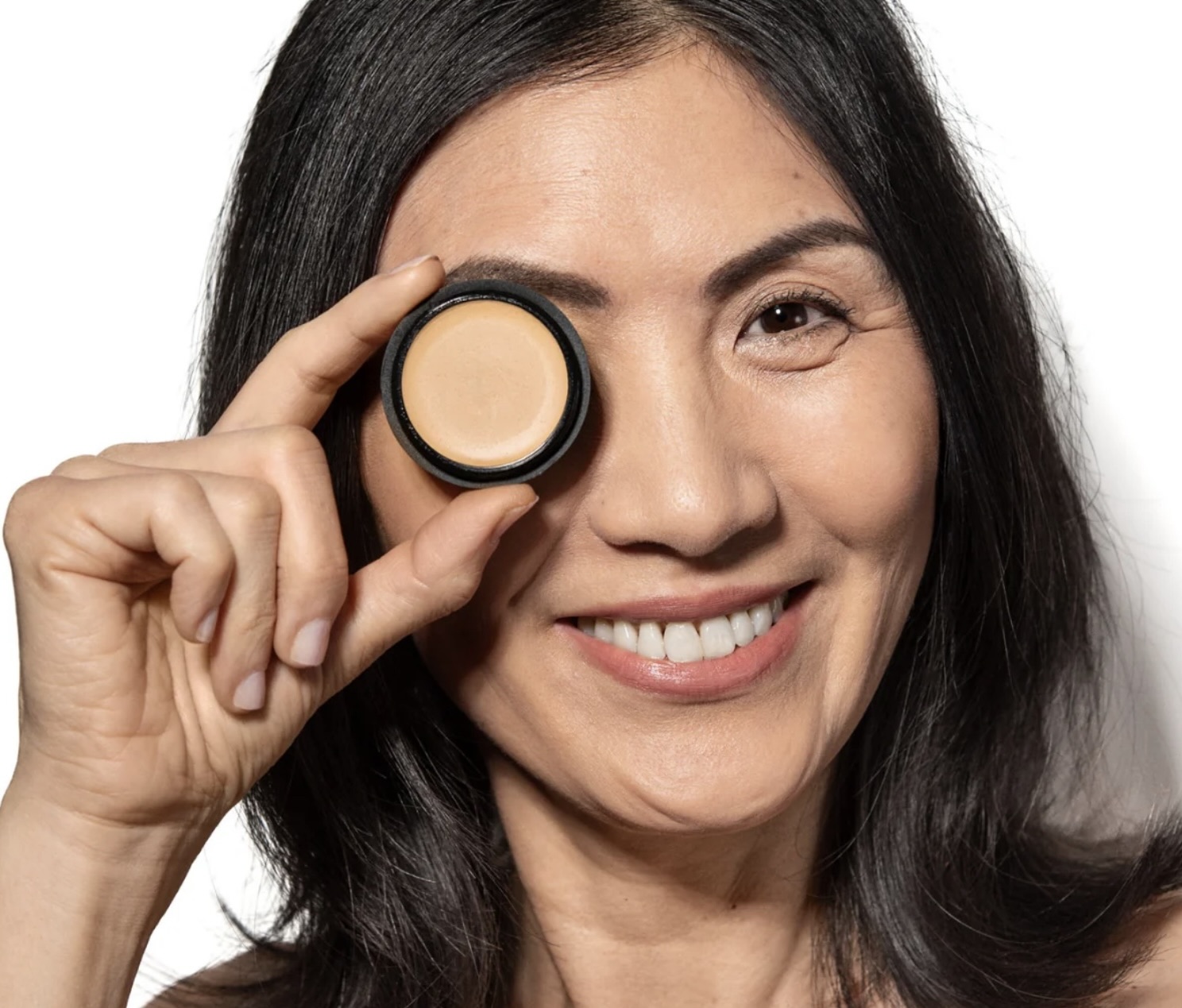
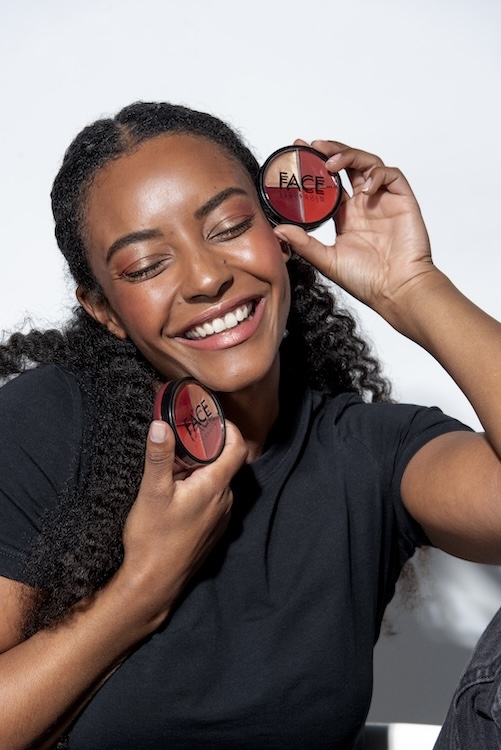
The Legacy Face Wheel, a three-in-one palette that simplifies everything—highlight, contour, and color in one compact. It’s the kind of product that rewards instinct: fingertips, a quick swipe, a little blending, and suddenly your whole face looks more awake. Eyes, lips, cheeks—it goes wherever you need it. “It’s very user-friendly,” she says. “You don’t have to overthink it.”
The Lasting Lash Mascara is newer, but already feels essential. It’s conditioning, waterproof, and, mercifully, non-clumping—the kind of mascara that does its job without announcing itself. Lashes look fuller, darker, lifted—but still like yours.
Together, they form a kind of quiet uniform. Effortless. Adaptable. Ready for whatever the day turns into.
Or, as they say in-store, with a knowing smile: dentist to date night.
Spring Skin, Simplified
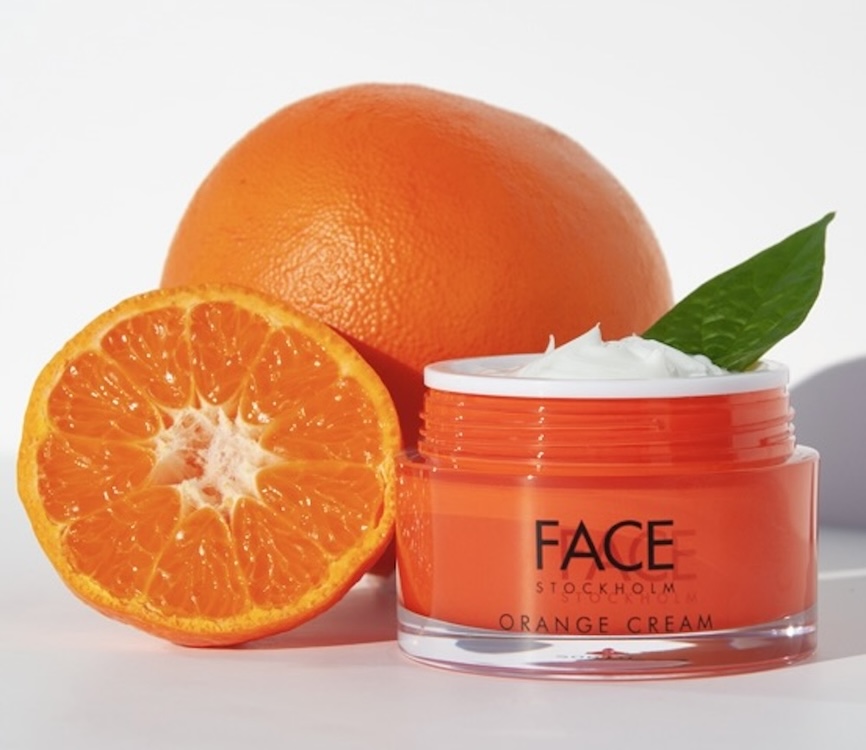
The Orange Cream—light, bright, absolutely addictive—feels like something you start using casually and then quietly rely on. It absorbs quickly, leaving skin soft but never heavy, with just enough glow to suggest you’re doing more than you are. There’s orange peel oil, vitamins C and E, macadamia, shea—but it never reads as complicated. Just deeply satisfying.
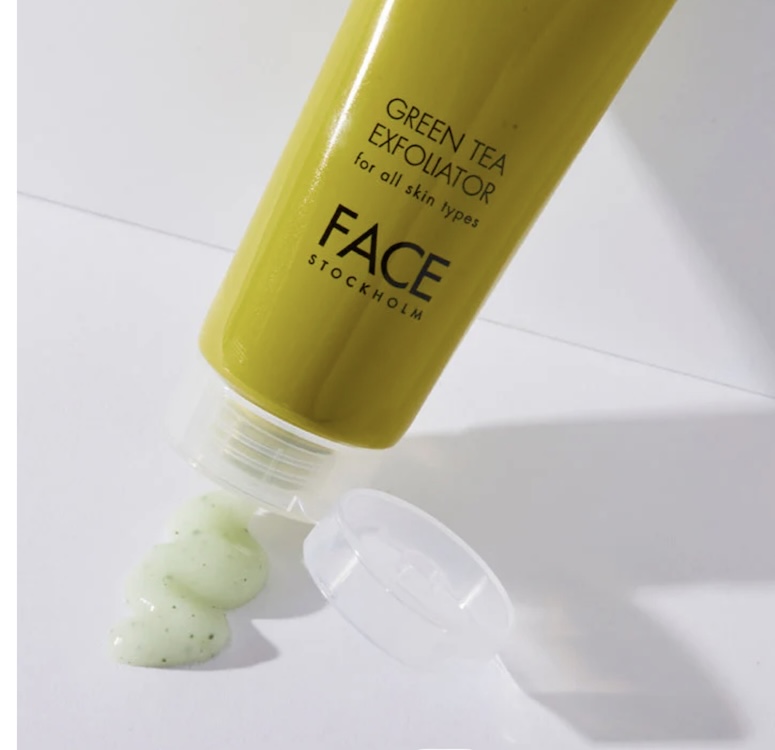
The Green Tea Exfoliator is gentler than you expect—in the best way. A soft, almost cloud-like blend of green tea, aloe, and papaya, it smooths without tipping into harshness, the kind of exfoliator that works consistently rather than dramatically. Skin looks clearer, more even, but still like skin.
And then there’s the Botanical Eye Cream, a more recent addition, quietly ambitious. Fermented plant extracts, peptides, layered hyaluronic acid—it sounds technical, but on the skin it feels simple: hydrated, smoothed, subtly revived. The kind of product that earns its place slowly, and then doesn’t leave.
No ten-step routines. No overwhelm.
Just what works—and the ease of knowing it.
Lead photo courtesy of Paul Brissman.
Follow/Connect with Face Stockholm via Website | Instagram
Martina’s homes? Just as good as you think. See them here Website.
Click HERE to see all of our exclusive interviews with the amazing folks who proudly call the Hudson Valley home.
Related Posts

Write a Comment
You must be logged in to post a comment.