


Gimme the Dirt…On The Farmer’s Voice
“Once upon a time, on the North Shore of Long Island, some thirty miles from New York, there lived a small girl on a large estate.” —Sabrina, 1954, starring Audrey Hepburn and Humphrey Bogart.
This is the story of a girl who grew up on the North Shore of Long Island when it was filled with farmers who dropped food at her doorstep, tantalizing her palate and capturing her heart. Fresh eggs were delivered to the back door by the egg man; the milkman had the same routine; and on their heels, the vegetable farmer brought freshly-picked produce grown in the deep, rich soils that are the hallmark of the Long Island of the not-so-distant past. “I grew up around great wealth, but the people I always connected to most were the ones who were the workers – the farmers, gardeners – the people who grew something.” This is the story of Deborah DeWan, a champion of agriculture and the voice of farmers.
Growing up in Greenvale (North Roslyn), Deborah watched as the rich farmland surrounding her childhood home transitioned from growing spectacular food to raising a whole new kind of crop: houses. “The significant changes I witnessed growing up were stark: from rural to suburban, from farmland and farmers to shopping malls and subdivisions. It was not just a different lifestyle; it was a whole different energy.” What she didn’t know was how witnessing this brutal transition would shape what would become her life’s work. “I did what young people do – I experimented with my diet, explored the world, and eventually landed in Woodstock.” Deborah’s life may have taken the twists and turns experienced by many, but her compass always pointed in one direction: the intersection of people, food, and the land. During the pursuit of her Master’s degree at Bard College in Environmental Studies, she found herself in Prattsville, NY, a quintessential Catskills town struggling with issues most small upstate towns have faced – pressure from “the city,“ sustainable growth, gentrification, and (most notably) community discord. Her thesis became an exercise in community engagement, and it was there that she honed her skills as a translator for the disempowered. Concurrently, her employment was more than a paycheck: it was her calling. Sunflower Market in Woodstock, Family of Woodstock, Scenic Hudson, the Catskill Center – all her work placed her in the unique overlap between food, consumers, farming, and land use. Through her work, she came to understand the importance of community engagement. “I stepped into more of an environmental career. I was doing all manner of things from writing community grants to learning about the permitting system for projects; basically, I fell back to the notion of being able to communicate and work with people in communities to help them make good decisions.”
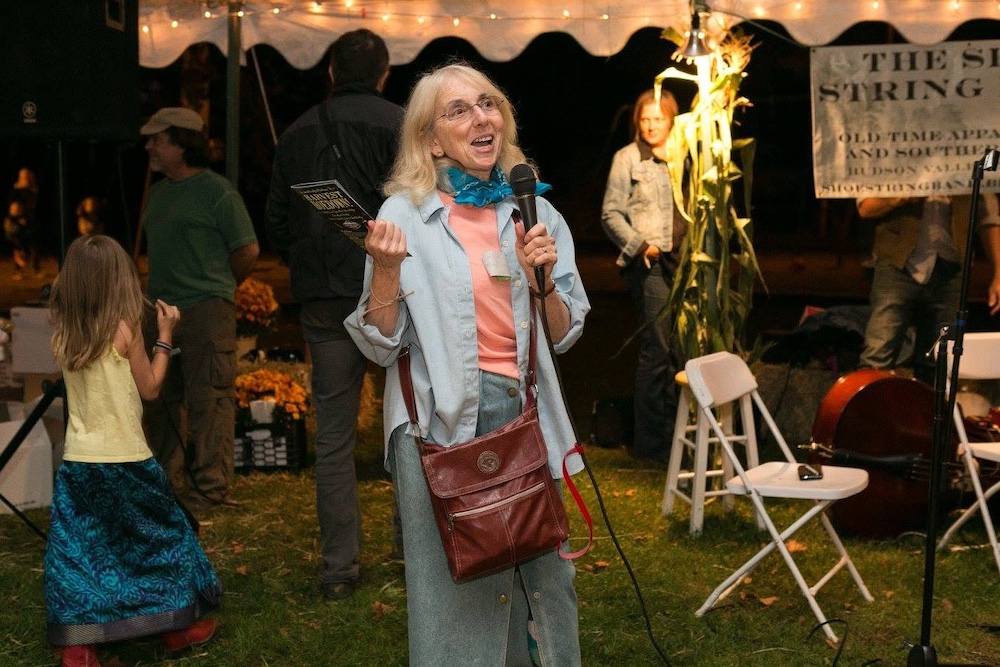
Community was the focus of her work, and Scenic Hudson became the foundation for her future endeavors. She reflects on her work there this way: “I was not just in a building, I was in the community and people knew me – my philosophy is that everybody is important, everyone has something to say, we may not all agree, we may end up in different places with different solutions, but the more people recognize each other and see each other, that’s how you build community.“ Deborah is a tiny person with delicate features. But it’s prudent not to underestimate her. Under her softness is a steely, fierce resolve. She focused that ferocity on building community. “It feels like a gift has been given to me to be exposed to and be able to get to know people in these different circumstances, to look at the conflicting objectives people have when both parties are coming from good intentions. I’m no ace problem solver, but I can see when that situation has come up. Holding space for two opposing views that are both true.” It’s a fact that she possesses a gift, but she’s wrong about one thing: she absolutely is an ace problem-solver. In fraught times, right down to the local level, her voice is more important than ever. “You can achieve change in a positive way. We don’t have to leave the past behind; we can be in the present and plan for the future. The more we are able to connect at the local level, the more we can achieve. We can achieve so much more right where we live.”
And so she decided to step into the small community of farmers, right where she lives. In her role as the Executive Director of the Rondout Valley Growers Association (RVGA), she became our greatest champion. For Deborah, stepping into the role with the RVGA was a full-circle moment. “All the puzzle pieces of my life coalesced into my work at the RVGA – it became a whole picture. Doing direct work with farms and farmers brought back when my mom would buy from them – the food we ate growing up was directly from the farmer. There was this need to respect the land, how the land is used, who cares for the land, and how we can somehow, together, recognize that. And THAT becomes the pillar of the community.“ The RVGA allowed her to build on this principle alongside farmers who were champions of food, soil and open space, just like her: notably Bruce Davenport, a founder of the RVGA.
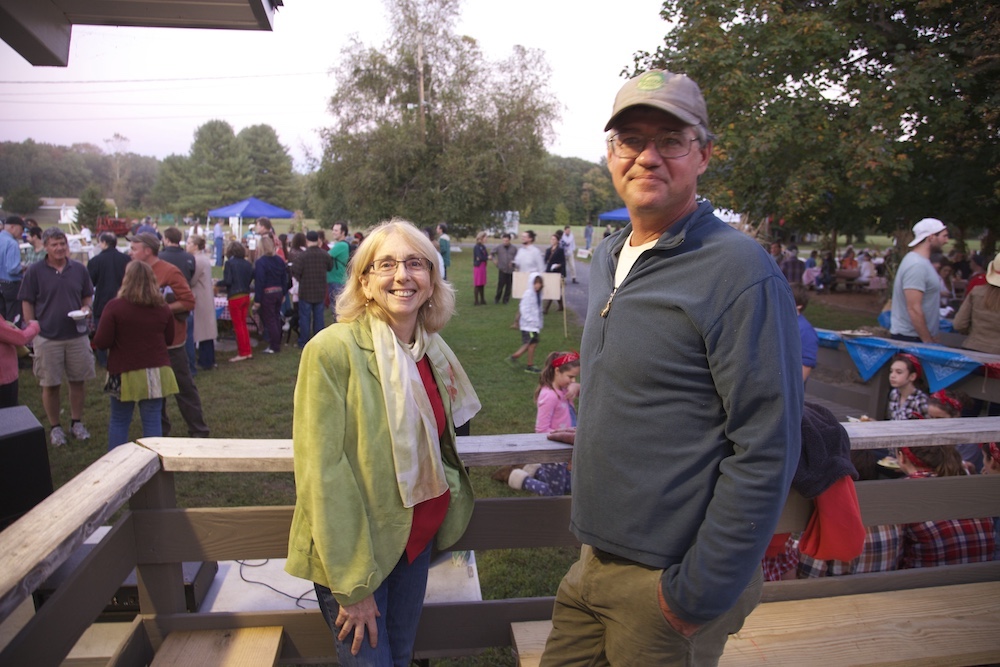
Rondout Valley Growers Association
My personal relationship with Deborah goes back to her role with the RVGA, when the “second act“ of my own life’s work began on Hilltop Farm with Barton. It’s really important to clarify that we aren’t alone in this relationship, because almost all the farmers in our county know of her, and most of us have spoken to her at one point or another. Deborah doesn’t pick favorites, and she doesn’t discriminate. She wisely understands that in the many ways to do things, farmers have found what works best for their own unique circumstances – their land, the products they grow, their resources, the community that surrounds them. The legacy farmers she’s worked with have familiar names – Schoonmaker, Davenport, Kelder, Gill, Byrd, to name a few – but she gave equal time to new farmers, young ones trying to get started, or those like us who were in the midst of navigating change. She made herself available to us all because, simply put, she likes us, in all our diversity, quirkiness and oddity. In today’s highly divisive political climate, I can assure you that’s a rare quality, and one from which the farmers of the Hudson Valley have benefited enormously. Many years ago, in a conversation at the RVGA office, I told her about our most closely-held dream: building a small dairy, where we could sell milk directly to customers. It felt like a confessional, sharing something so personal that it almost couldn’t be said aloud. But in the moment, I felt acknowledgment: she got it. And in our world, that’s a rarity. Some farmers plan to “go big,“ others decide as they age to sell out and retire. But we held fast to our dream, diversifying into Wagyu beef while maintaining a handful of Holstein dairy cows just for us. We began raising pastured chickens for meat to sell to our growing customer base, and eggs, because our customers asked for them. In the background was always the sense that we still had something to do. It was a proud moment for us to be able to share our beautiful new creamery with Deborah, now awaiting final inspections: our dream finally realized after all the years of working (and praying) for it.
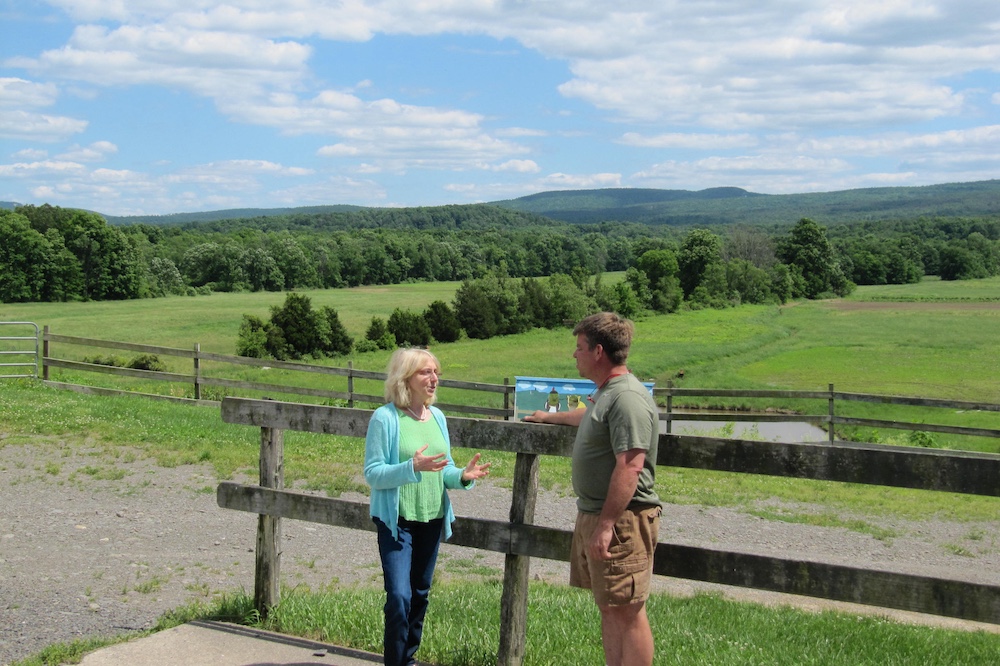
Kelder Farms
Deborah moved on from the Rondout Valley Growers Association to something bigger when a local leader was elected to go to Albany. That official, Jen Metzger, became the first female chair of the State Legislature’s Agriculture Committee, a powerful role, since, unbeknownst to the vast majority of the state’s population, the greatest industry outside of the Big Apple is agriculture. Deborah’s official position was that of advisor, but her proximity to those in charge of state agriculture policy and other prominent people in the capital enabled her to use her voice to advocate for farmers. She had our backs. Deborah’s greatest skill is her ability to hold tight to her mission and advocate for it. But her greatest magic is in her ability to connect those in power to that mission and empower them to fight for it, too. And her mission was always agriculture. Farmers are a paradoxical group. We don’t like change, yet we adapt quickly because we don’t have any choice in the matter. We might be a little curmudgeonly about it, but adapt we must. Most notably, we are challenged by weather we cannot control, alongside a climate that has forced us to rework components of how we farm, animals with needs of their own, and politics that feel way beyond our power or time to impact. But our not-so-secret weapon has been Deborah. I know thoughts of retirement crossed her mind several times, and while we never spoke about it, I knew it had to be something she was considering. Even though her gentleness and smile never wavered, we knew her work had to be wearing on her. Just as farming is an all-consuming way to live, working alongside and advocating for farmers is, too.
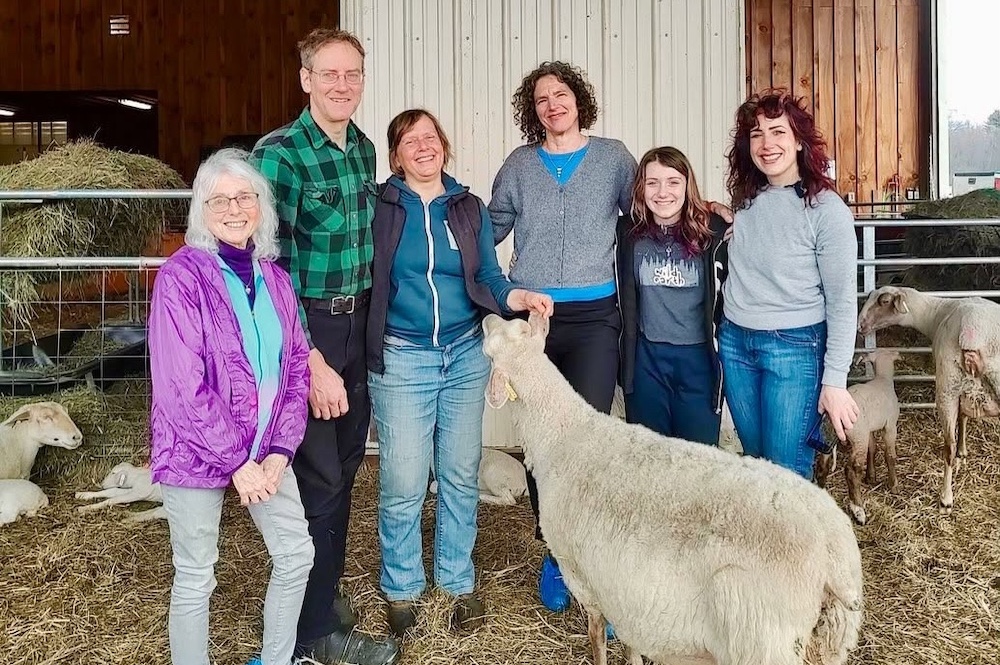
Willow Pond Farm
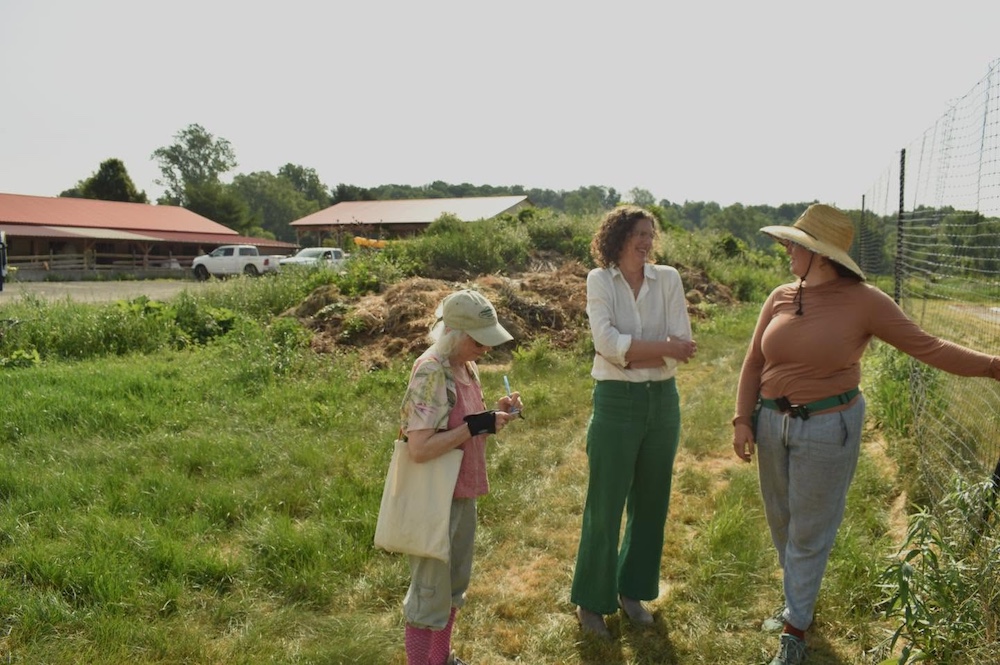
Hudson Valley Flower Collective
Recently, I had the special pleasure of sitting next to Deborah at the annual RVGA Growers’ Dinner. Amid all the chatter, laughter and donated beer were some serious conversations about feeding people in pretty concerning circumstances and how Ulster County farmers can help. Somewhere in the middle of the speeches, I learned that Deborah had made the decision I’d been expecting for a little while: she was retiring, for real this time. When the formalities concluded, I turned to her and caught a glimpse of the little girl I started this story with: a hint of a smile filled with joy, eyes turned upward as if she was remembering the flavor of that fresh-picked lettuce of her childhood. I said, “You must feel so proud of this.“ After one more moment to savor her thoughts, she turned to me with a puzzled look. “Of what?“ Like the farmers from her childhood, and the ones teeming around us in that firehall, she was more focused on the work itself rather than any grand outcome. With a humility I should have expected, her answer resonated because that’s how we feel, too: focused on the process and quality of results while removing ourselves from the conversation. Her modesty belies the power of her work.
-
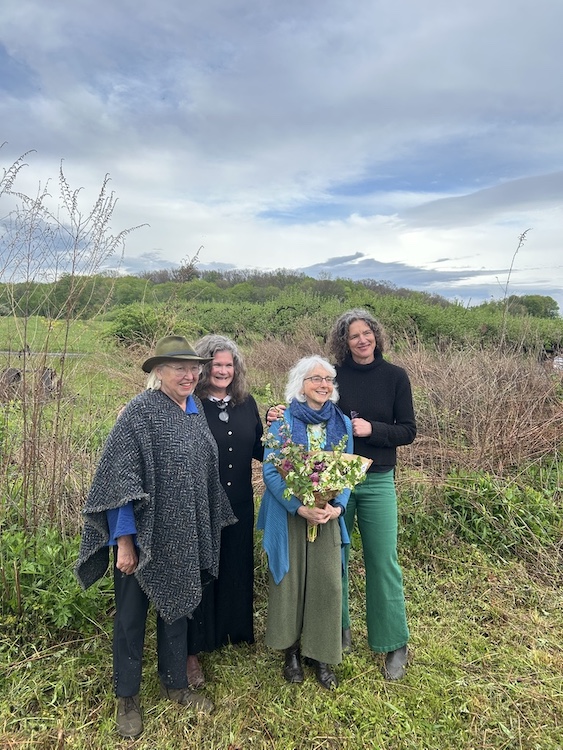
- Stone Ridge Orchards
-
- .
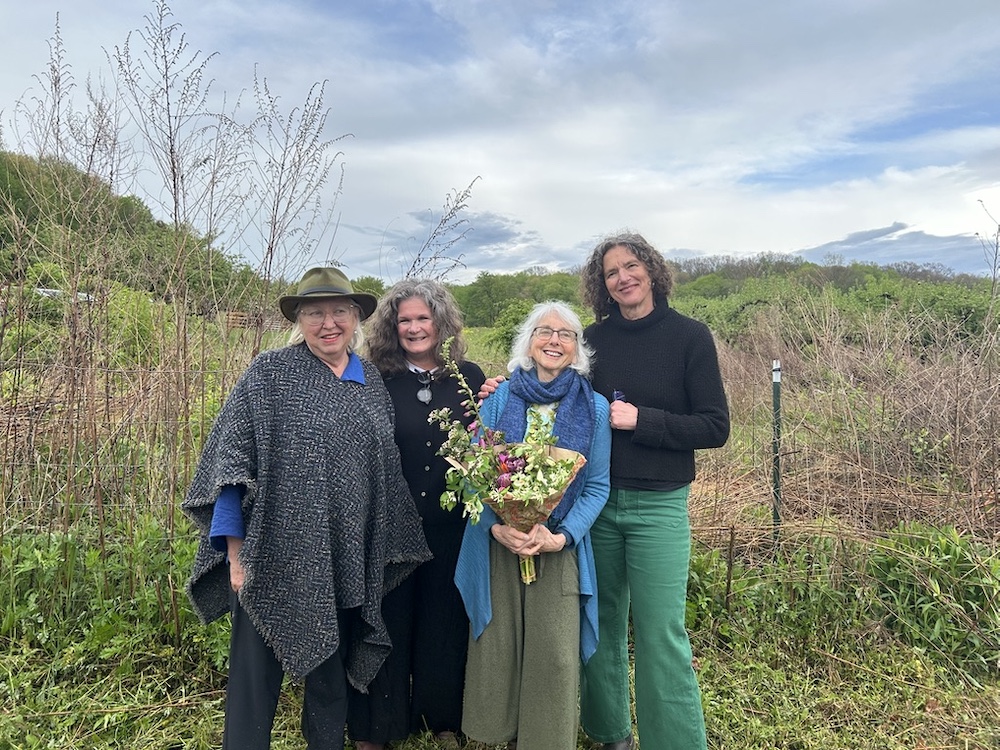
And then, not long ago, I received a phone call. “Becky, there’s this thing that’s happening, and I’m wondering if you’d come say a few words?” It was Deborah, asking me to speak at a celebration of her career. I don’t love public speaking, but given the opportunity to say a very public thank you to someone so special to this farm? I wasn’t going to pass up the opportunity. And so I found myself in a local orchard, tromping through mud while a steady drizzle curled my hair to ringlets. Standing next to our County Executive Jen Metzger, RVGA Executive Director Matt Igoe, the owner of the orchard, and fellow farmers and friends, I listened as Deborah was feted with the accolades that really didn’t feel like enough. As she was presented with a spectacular bouquet of flowers grown by an RVGA grower member, the sun broke through the clouds. And then, it was my turn to speak. I’d printed my little speech so I could read without having to look at the crowd. I cried when I read the last sentence. And I hugged her tight when I was done. And as I looked around, I saw the real impact of Deborah’s work. Farmers, leaders and advocates are the seeds she tended; the spirit of togetherness that she cultivated with care; and most importantly, the landscape of community that will be her legacy for generations to come.
Photos courtesy of Deborah DeWan and Urana Kinlen
Rebecca Collins Brooks is a farmer, writer and farmstead cheesemaker at Hilltop Farm in Accord, NY. She is the creator and founder of The Meeting of the Milkmaids, a gathering of women working in the cheese and dairy industry. In addition to a small herd of dairy cows, she and her husband, Barton, raise Wagyu beef, selling meat to customers directly off the farm. Her best friends are two terriers, Winston and Molly, and Sylvie, a truly brilliant barn cat. You can visit the farm by appointment to see where truly good food is grown.
Connect with Rebecca via Instagram @catskillwagyu, on Facebook CatskillWagyu
Check out > INSIDE+OUT’s Spotlight on Catskill Wagyu at Hilltop Farm
Related Posts
Write a Comment
You must be logged in to post a comment.
Doreen Johnson | Inside+Out
I love this so much! Deborah is such a bright light. All four women in the cover photo are powerhouses! Love to all and best wishes on your next adventure, Deborah! xoxo