


Holding Space: The Sacred Art of Connection at Intuitively Wild
There’s a quiet shift happening in how we think about wellness—less about fixing, more about returning. In High Falls, Intuitively Wild offers a space that feels both deeply personal and gently communal, where ritual becomes practice and practice becomes a way of living.
For our May Art + Practice theme, we spoke with founder Rachel Levine about creating a place rooted in rhythm, presence, and the important, ongoing work of coming back to yourself.
You’ve described Intuitively Wild as a space that began with “an ache.” What was that moment for you—and how did it turn into something physical, something others could walk into?
For much of my life up until now, my journey has been an independent one. I was a wanderer, devoted to deepening my connection with nature, myself, my spirituality, and my path. My desire to help and heal others was always the driving factor, but I kept people at an arm’s length, finding safety in solitude. This part of my journey was an important one, but there was always an empty piece missing, a quiet ache underneath the surface, slowly growing. The ache was always there, I just couldn’t place where it was coming from- until it became too loud to ignore.
That moment happened when I finally admitted to myself what I was missing – a deep, intentional, true connection with others. Community.
I tried to soothe the ache with online offers and temporary homes, but that only scratched the surface.
I realized that coming back to myself also meant finding a home. I needed to find safety in staying, in being seen, in being known. What was missing was building a ritual in an in-person, real-time, deep community. The space I was seeking didn’t exist, so I created it myself.
There’s a quiet rebellion in what you’re creating—less performance, more presence. What were you stepping away from in the traditional “wellness” world?
I was stepping away from illusion. From striving for perfection and basing self-worth on external sources. From outdated conditioned beliefs and rigid rules. I was stepping away from a path that someone else had decided was The Way to success, but was really only meant to control. I was stepping away from self-harm, self-abandonment, and disconnection.
So many of us drain our joy and risk our entire lives for the illusion of wellness. We trade messy truth for society’s version of perfection. We completely disconnect from ourselves – what we need and want, what we are meant for – until we’re so numb we can’t find our way back.
Stepping away from the wellness world did feel like a rebellion. It still does every day- when I choose to turn off the noise and tune back into myself. When I choose integrity and truth over trends and lies. When I choose softening and silence over rigidity and productivity.
When stepping away from the “wellness” world, I was stepping towards myself.
The idea of “rhythm” feels central to your work. What does it mean, in practice, to return to rhythm in daily life?
To me, rhythm is about connection- connection to self, to nature, to the world around us. I do this through my rituals. I have certain rituals baked into my everyday life so that I know I always have space to return to myself, to my intentions, to presence, nature and truth, no matter what else is happening. Practically, this means creating space in your day for spaciousness – for a pause, for a check-in. At least one moment in your day (although I highly suggest multiple) where you pause, tune into yourself, notice how you’re feeling, ask yourself what you need- and answer honestly.
What comes from there depends on season, schedules, capacity, accessibility… but it is the rhythm of this ritual that bleeds out into the rest of our lives. It creates a harmony between internal and external rhythms – what we need personally, and what is happening around us in nature, in our community, in the world.
The importance of rhythm lies in its ritualistic nature. There is a repetitive nature that allows the impact to deepen and the practice to become a habit, while still staying devotional. The rhythm is in creating the space – the what, where, how, when… that can all shift and grow as needed, which allows it to always stay intentional and present, not autopilot or prescriptive.
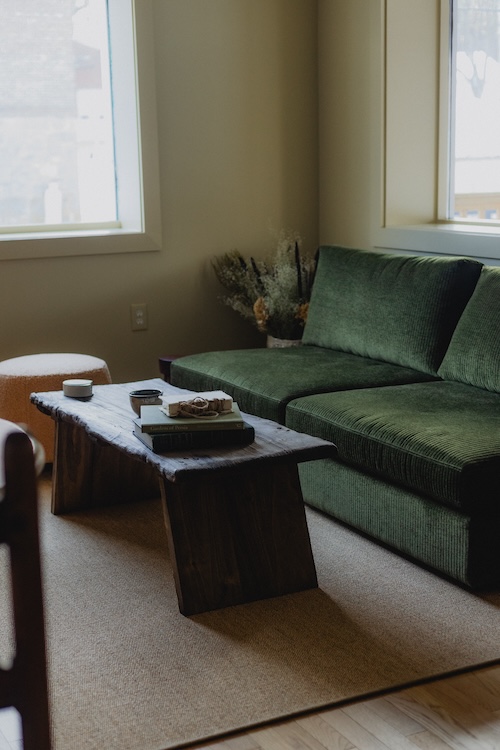
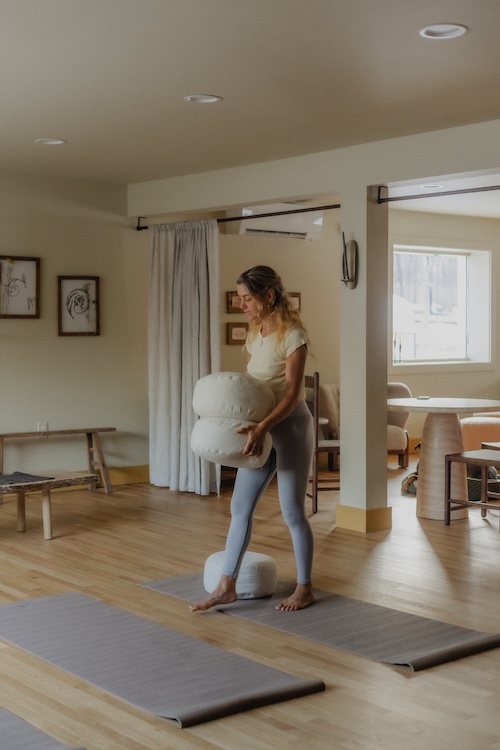
The space itself feels intentional but not precious. How did you think about designing an environment that invites people to soften, rather than strive?
Honestly, I followed my intuition. I trusted how each item in the space made me feel, instead of obsessing over how it would all look. I knew the intention behind each item, each detail, and corner, and it all centered around how I wanted people to feel – so I followed the feeling, and kept trusting that.
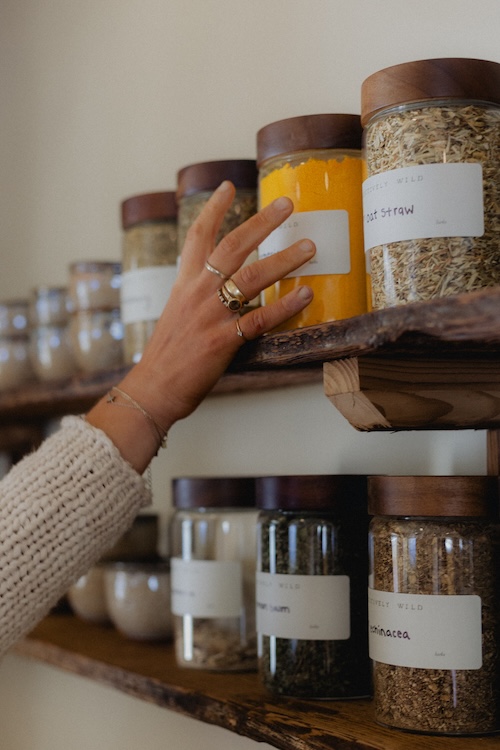
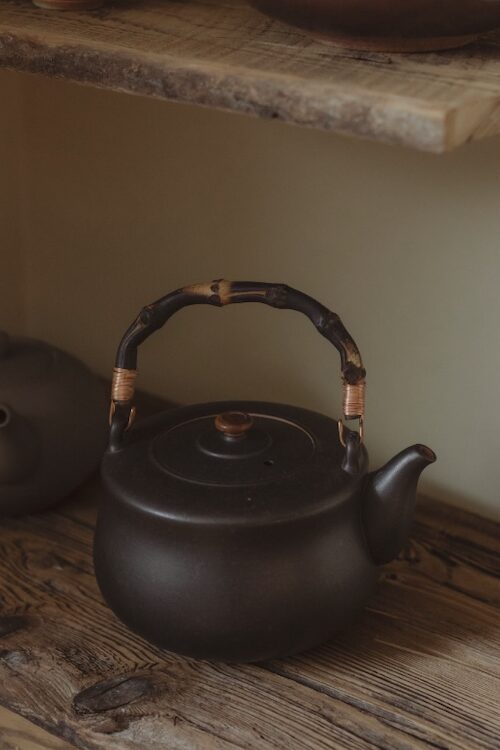
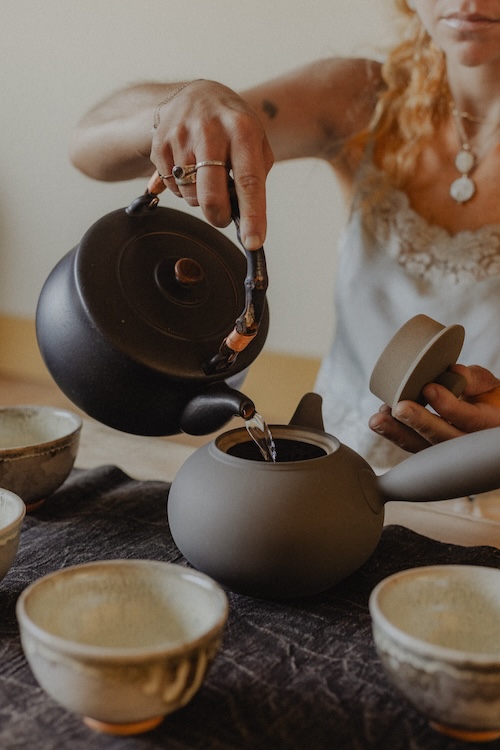
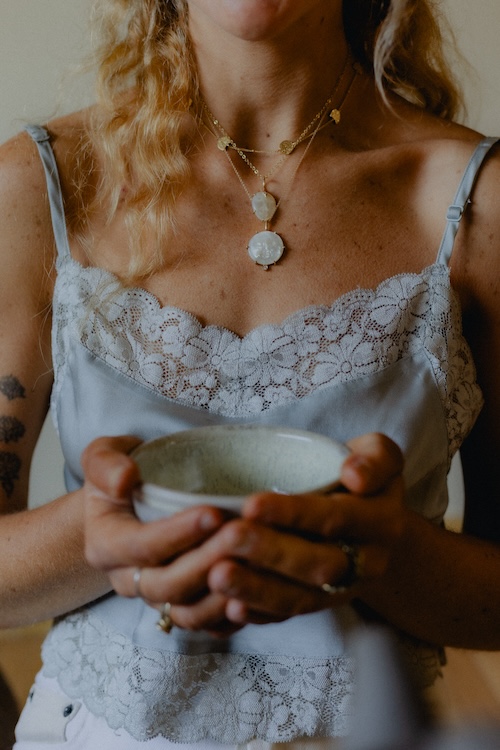
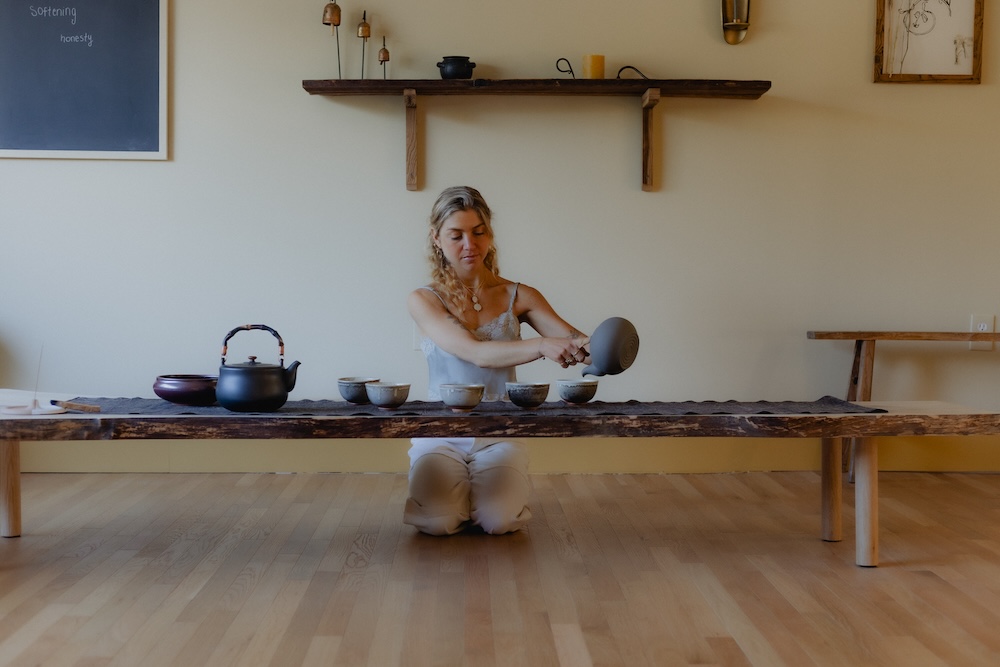
Your tea ceremonies feel like the heart of it all. What is it about tea—as ritual, as practice—that opens people up in a different way?
There are several aspects of the tea ceremony that, when combined, become transformative. Primarily- connection to nature, simplicity, silence.
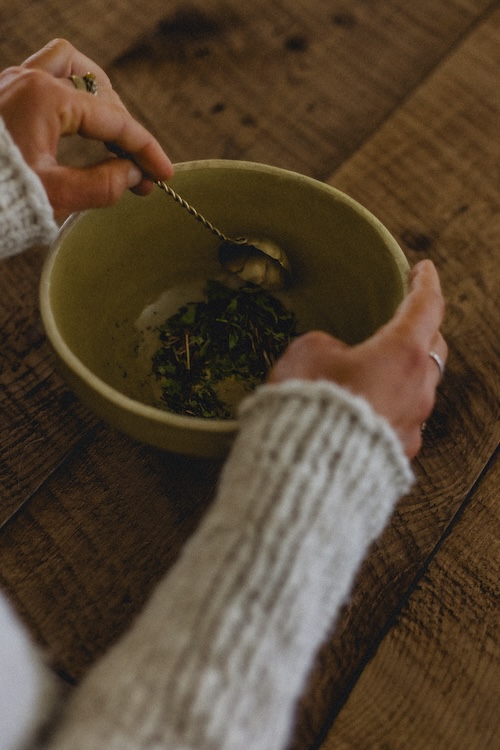
Tea gives us this opportunity to really be with nature in a way that many of us haven’t experienced perhaps ever in our lives- with presence. It allows us to be solely focused on the medicine of nature and the messages it sends to us when we are open and willing to receive them.
Just as importantly, there is the silence and simplicity. The tea ceremony, at least the style that I practice, is quite simple. It is not about perfection or performance, nor about rigidity or rules.
The only real “rule” is silence. It is a meditative practice that helps us find rhythm and spaciousness. It teaches us how to find safety in softening and how to return to our center time and again- and we get to do it together.
This feels like that quiet rebellion in action.
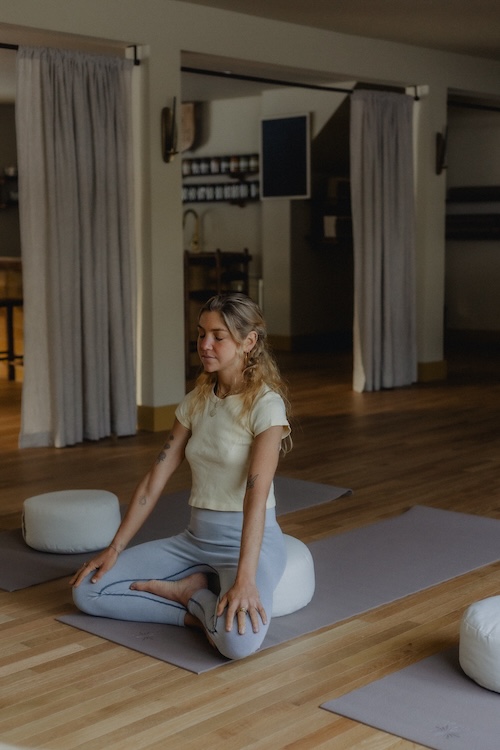
You combine a range of practices—including yoga therapy, herbalism, breathwork, and human design. What does that integration look like in your work?
To me, the integration is seamless; I rarely think about how I am going to work all of the pieces together, they just fit. Each component is about connection – to self (body, mind, emotions, spirit), nature, and others. They are each about understanding who we are and bringing us back to presence, intention, and ourselves.
How do you work with people when they come into the studio? What does a session or experience actually feel like from the inside?
The exact details depend on the offer- whether 1:1, in a group ceremony, or serving tea during open teahouse hours. Regardless, though, I always hope people feel a sense of homecoming. A release, a sense of relief. I aim to work with people as individuals, meeting each person with presence and responding from that place. Each experience feels personal and unique, deep and intentional, healing and connective.
For someone walking in carrying stress or burnout—what do you hope they experience in their first hour?
I hope they experience hope- a knowing that life can be different… life can feel different. I hope they experience a remembering of who they are, who they want to be, and a return to themselves and their lives. A main intention in creating IW was to make it a part of our everyday lives – this space is a home, a reminder that ritual, ceremony, deep connection, and presence do actually fit into our lives. This is the space to remember and return to every day.
The Hudson Valley has become a kind of refuge for people seeking a different pace of life. How does Intuitively Wild reflect, or respond to, this moment upstate?
Intuitively Wild is here to help you create a new lifestyle for yourself. So many of us are now realizing how much we want- need- a different way of living. One that connects us, allows us to live with presence, intention, and purpose.
Intuitively Wild is the opposite of autopilot mode, disconnected, impersonal, and distracted.
What we need in our world, now more than ever, is to slow down- perhaps even stop. What we need now more than ever is to actually get to know ourselves and live a life custom-made for us by us. What we need now more than ever is an in-person, authentic, integritious, aligned community. Intuitively Wild provides the foundation on which we build this new lifestyle.
You write beautifully about learning to “stay.” What does that look like for you now, in real life—not in theory?
It means building a home here, in Upstate New York, at Intuitively Wild. It means choosing to nourish and grow Intuitively Wild as a community, as my foundation, and rooting down even more firmly when life feels unsteady. It means trusting myself even when life is scary. It means showing up and being seen even when my fears tell me to run and hide. It means slowing down, softening, and resting in the present moment.
It means putting my feet in the dirt, lying down on the grass, and letting myself watch the clouds for a little while.
What are a few simple ways someone can begin to bring these practices into their own life—especially if they’re feeling overwhelmed or disconnected?
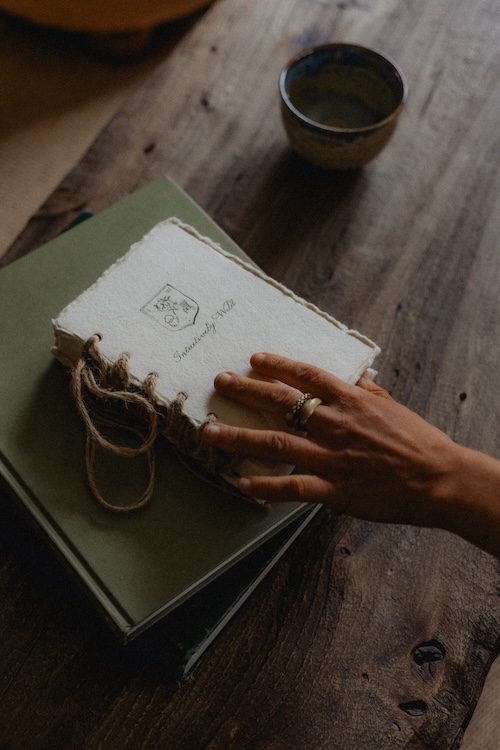
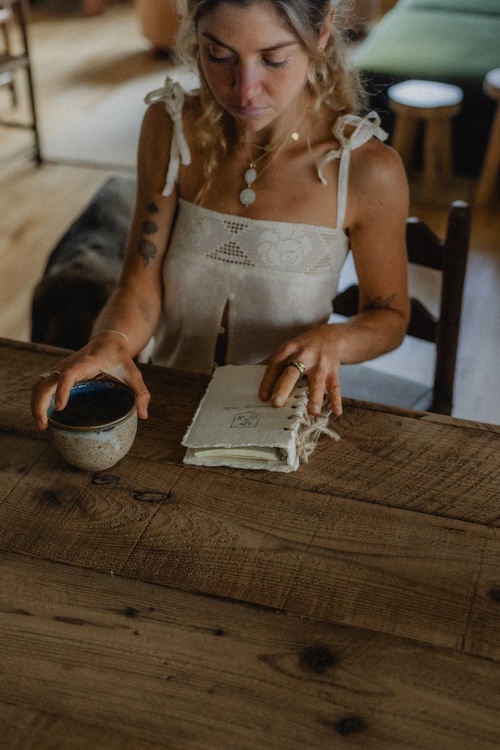
My number one suggestion is morning, mid-day and evening check-ins. Building the ritual into your day as a non-negotiable- putting it in your calendar, scheduling an alarm, closing your door, putting your phone on “do not disturb”. These check-ins can be as simple as three deep breaths, five minutes to sit with your tea, ten minutes with your journal, or a walk around the block. They can be opening the window and feeling the wind on your skin, making friends with the bird on your porch, dancing to their favorite song.
I hesitate to be more descriptive or detailed because everyone has their own needs and preferences, but the foundation is the same. Build pauses into your day every day, check in with yourself, learn to listen to what you need, and actually follow through with action.
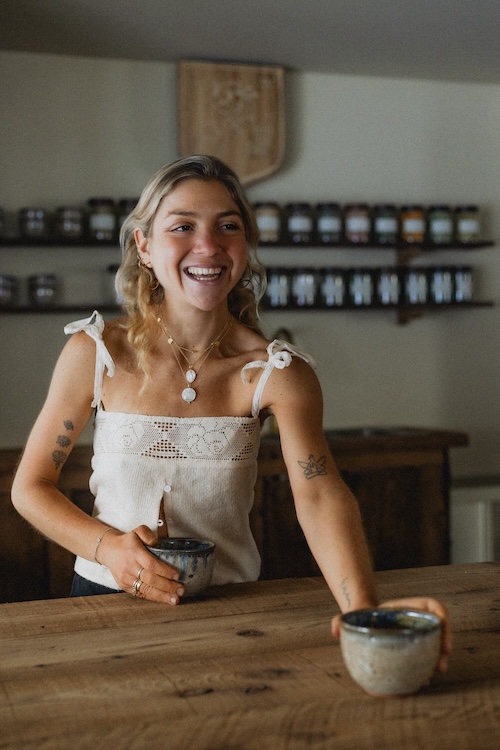
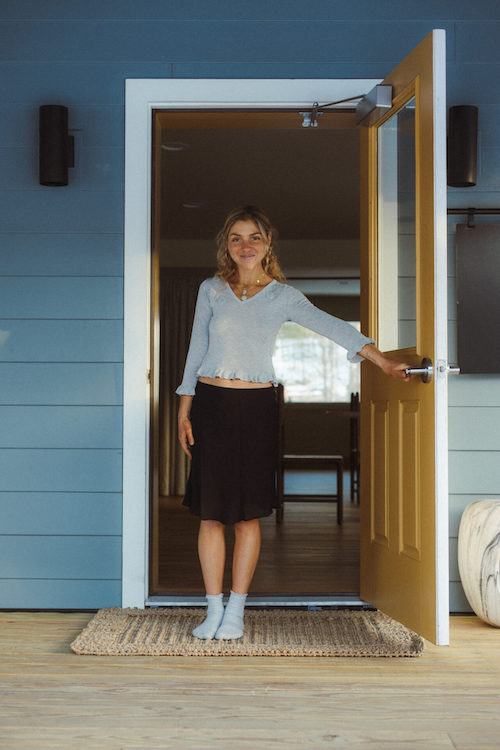
Photos courtesy of Pine and Fable Photography
+ + +
EXPLORE THE DIRECTORY and EVENT CALENDAR for more Hudson Valley experiences designed to help you reconnect, find stillness, and cultivate a deeper sense of peace and community.
Related Posts

Write a Comment
You must be logged in to post a comment.