


How to Look Chic When It’s Freezing: Stylist Hillary Harper Neal’s Winter Edit
Does winter dressing exhaust you before you’ve even pulled on a sock? By February, getting dressed can feel less like self-expression and more like a logistical exercise. Layers accumulate. Silhouettes soften. Somewhere between the thermal base and the final zip, even the most style-minded among us can look in the mirror and see a version that feels… padded. Serviceable. Slightly snowman-adjacent.
A good winter wardrobe should do more than protect against the elements. It should preserve a sense of shape, intention, and self beneath the layers — something that quietly erodes during the long stretch of Hudson Valley cold. Fashion stylist Hillary Harper Neal has built a career helping women recover exactly that.
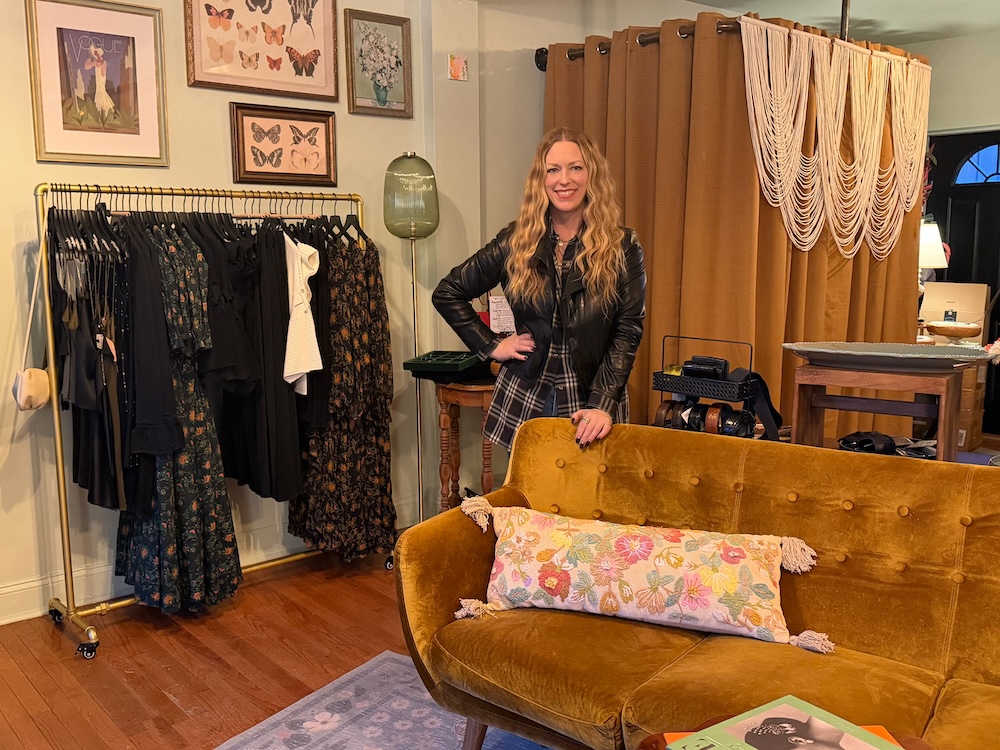
In Cornwall, New York, her two sister shops — ReDiscovered and Discovered — sit a few doors apart like a small, stylish ecosystem devoted to getting dressed well without intimidation. It is, in her words, “the nicest way to shop,” and something she believes has been missing from retail for at least fifteen years. Luxury, she has watched, shifted toward a rarefied one percent. The experience became sharper, more exclusive, less human. Hillary’s response is simple and quietly radical: open the doors wider. “I’m here to say that luxury is more than a price tag,” she says.
“Luxury is more than a price tag. It’s the experience — a place to learn about fashion, to put clothes on, and feel better when you walk out.” — Hillary Harper Neal
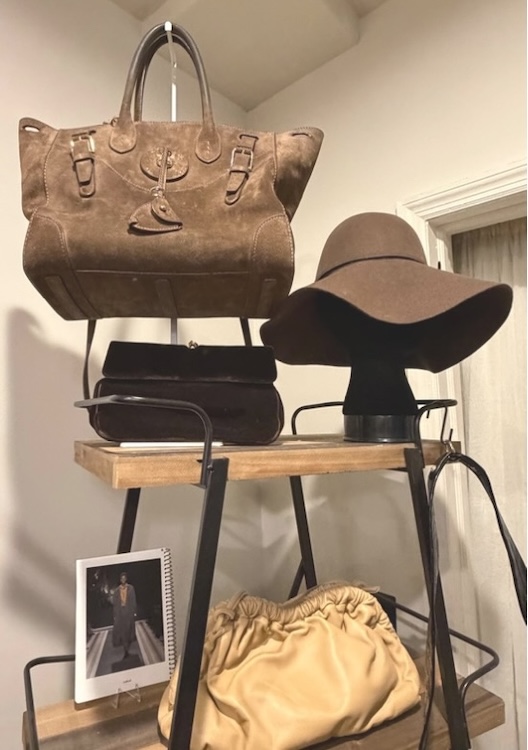
Inside ReDiscovered, her resale boutique, racks hold an ever-evolving mix of designer pieces that feel less like relics and more like living wardrobe staples: a beautifully cut Max Mara coat, Stella McCartney tailoring, Marni knits, the occasional flash of Chanel, Valentino, or Dior. Manolo Blahnik heels wait patiently for their next evening out. Nothing feels museum-like or overly precious. Alongside those pieces sit curated thrifted finds at highly accessible price points — because, as Hillary sees it, the pleasure of discovery should never belong to just one bracket of shopper.
Two doors down, Discovered turns the lens forward. Independent designers and new collections here aren’t about chasing whatever just walked off a runway. Hillary selects pieces the way a master tailor thinks about a wardrobe: considering line, proportion, and longevity first — how something is built, how it moves, how it will hold up after years of real use. There are sculptural, quietly confident silhouettes from Grammar and The Other, beautifully made Italian knits from Lemme, and refined essentials that feel considered rather than conspicuous.
She lights up when she talks about knitwear — especially the pieces from Kristina Collins. They’re soft, substantial, and, crucially, they don’t pill. “I’ve beaten mine up,” she says, almost proudly. “They just hold up.” It’s the kind of endorsement that carries more weight than a logo.
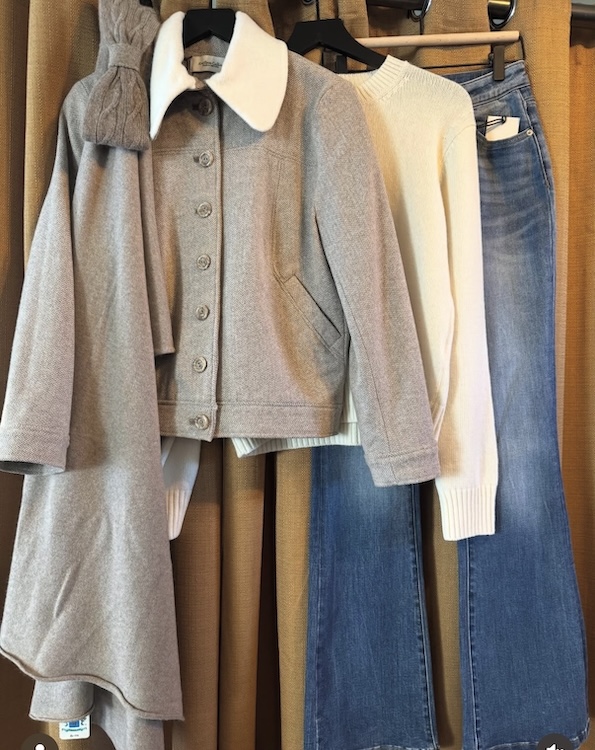
And then there’s the denim from Mica — which Hillary insists, without hesitation, are “the most comfortable jeans you’ll ever put on.” It’s not hyperbole; it’s the verdict of someone who has spent decades in fitting rooms and knows exactly when a pair of jeans is worth taking home.
What distinguishes both shops is not just what hangs on the racks, but the balance they strike. Price points begin delightfully low—Hillary keeps ten-dollar gems in constant circulation—yet the racks are equally rich with stunning designer pieces, creating a mix that feels both democratic and deeply chic.
“I always want there to be something for ten dollars,” she says. “I want everyone to be able to come in and do a treasure hunt.”
Curiosity is encouraged. Clients come for closet edits, seasonal recalibrations, or simply to try things on without the faint anxiety that can accompany most retail environments. The goal is not pressure, but possibility.
“It’s not really about the sale,” she says. “It’s about the whole experience. A place to learn about fashion, to put clothes on, and feel better when you walk out.”
She did not begin her professional life in fashion. She trained first as a musician, a performance major practicing with near-athletic discipline. Fashion was the parallel love — constant, absorbing, but initially secondary. At nineteen, she pivoted, leaving one path and walking into Saks Fifth Avenue with little formal experience and a surplus of confidence. They hired her. “I joke that I grew up there,” she says. “I wasn’t born into fashion, but I became an adult inside it.”
Her timing was fortunate. She entered luxury retail before it calcified into something more remote, moving through Saks, Bergdorf Goodman, and the Neiman Marcus world before becoming a stylist and personal shopper early in her career. More than twenty years later, she has watched the industry cycle through excess, consolidation, and an increasing fixation on an ever-narrower clientele. What interests her now is something more human.
“I’m trying to create experiences that are more about the client,” she says. “Friendlier. More grounded.” She pauses, then laughs lightly. “At the risk of sounding cheesy, we’re the nice girls of fashion.”
“At the risk of sounding cheesy, we’re the nice girls of fashion.”
— Hillary Harper Neal
It’s not a throwaway line. Hillary and her team follow the collections, understand the runway, and know what’s coming next. But the goal at Discovered and ReDiscovered isn’t to intimidate or impress. It’s to open the door. To remove the low-grade anxiety that can accompany getting dressed — especially in winter, when practicality can flatten everything into sameness.
That perspective becomes particularly relevant during the coldest months, when getting dressed can feel less like expression and more like endurance. Upstate life is physical. You are driving in snow, hauling wood, walking dogs before coffee. Even the most style-inclined can slip into a kind of utilitarian fog.
‘Upstate life is physical. You are driving in snow, hauling wood, walking dogs before coffee. Even the most style-inclined can slip into a kind of utilitarian fog.”
Her styling philosophy — what she calls creative wardrobe management — rests on a deceptively simple premise: fewer, better decisions. A closet that reflects a real life. Pieces that feel current without tipping into costume. In the fitting room, she quickly dismantles comparisons.
“Comparison is the thief of joy,” she tells clients. “We’re not going to look like someone else. We’re going to look like the best version of you.”
“Comparison is the thief of joy. We’re not going to look like someone else — we’re going to look like the best version of you.” — Hillary Harper Neal
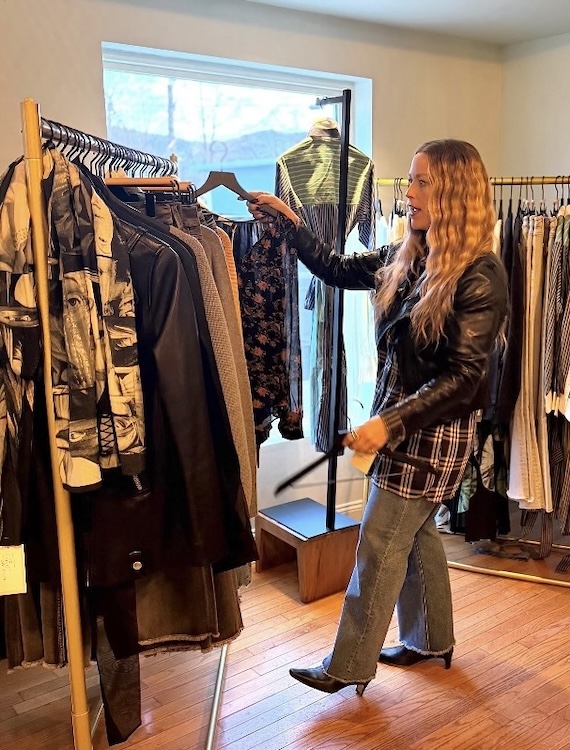
Hillary Harper Neal’s Winter Style Playbook
Winter has a way of turning even good dressers into pragmatists. You start the season with intention and end it in whatever happens to be clean, warm, and not actively irritating. Hillary’s solution isn’t to fight winter. It’s to dress for it with clarity — the kind that keeps you warm without losing yourself.
Layer — Don’t Pile
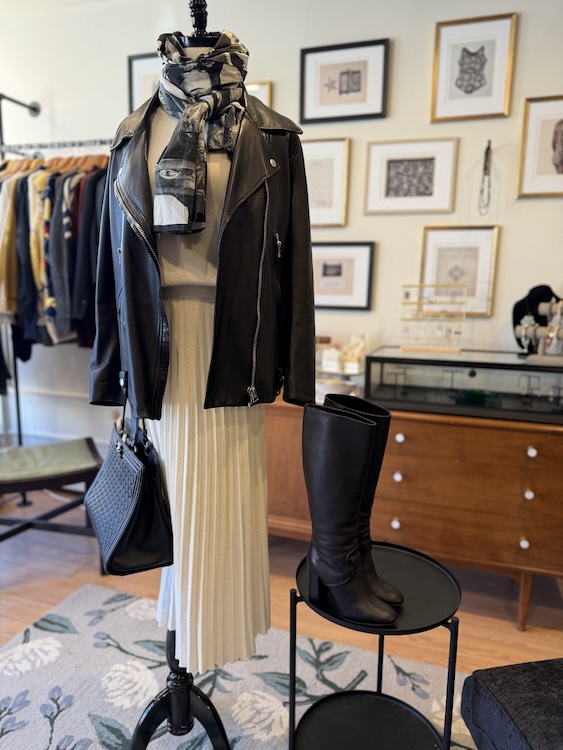
“The difference is layering versus piling,” Hillary says. “Layering has intention.”
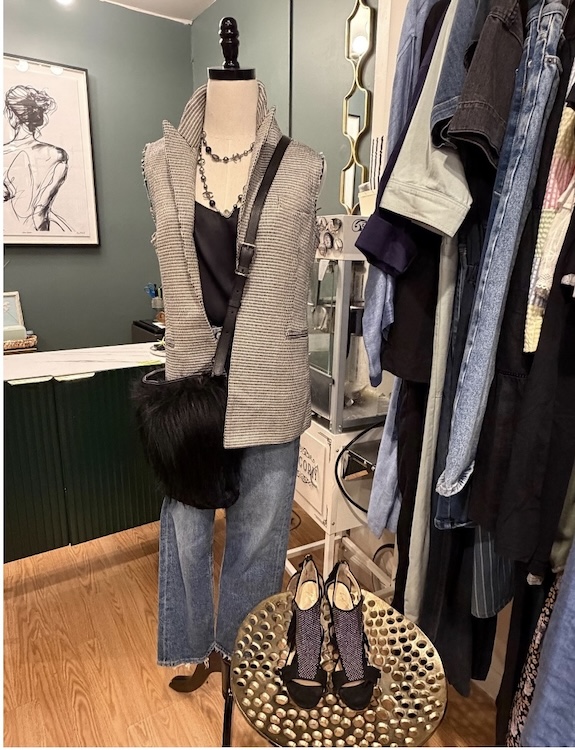
Winter bulk is inevitable. Looking swallowed by it is not. The key, she insists, is what goes closest to the body. “I prefer a thinner-gauge knit under a blazer,” she says. “That’s what keeps you from feeling like the kid in “A Christmas Story.” The goal is warmth without immobility — coziness that doesn’t trap your arms at your sides.
She’s been buying ahead with this in mind. One piece she loves right now is a modern take on the dickey — not just a collar insert, but a sleeveless sweater vest with structure and subtle detailing. It gives the illusion of a full knit layered under a jacket, but without the extra bulk at the sleeves. “It looks like you’ve layered something substantial,” she says, “but you can still move.”
Styled on its own over a crisp cotton blouse, it reads intentional and sharp. Under a coat, it creates depth without heaviness. The effect is fitted coziness — the appearance of insulation, minus the claustrophobia.
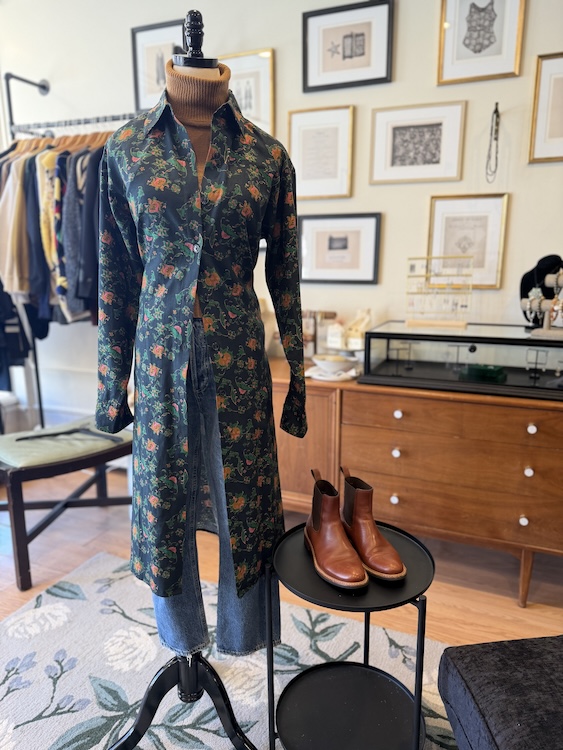
She also loves a long shirtdress in winter, worn open or lightly belted over a slim turtleneck and jeans — the kind of full-length warmer that reads intentional rather than bundled. It creates a vertical line, movement, and ease all at once. “You still feel dressed underneath,” she says — crucial in upstate life, where forty degrees at noon can follow a morning that felt arctic. If layers come off, the outfit still holds.
“Layering is about thinking ahead,” she says. “It’s about knowing where you’re going and building the outfit so it works the whole way.”
Dress for Your Shape — Not the Trend
Most winter “style problems,” Hillary says, are simply physics. Thick knits and heavy coats create bulk whether you intend them to or not. The answer is proportion.
“Getting dressed well is really just a lot of tricks,” she says. “It’s not about hiding. It’s about accentuating the positive.”
If you’re heavier on the top or bottom, the goal is elongation. A touch of height — a block heel, a chunkier boot, even an elongated pointed toe — quietly stretches the line of the leg. “Finding a comfortable height in your shoe helps you play with fuller pants or longer skirts,” she notes. The wider the pants, the closer they should fall to the floor for the longest silhouette.
At the waist, she favors subtle structure. A “twist and a half” half-tuck in the center pulls fabric forward and creates a gentle V toward the middle, especially when framed by a well-fitting, hip-length blazer. The result is not dramatic. It’s controlled — the illusion of contour, the preservation of shape.
Her fitting-room refrain is steady and reassuring: “We’re going to look like the best version of you.”
Tonal Dressing as Your Style Shortcut
Monochromatic color play is Hillary’s favorite winter trick — the fastest way to look polished without trying too hard.
“Tonal, monochromatic always looks the most elevated,” she says.
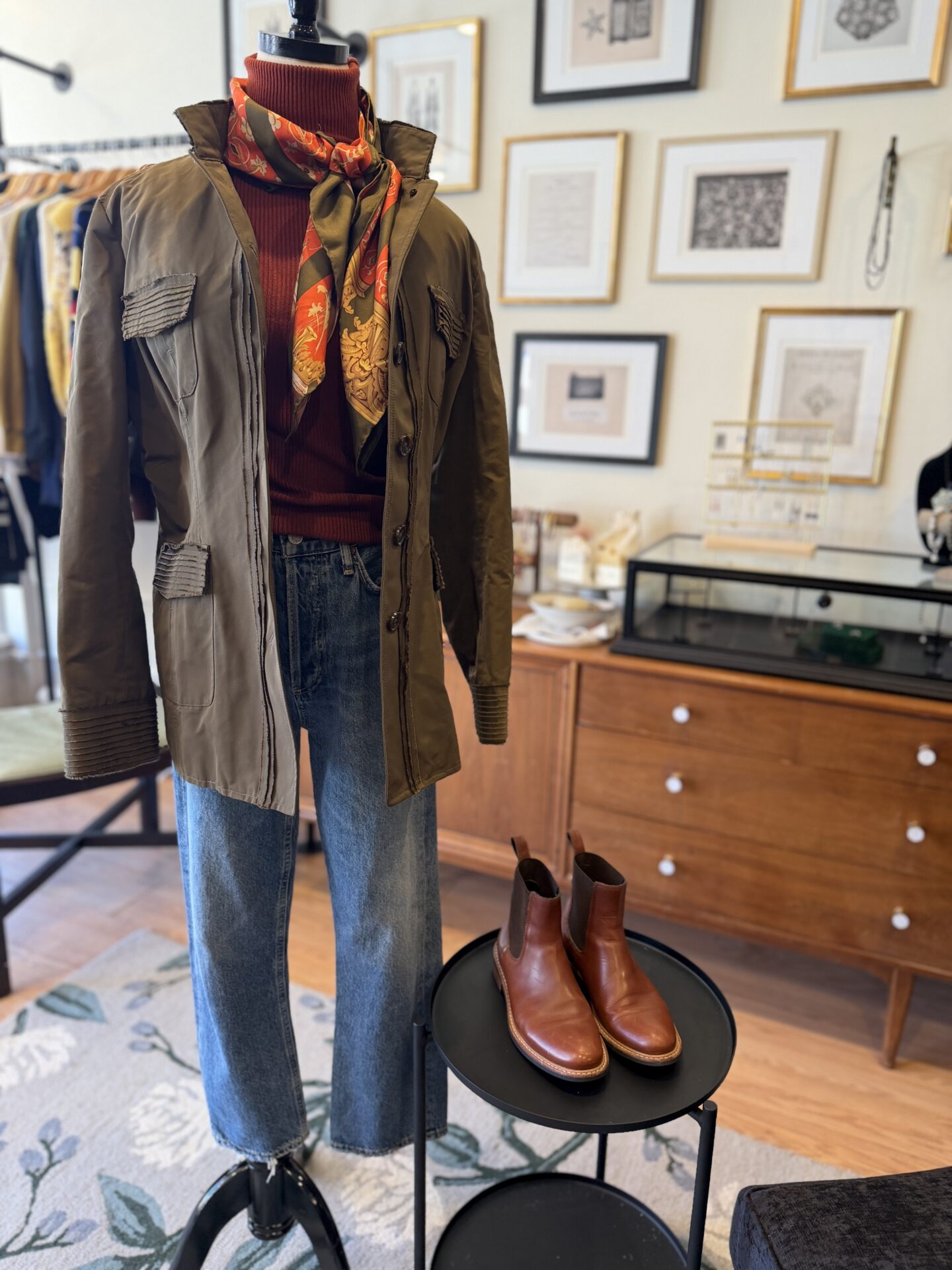
The idea is less about matching and more about mood. Think oatmeal layered with winter white, charcoal over soft black, olive threaded through shades of green and gray. “It doesn’t have to be exact,” she explains. “It’s about staying in the same tonal family so the layering looks clean.”
“Tonal, monochromatic always looks the most elevated. It’s the fastest way to look polished without trying too hard.”
— Hillary Harper Neal
Her rule is precise: limit yourself to three base neutrals and repeat one of them. That repetition — a shoe echoing a belt, a scarf pulling from a sweater — creates quiet cohesion. Too many competing neutrals, on the other hand, fracture the look. “If you have sixty different shades screaming,” she says lightly, “it just looks a little crazy.”
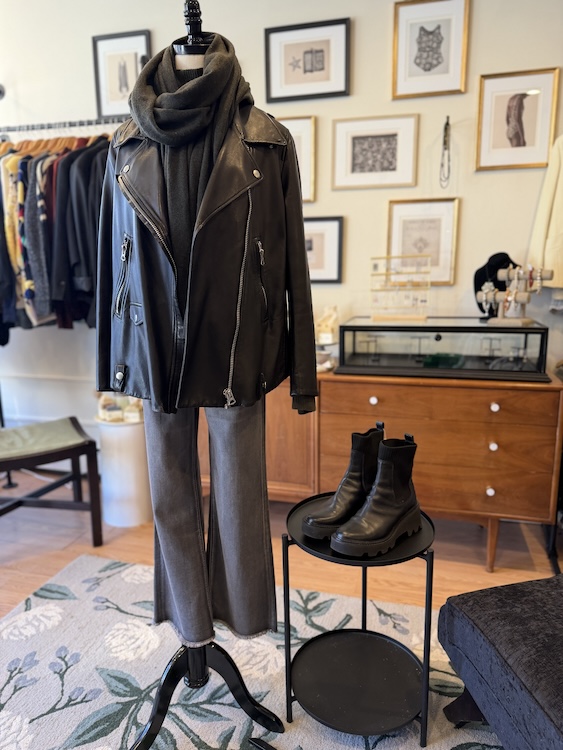
One favorite example is an olive-on-grey winter look: soft grey denim, a coordinating dark green knit, a tonal scarf layered under a darker leather jacket. The effect is lush rather than busy — each piece building on the next. “It looks richer,” she says. “More put together. Like an even more luxurious version of the sweater.”
Invest Where It Counts
Hillary believes in quality — but she’s always considering budgets.
“Better pieces last longer and cost less over time,” she says, then quickly adds, “That doesn’t put money in someone’s pocket today.”
Winter is where clothing works hardest. Coats, knits, boots — they take the brunt of the weather and repetition. So if you’re going to invest anywhere, invest in the pieces that keep rewarding you.
Knitwear is often the first place she looks. “It should have a smooth hand,” she says. “Even if it’s chunky, it shouldn’t feel rough.” That roughness is what causes fibers to pill. Her sweet spot for high-quality sweaters typically falls between $150 and $350 — fine merino, cashmere, well-woven blends, pieces that hold their shape.
Care matters just as much as cost. Despite what labels suggest, she avoids excessive dry cleaning. “It breaks down the quality of the garment over time,” she says. Instead: delicate wash or cashmere wash, reshape, lay flat to dry. And give your clothes room to breathe. She encourages clients to install a small rack or hook outside the closet — a place to hang pieces overnight, mist lightly with fabric refresher, and let air circulate before tucking them back into a crowded rail.
Choose a Coat Like a Partner
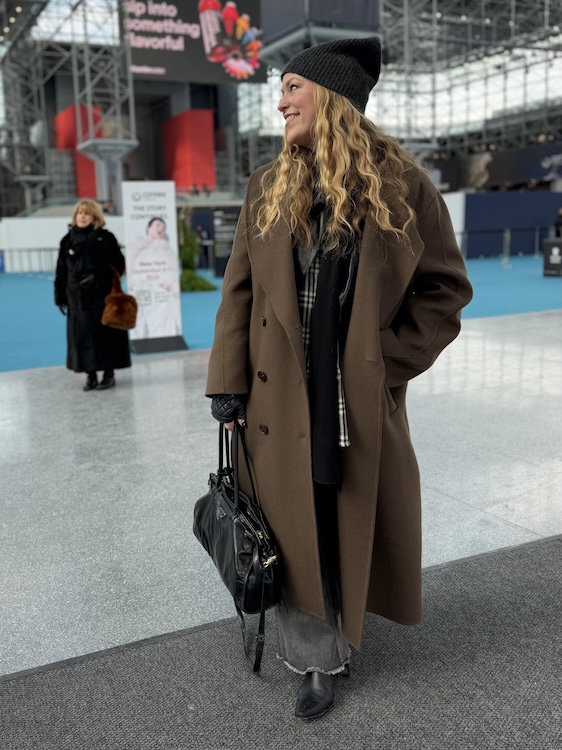
“A good coat should last ten years,” Hillary says. “It’s a marriage, not a date.”
“My coat is my absolute MVP,” she admits. “I know I arrive in a striking, classic, elevated piece. It’s my first impression.”
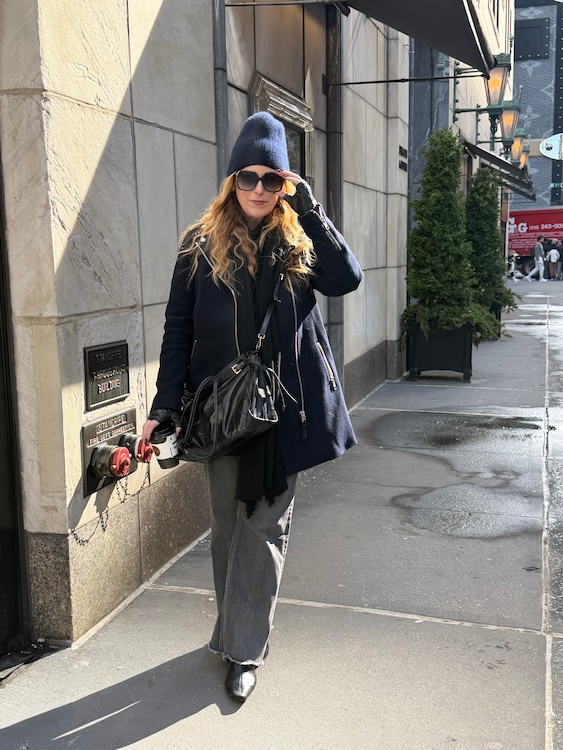
Her current favorite is a long ROHE coat in a mushroom-taupe — her version of camel. “Your coat should work with your base colors and your complexion,” she says. “It should move between those tonalities.”
“A good coat should last ten years. It’s a marriage, not a date.” — Hillary Harper Neal
Fit comes first. Then color. She favors long lines — ankle-length when possible, knee-length at minimum. “A full-length coat works over jeans, and it works over an evening gown,” she says. The beauty is in its versatility: one sweeping silhouette that carries you from school drop-off to dinner out without ever feeling underdressed — or overdone. Leather, properly conditioned, becomes armor. Wool endures. What she discourages for a primary coat is impulse color. “If red makes your heart sing, wonderful,” she says. “But maybe that’s your second coat. Get your stable of classics first.”
Finish the Look
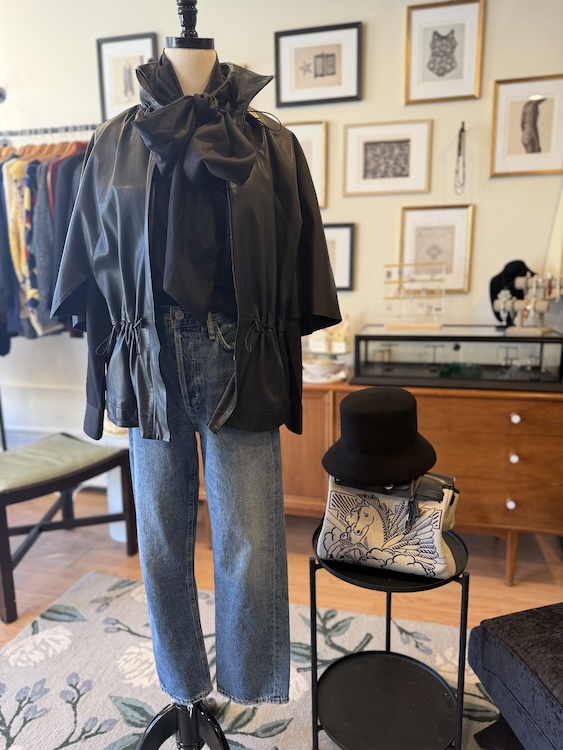
Hats, gloves, scarves — these are not afterthoughts. They are punctuation.
“I have a shelf just for them,” Hillary says. “They change the whole mood of an outfit.”
A lush-toned scarf keeps everything elevated and seamless; swap in something embroidered or patterned, and the entire look shifts. Heading out to dinner? Tie a silk scarf into an exaggerated bow at the neck, or introduce a touch of velvet — a collar, a ribbon, a glove — and suddenly the cold feels almost theatrical. Play. Have fun with it.
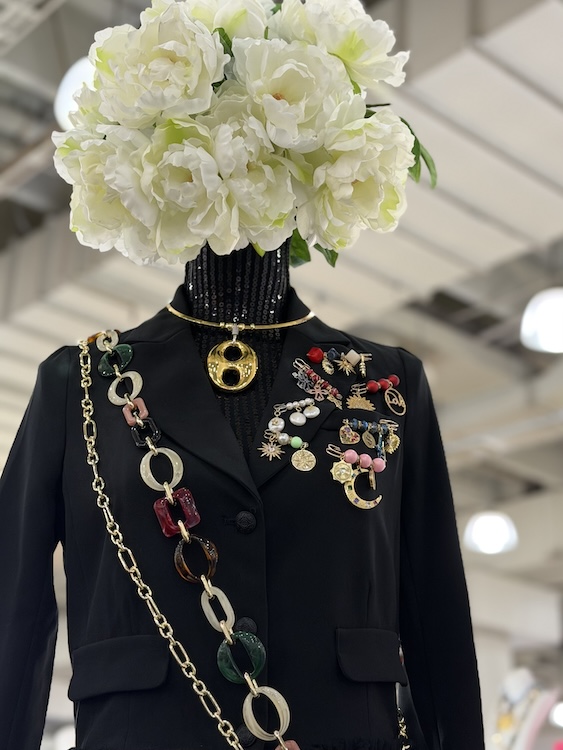
Lately, Hillary has been encouraging clients to think of outerwear as something personal rather than fixed. Brooches and decorative pins — customized in-shop — allow coats and bags to evolve into one-of-a-kind pieces over time. At Discovered, customers can create their own combinations using an ever-growing collection of charms, chains, oversized diaper pins, and gold-filled carabiners, transforming everyday accessories into quiet signatures. The effect is elegant rather than ornamental: a coat that gathers meaning as it’s worn, becoming less an outfit and more a story — individual, lived-in, unmistakably yours. In winter, when everything else can feel uniform, a small personal detail becomes the difference between simply getting dressed and truly feeling dressed.
And then the bag: the cherry on the layering sundae. A crossbody worn over a coat does more than carry essentials — it creates shape, drawing a line across oversized silhouettes and quietly defining the waist. “It can give you form back,” she says.
“Those little things make you feel finished.”
And feeling finished in February — polished, warm, unmistakably yourself — is no small achievement. In a season that encourages retreat, Hillary Harper Neal makes a quiet case for engagement, beginning where it so often does: with what you choose to put on in the morning.
Stay warm. Stay cozy. And if you happen to look impossibly well-dressed while doing absolutely ordinary things — walking the dog, buying leeks, running into someone you once loved — consider it Hillary’s kind of winter victory.
Photos courtesy of Hillary Harper Neal
Follow/Connect with Hillary Harper Neal via Website | Instagram
+ + +
Click HERE to see all of our exclusive interviews with the amazing folks who proudly call the Hudson Valley home.
Related Posts

Write a Comment
You must be logged in to post a comment.