


The Road Less Traveled: Inside the Craft of Catskill Trail Building
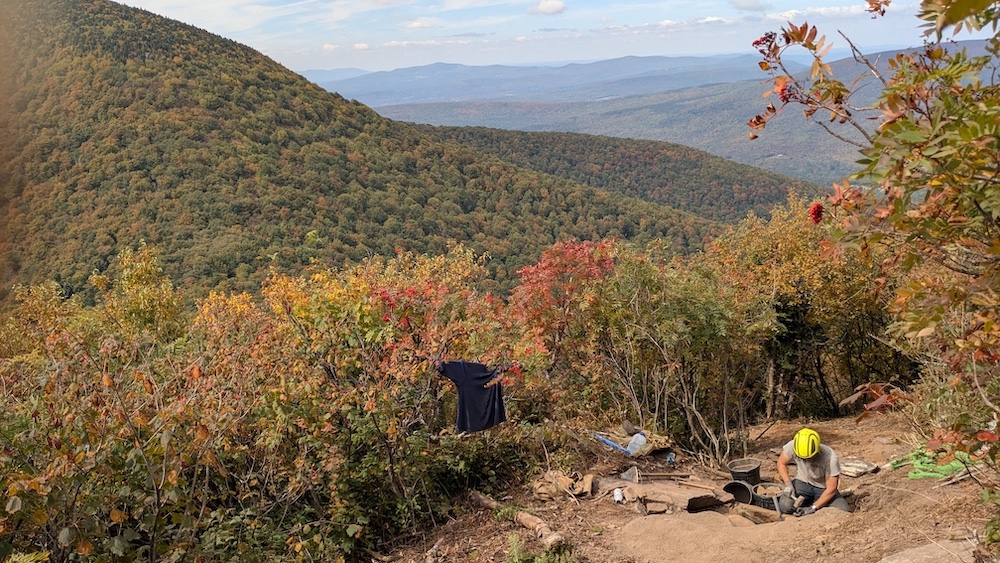
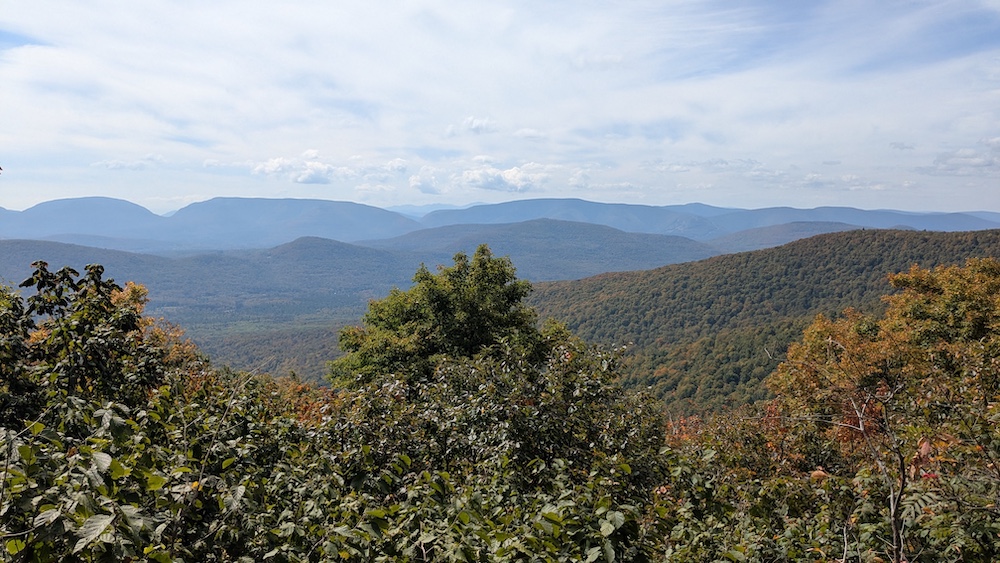
On a warm day in early fall, a small crew of skilled workers is fixing trails on the steep slopes of Blackhead Mountain in the northern reaches of the Catskill Park. We are near the summit of the nearly 4,000-foot peak, a wildly beautiful place to work. Facing us is the majestic summit of Black Dome, its burnt-orange canopy of hardwoods giving way to an emerald crown of evergreens. Beyond Black Dome, the contours of the Catskill range ripple away magically to the south.
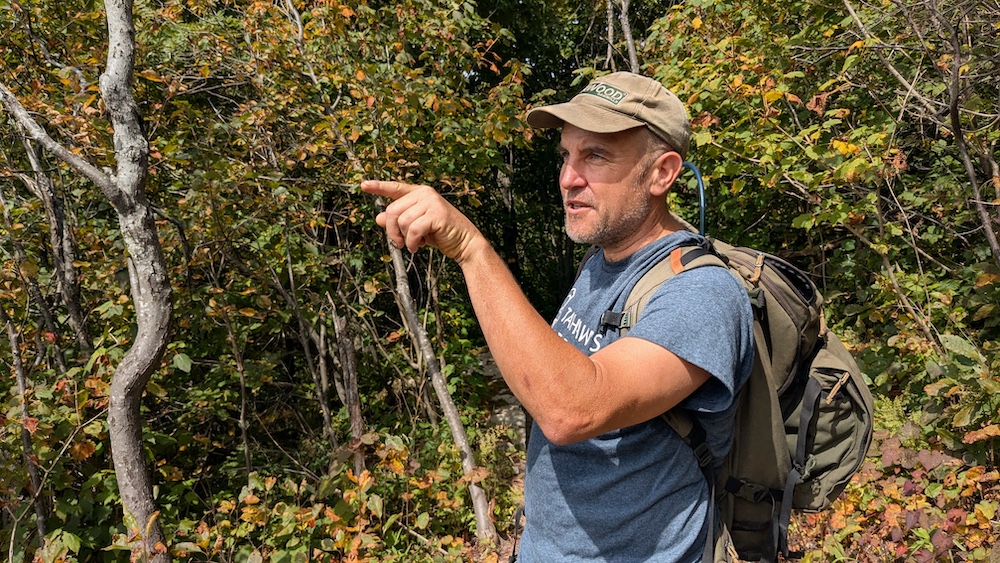
I sat among the red berries of Mountain Ash, enjoying the sunshine, admiring the view, and resting after an uphill, hour-long hike that brought us here from the trailhead. My guide was Eddie Walsh, founder of Tahawus Trails, a professional trail-building company based in Accord, New York. Walsh is a veteran of more than three decades of trail building, starting as a volunteer in the mid-1990s before founding his own company in the early 2000s. From humble beginnings, Tahawus has grown into a thriving trail-building enterprise, with its crews operating throughout the Hudson Valley and as far afield as Niagara Falls and the Caribbean.
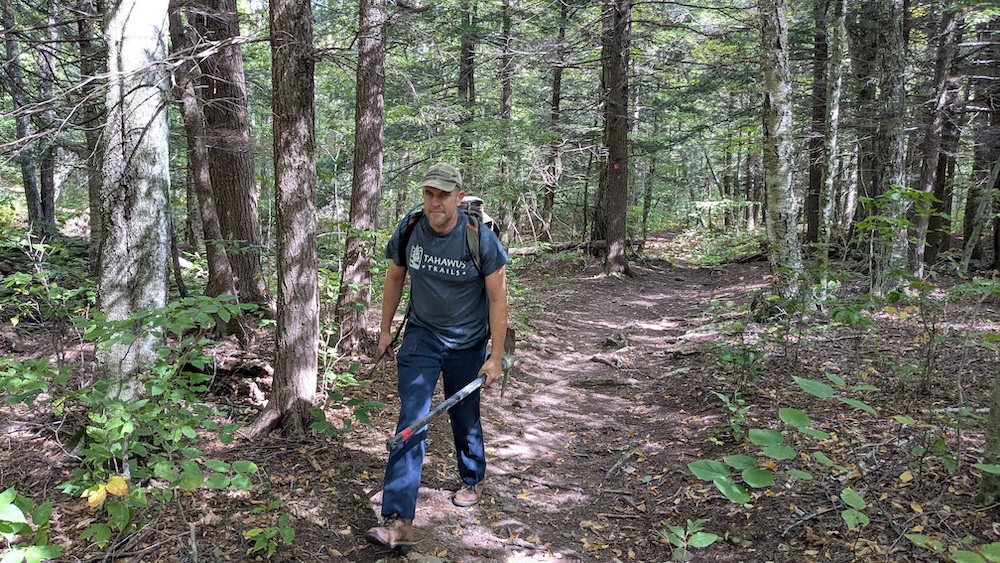
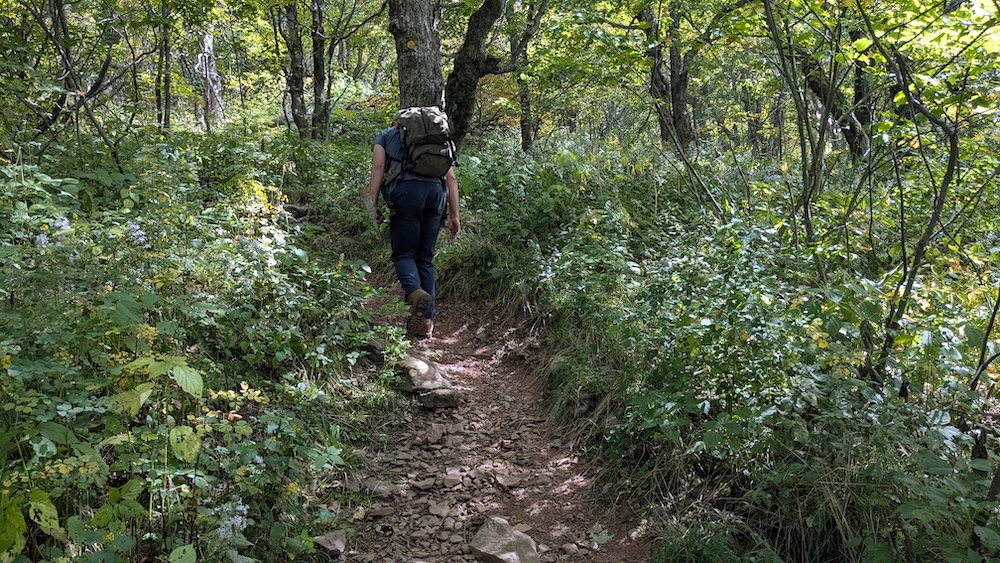
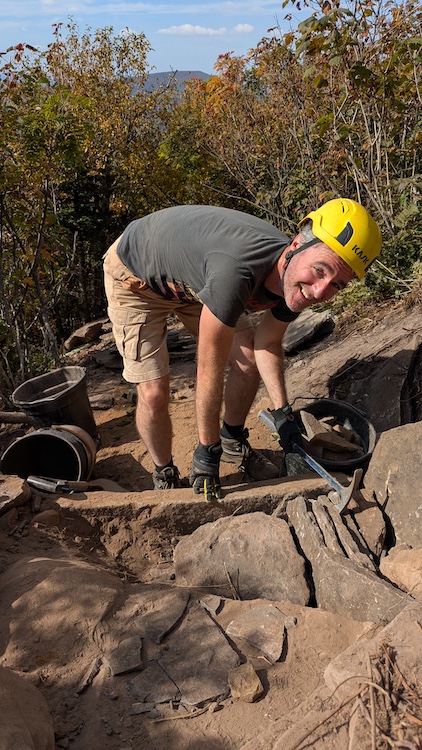
The four-person crew he has fixing the Blackhead trail has been here for several weeks, rerouting a small section of the upper reaches of the path that has eroded. I am here to join them for the day, but after the exhausting two-mile commute up the mountain, I can’t say I’m dying to get to work.
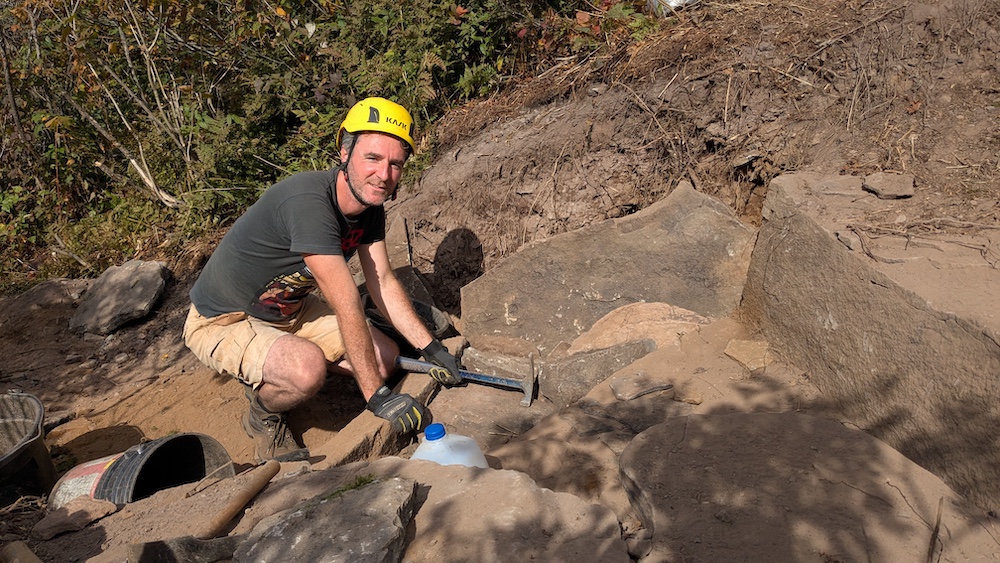
Because the work site is located inside a state park, there are strict restrictions on the technologies and materials Walsh’s team is allowed to use. To avoid disturbing local wildlife, power tools are prohibited. The materials, too, have to be sourced from the local environment, meaning that the huge boulders required to construct the trail’s steps need to be harvested from the surrounding slopes and moved using hand-operated hoists and slings.
I get to work. Crew member Nick Rogers hands me the metal handle of a grip hoist, which we will use to drag a one-ton boulder across the forested slopes. About twenty feet away, Rogers’ colleague, Owen Goodman, has connected the hoist to the boulder via a reinforced steel cable and a thick canvas sling.
“Rock on!” Goodman shouts, without irony, as the sling is secured. Next comes the command: “Tension!” That’s my cue to start winching. I work the grip hoist back and forth until, almost miraculously, the massive rock begins to move through the undergrowth. As it shifts, Goodman guides it with a steel bar, wedging the tool beneath the stone and rocking it forward using a technique known as “rowing.”
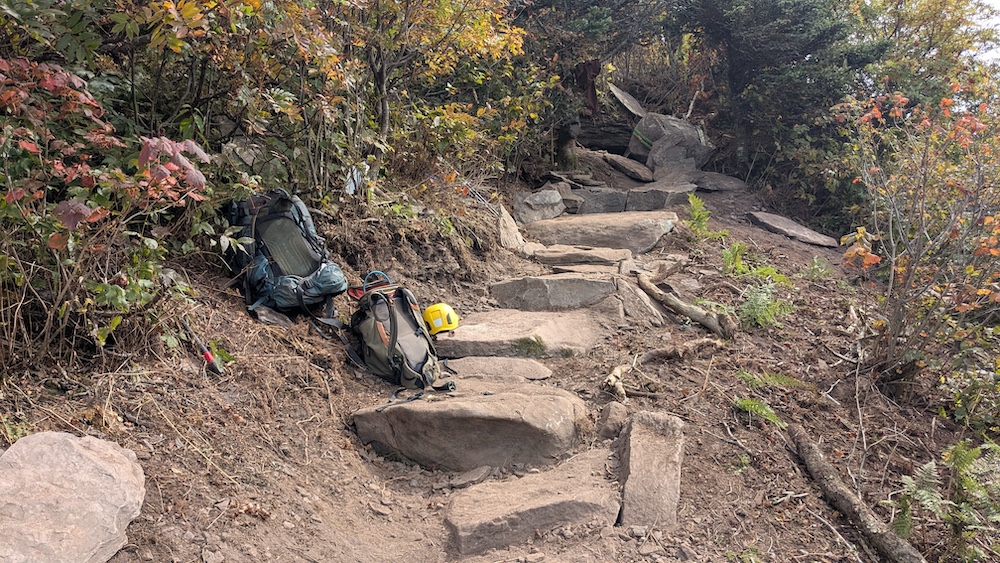
It is hard physical work, but successful trail building requires brains as well as brawn. Once we have the rock by the edge of the trail, we need to consider how it will be incorporated into it. “The placement of the rocks is 80 percent engineering and 20 percent art,” says Rogers.
This is because a good trail, and certainly one that runs through a wilderness area, shouldn’t draw attention to itself. “Often the best work is what people don’t even notice was built,” says Walsh. “Certainly, in places like this, we don’t want to build something that looks like a stairway. We want it to blend in as much as possible.”
The trail-builders also want hikers to use the trails in ways that minimize erosion over time. With this in mind, says Rogers, stones can be positioned to encourage hikers to avoid treading on the downward side of an incline, where the path can more easily be worn down.
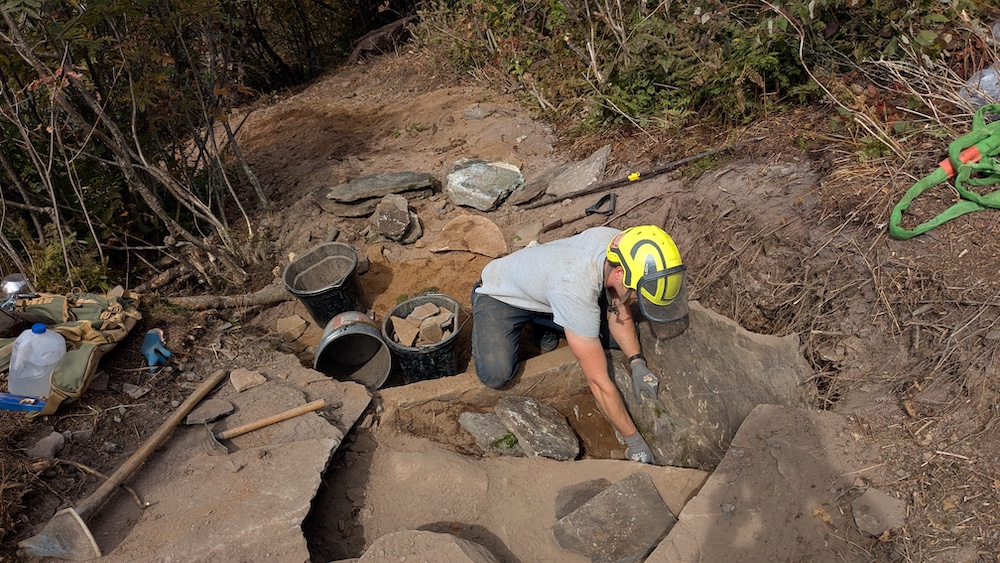
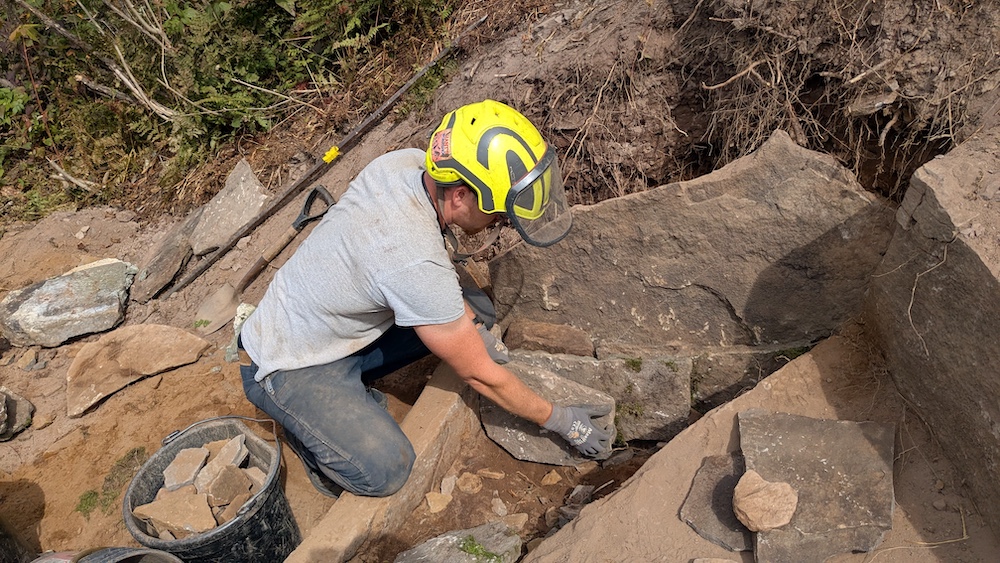
Another crewmate, Seamus Barry, shows me how the trail steps are built. To form the vertical side of the step, a large flat stone is wedged into the ground, a process known as “knifing.” “As much as two-thirds of the stone is submerged to ensure the steps stay solid,” Barry explains. Once in place, broken-up pieces of rock known as “crush” are packed behind the wedged stone, and finally, a large flat rock is laid horizontally to provide the capstone.
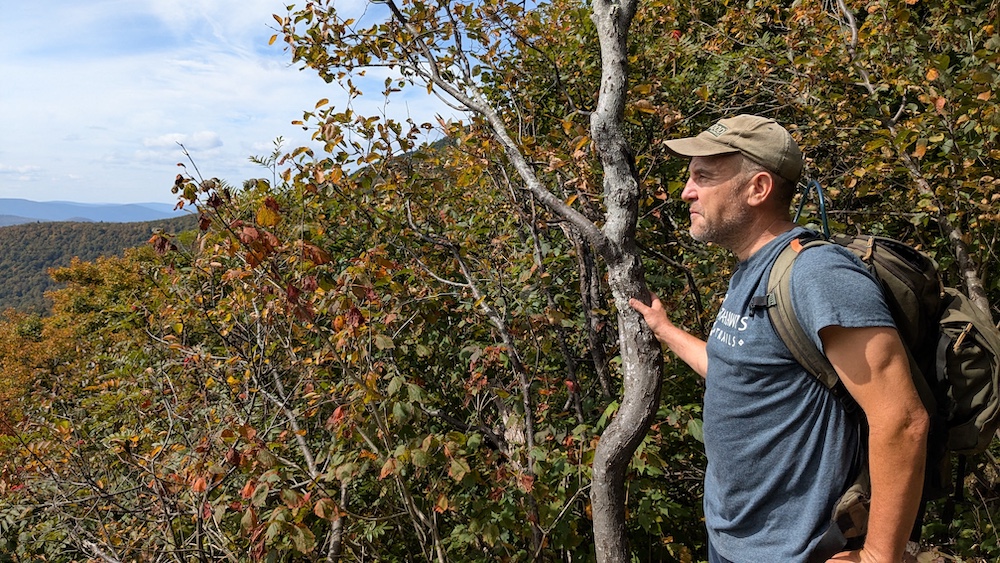 Tahawus is carrying out the Blackhead construction under contract from New York’s Department of Environmental Conservation (DEC), funded by the State’s Environmental Protection Fund, with the goal of reducing trail impact by making the path less steep. “Most of the mountain hiking trails in the Catskills were created to provide the quickest way to get from the bottom to the top of the mountain,” says Walsh.
For this reason, they tend to follow the path of steepest descent—known as the fall line—which is also the direction water travels down the slope. Such steep trails are more susceptible to erosion, a problem exacerbated by a gradual uptick in the number of hikers using them over the years.
“Most of the mountain hiking trails in the Catskills were created to provide the quickest way to get from the bottom to the top of the mountain,” — Eddie Walsh
“Many of these trails date from the 1960s or even earlier, and they weren’t really built with long-term use in mind,” says Walsh. “But alongside the Back-to-the-Land movement of the late 1960s and early 1970s, there was a backpacking boom where there was a big increase in the use of these trails, which produced a lot of challenges.” Similar damage was observed during the surge in hiking during the COVID pandemic, he says, when so many people were out on the trails in such a short period that significant environmental impacts were observed.
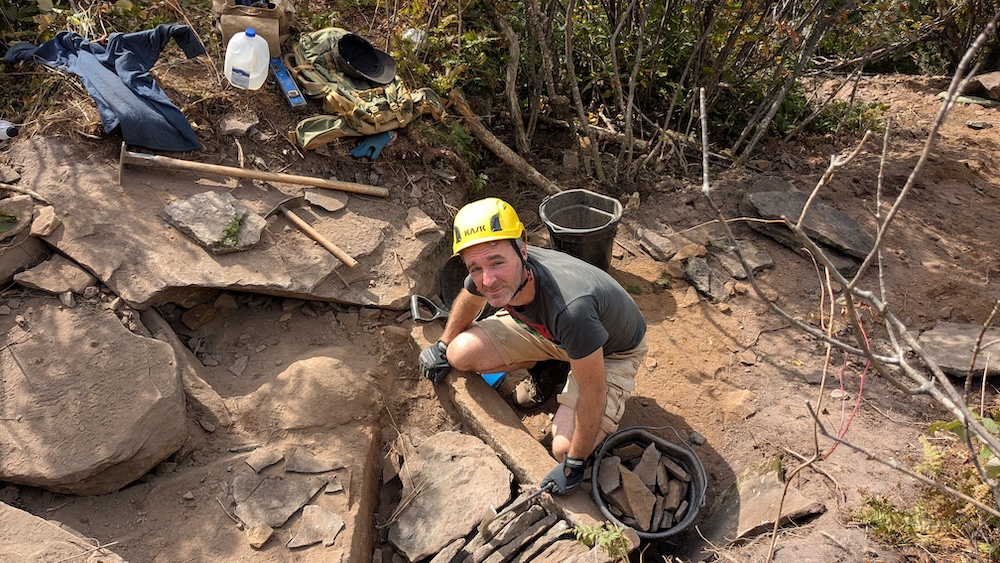
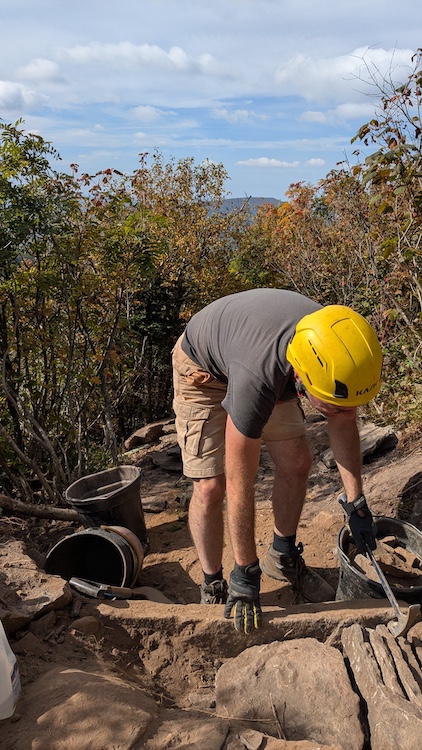
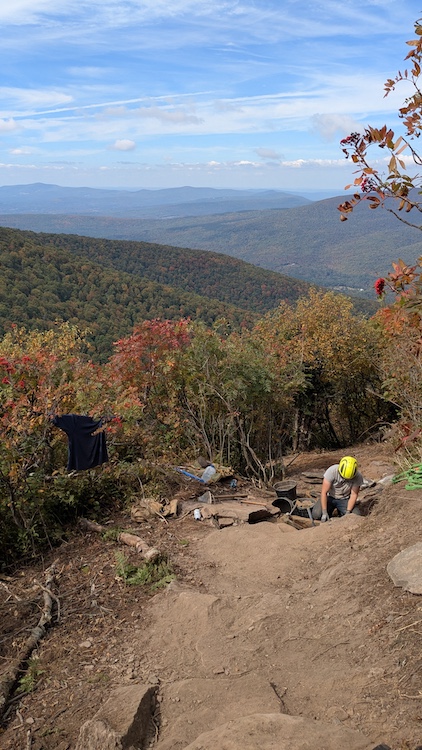
The Blackhead project is one of many by Tahawus’ dedicated team of 38 trail-builders, most of whom work seasonally.
Over the years, the company has shaped some of the Hudson Valley’s most beloved landscapes, with projects at Minnewaska State Park, along the Appalachian Trail, and at the John Burroughs Nature Sanctuary in West Park. Their work now extends well beyond walking paths to include mountain bike trails, bridges, kiosks, and boardwalks. In other words, if you’ve spent time hiking or biking in the region, there’s a good chance you’ve felt the quiet impact of Walsh and his team’s work—whether you realized it or not.
Nor are they limited to the Hudson Valley. Walsh estimates that about half the company’s work comes from outside of the region, with much of it focused on the Adirondacks and Western New York. Whenever possible, the company uses local building materials, but some projects require bringing in stone. An example of this is an ongoing project to construct an outdoor staircase at Niagara Falls, where the “in situ limestone” proved unsuitable for their needs.
According to Walsh, designing a trail requires an intuitive understanding of both how people recreate and how they think. On a walking trail, he explains, the goal is to weave in views and compelling features that naturally draw people forward, encouraging them to stay on the path rather than cutting straight up the slope. A mountain bike trail, however, is shaped by an entirely different set of desires. It’s less about stopping to admire a view or a trillium in bloom, and more about the rhythm and flow of movement—how the rider travels through the forest, moment by moment.
Listening to Walsh, it is clear that I am in the presence of a real artisan—someone who has devoted the last three decades to learning an ancient craft and who has re-purposed these time-honed skills for today’s reality. Besides trail-building, I ask him what else all these years of working in nature have taught him.
“Listening to Walsh, it is clear that I am in the presence of a real artisan—someone who has devoted the last three decades to learning an ancient craft and who has re-purposed these time-honed skills for today’s reality.” —Paul Willis
“I first hiked these woods when I was seven, so it’s a long relationship,” Walsh says. “The longer you spend out here, the more you learn from it.” He explains that no matter where you pause in the forest, there’s always a story waiting to be read. To illustrate, he stops beside an old tree that bends sharply at a right angle halfway up its trunk before straightening itself skyward. The distortion, he notes, was likely caused by another tree falling onto it when it was still a sapling. Some believe trees like this were intentionally shaped by Native people, bent as living markers to guide travelers through the landscape.
Today, it is the team at Tahawus Trails helping us find our way through the region’s wild places, quietly shaping paths designed to endure for generations. When Walsh first began, his own children were small, honing his awareness of accessibility and the value of a trail you can walk on with a three-year-old in tow. “Some people worry we’re making everything too easy, and I understand that,” he says. “But there’s a real satisfaction in watching people use trails that simply wouldn’t exist if we hadn’t built them.”
Photos courtesy of Paul Willis
Follow/Connect with Eddie Walsh via Website | Facebook | Instagram
+ + +
Click HERE to see all of our exclusive interviews with the amazing folks who proudly call the Hudson Valley home.
Related Posts



Write a Comment
You must be logged in to post a comment.