


Mic Drop: A Crash Course in Stand-Up Comedy
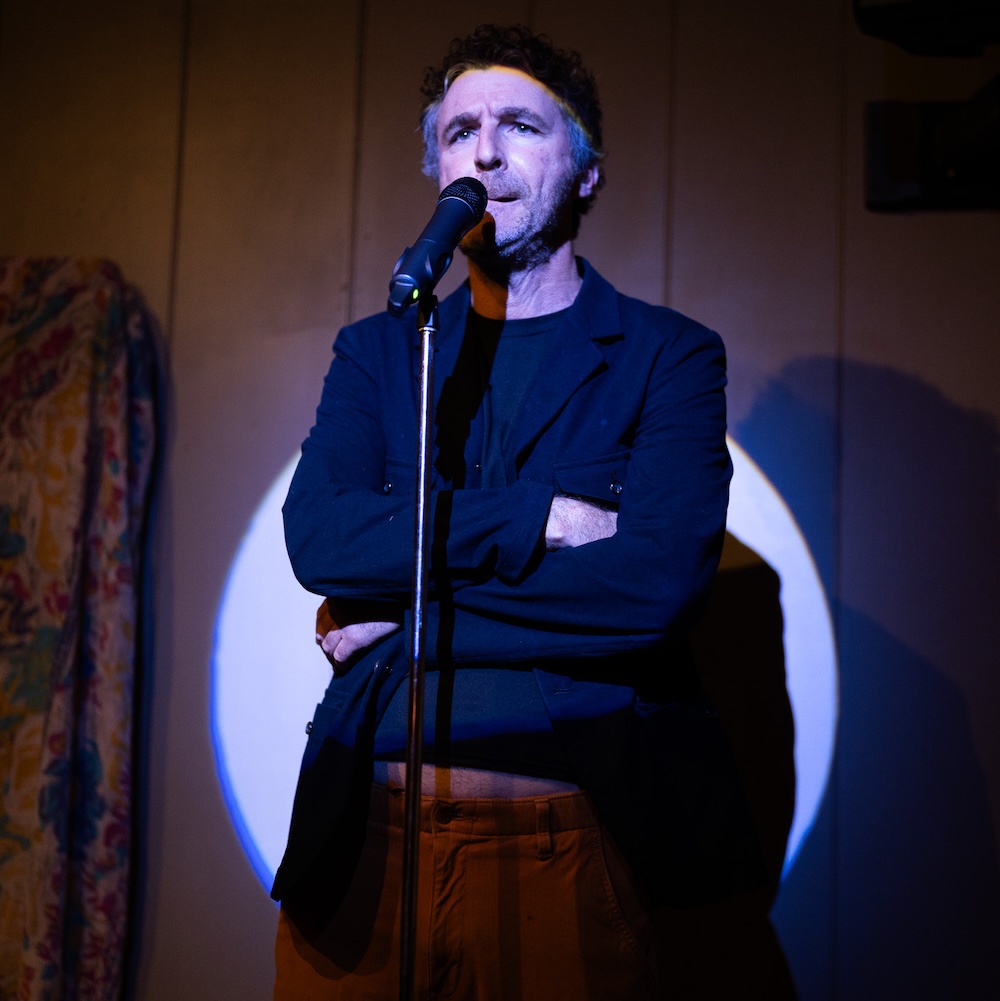
It is a cold Monday night in December, and the Stockade Tavern in Kingston is full of revelers. They are here for laughs; a gig showcasing new stand-up talent, one of whom, inexplicably, is me.
Along with seven other aspiring comics, I have been attending a course for the last six weeks run by Kingston-based comedian Lauren Kincheloe.
Tonight is the culmination of everything Kincheloe has taught us, a chance to test out the material we have been crafting in front of a live audience, and we’re all suffering varying degrees of pre-show nerves.
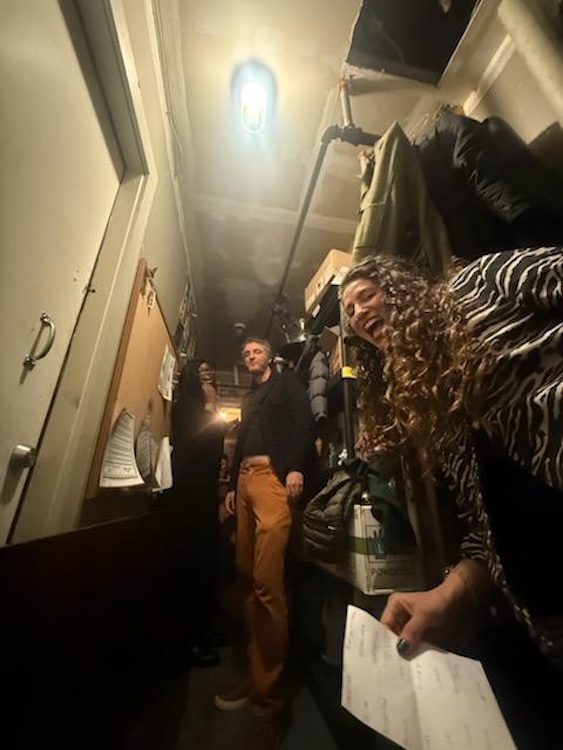
In the improvised green room, some of my fellow classmates pace up and down, notes in hand, trying to commit to memory their routines.
Kincheloe appears backstage to give us our ten-minute warning. I look out on the crowd apprehensively. Revelers take their places at the seats and tables that surround the spotlit stage.
My eyes wander towards the solitary mic stand at the stage’s center, and I feel a wave of excitement mixed with fear at what’s about to come.
I’ve practiced my routine dozens of times in the past week: in the kitchen, in the shower, driving in my car.
With Kincheloe’s help, I’ve trimmed the fat and crafted something that – while it may not bring down the house – should guarantee a few laughs.
But having something good on paper and translating it into a funny show is the difference between sheet music and hearing the instrument live. One is reassuring; the other can still go terribly wrong.
“Okay, take a deep breath,” I tell myself. “It’s just a bit of fun. Not that important.”
But it feels important.
Stand-up comedy has felt important to me ever since the early 2000s when I rented a copy of Bill Hicks’ Revelations tour from Blockbuster Video, and I understood – maybe for the first time – that comedy could aspire to more than just making people laugh.
Watching Hicks prowl the stage, the self-styled “dark poet,” I saw at once how stand-up comedy can be elevated to an artform and, perhaps more importantly, how those willing to test the limits of the artform can become a culture’s truth-tellers – the jesters who spit in the eye of the king and sometimes, though not always, get away with it.
-
- Photo by Garin Sheeley
-
- Photo by Zebulon Brown
Learning Curve
Rewind six weeks to the start of the course.
What is obvious from the first class is that everyone there is funnier than I am. I grew up one of three brothers, so my humor is rooted in the playful banter of boys – somewhat sophomoric by nature. My classmates, by contrast, bring a level of sophistication to their comedy that I can’t quite match.
Take Garin, a waiter in his mid-thirties, whose casual, sardonic wit keeps catching me off guard with the cleverness of his insights. Or Jen, who throws out one-liners with the naturalness of a seasoned pro. Or Molly, a bartender, who talks as fast and funny as she thinks.
Don’t get me wrong, being in their presence is gold. I am learning constantly. And then there’s Kincheloe, our wonderful teacher. A former stand-up (she spent several years gigging in LA), she has just the right mix of encouragement and hard-nosed realism. During our weekly encounters at the Stockade, she encourages us to mine our own lives for jokes. As a result, the Monday meet-ups feel raw, with students talking candidly about deep personal struggles.
Over the course of the six weeks, two important insights emerge. The first is the realization that stand-up has its own grammar; that there is a formula for how to structure a joke and a routine which can be learned and practiced.
The second is the understanding that everyone is funny in their own particular way, which means that the grammar of comedy can only get you so far. What an audience is really responding to are the specific idiosyncrasies that make you someone they want to share a laugh with.
The implication is clear: the more personal you can be, the greater your chances of success.
As Kincheloe puts it to me during a later conversation: “I’m not having people write about their opinions on politics. I’m having them write about the struggles of their daily life. I think you know you’re onto a good joke when someone in the audience can say, ‘Oh God—me too. But I never would have said that out loud.’ It’s about baring yourself. That’s how you become relatable.”
Kincheloe’s challenge to be vulnerable hits home. I’ve had insomnia for the last couple of years and I’ve been avoiding talking about it because of the shame it’s been causing me. The invitation to open up about this painful subject in front of a bar full of strangers is frankly terrifying, and for the first few weeks of class, I avoid talking about it.
Finally, though, the insomnia seems to force my hand. It’s the penultimate class, and the night before, I sleep badly. I spent the next day tired and depressed. At some point, I sit down to write material for that night’s class, and it becomes clear I have to start talking about what I’m going through.
This is my life after all. So why not share it?
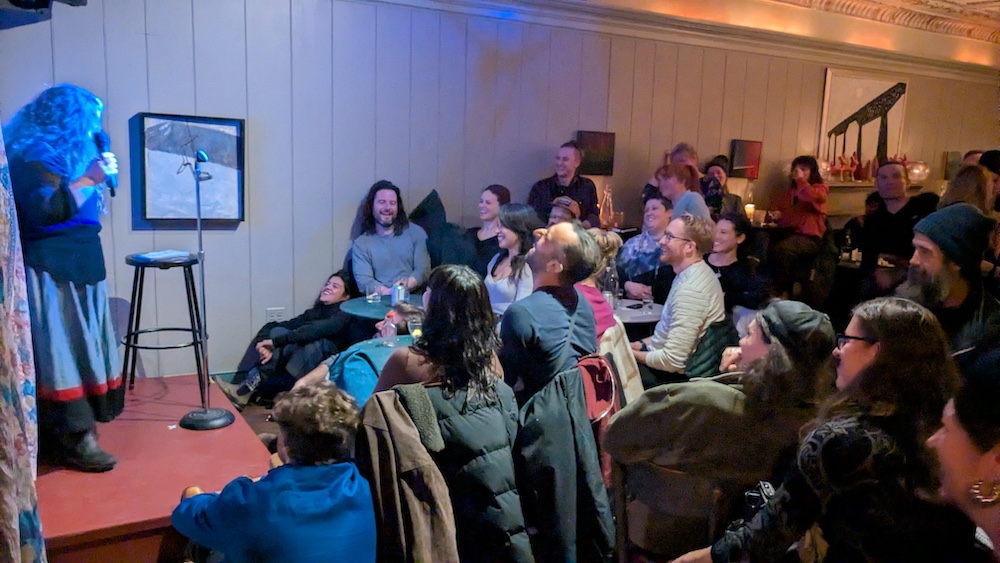
Photo by Paul Willis
Showtime
The gig starts.
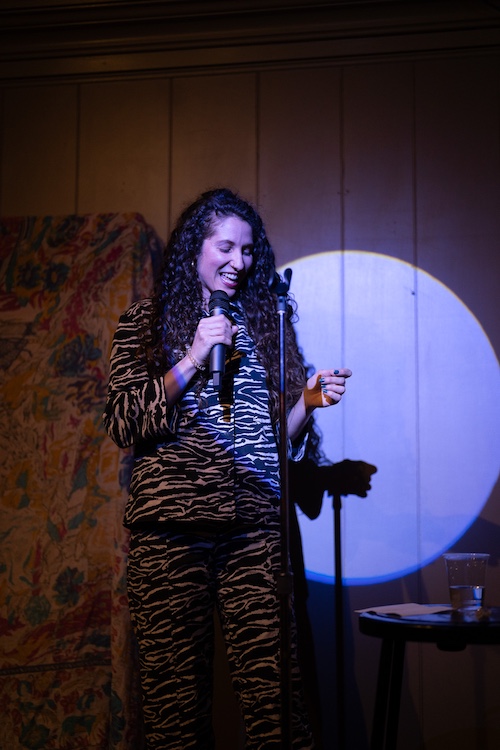
The first act, Marika, takes the stage. She’s funny and charming, and seems to know half the people in the room. I watch her move effortlessly through her routine, creating the tension necessary for a good set-up and then releasing it with the joke – just as Kincheloe has taught us. She leaves to thunderous applause.
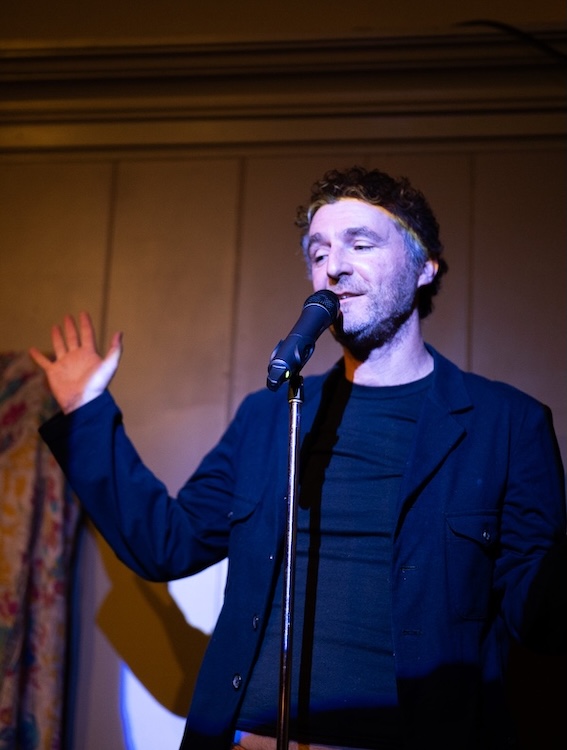
Before I know it, it’s my turn. I walk out on stage and feel the audience watching me, even though, with the spotlight shining in my eyes, it’s nearly impossible to see any of them. It’s surreal to have all this attention focused on me. I adjust the mic stand and blow into the microphone to test the levels.
“Hi,“ I say, hearing my voice resound through the speakers. “My name’s Paul and I’m from England.”
I make some jokes about anxiety, about being British in America. Then I get to my bit on insomnia. “I have a sleep coach,“ I say. “I think when people hear me say that, they imagine a guy at the end of the bed with a towel around his neck and a timer in his hand. ‘3-2-1… And snooze!'”
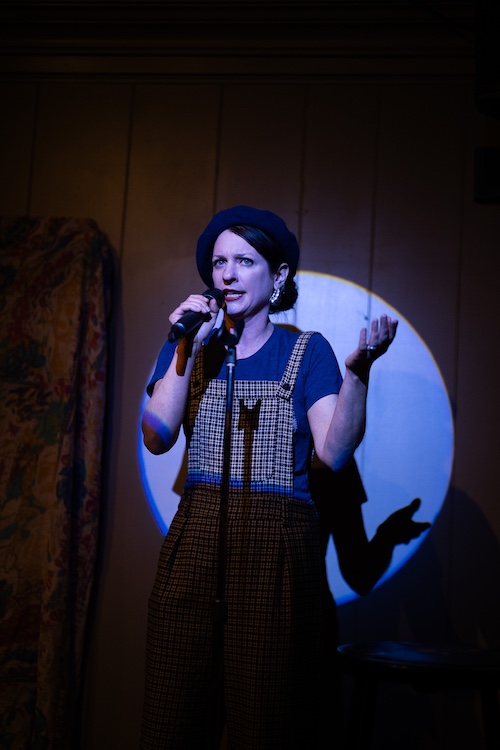
My set lasts around eight minutes. When I walk off stage, I’m elated. There’s something deeply satisfying about sharing your life in a way that brings levity to your struggles and connects you to other people. I slip off to the sidelines and watch my classmates take the stage one after another. I feel an outpouring of compassion for each one of them, because I now understand first-hand the scary leap of faith they are taking.
-
- Photo by Zebulon Brown
-
- Photo by Zebulon Brown
Further Afield
The following week, I try an open mic night at another bar in Kingston. It’s a chilly Wednesday and the place is mostly empty. The gig takes place in the bar’s backroom in front of a crowd of no more than a dozen. Unlike the enthusiastic reception I got at the Stockade, the response here is lukewarm. I raise a few laughs, but it’s hard to generate much energy from such a small audience.
As I leave the stage, I realize that stand-up lives or dies by its relationship with the audience. Laughter is contagious—the more of it there is, the more it feeds on itself.
After the gig, I feel a little despondent. I talk with one of the other comics at the bar, who encourages me to keep going—an act of generosity I immediately cling to. A few days later, during a conversation with Kincheloe, she tells me that some of her former students have gone on to open for major acts, while for others the gains have been more quotidian.
“Some have told me the course helped them be a better lawyer,“ she says. “What’s important for me is that people can take things from the experience and apply them to whatever they’re doing.”
I don’t know if my introduction to stand-up will develop into anything more than a pleasant memory, an anecdote about the time I got up in front of a room full of strangers and tried to turn chronic sleep deprivation into comedic gold. In a way, it doesn’t matter. What counts in the end is the connectedness of the experience, and the sense that anything is possible if you’re willing to be vulnerable.
+ + +
Lauren Kincheloe runs her comedy course twice a year in the Spring and Fall. She can be contacted via her Instagram.
Photos courtesy of Paul Willis + Garin Sheeley + Zebulon Brown
Related Posts

Write a Comment
You must be logged in to post a comment.