



Cold Comfort: A Polar Bear Plunge to Start the New Year
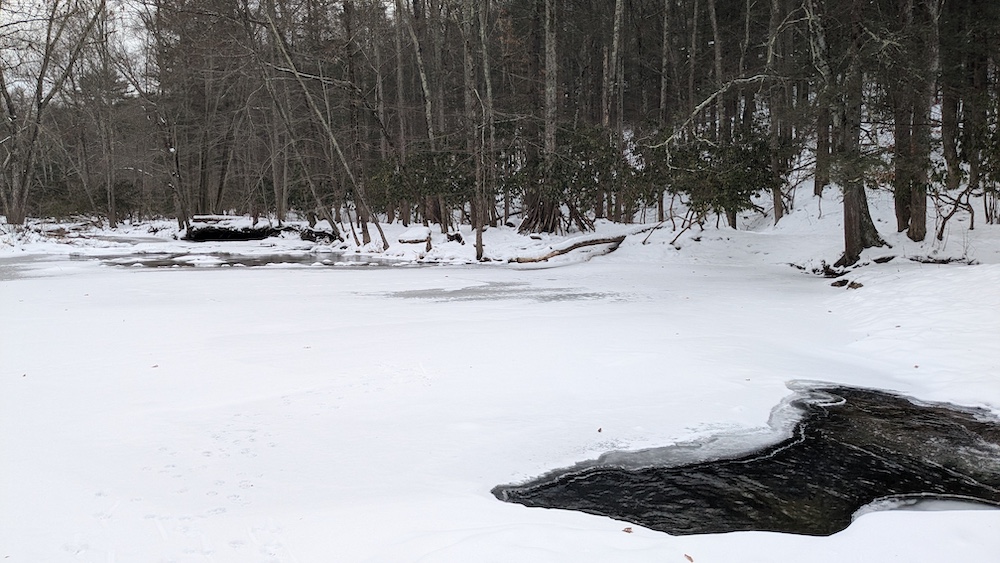
It’s the morning of New Year’s Day, and I am standing on the snowy banks of Peter’s Kill near Accord looking for a place where I can get into the water.
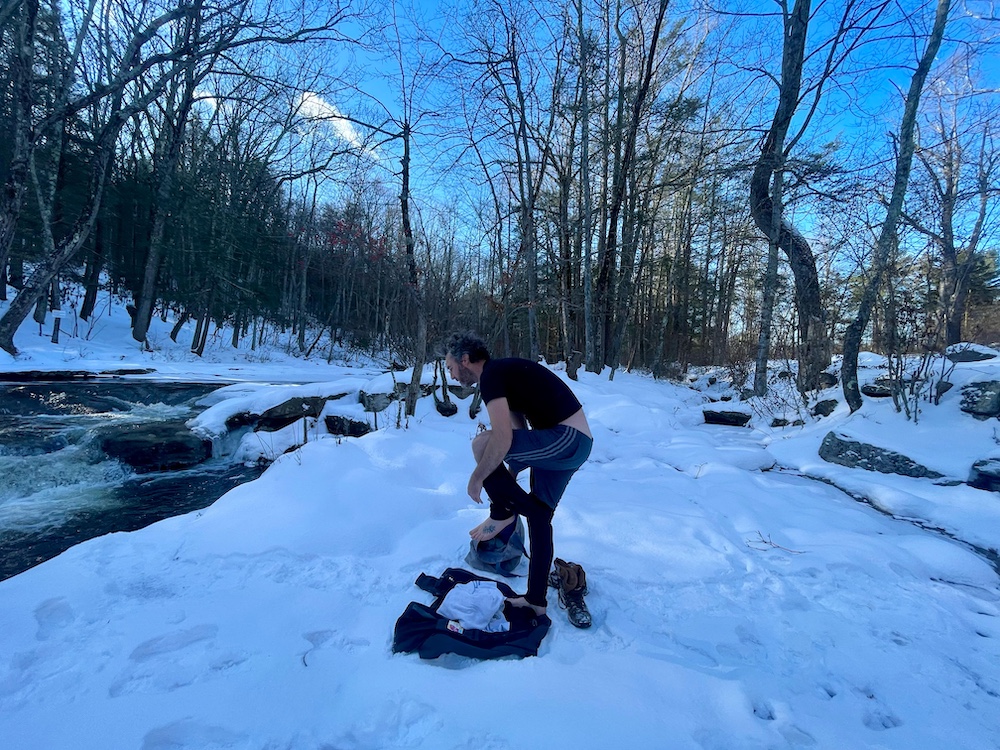
Much of the creek’s surface is frozen over, with so much snow on the ground that it’s hard to determine where the land ends and the creek begins. Nevertheless, I find a place where the water is accessible. I take off my clothes and lay them inside my bag.
I am excited but also nervous. What better way to shake off the cobwebs of the old year and usher in the new than a plunge in the freezing waters of a Hudson Valley creek?
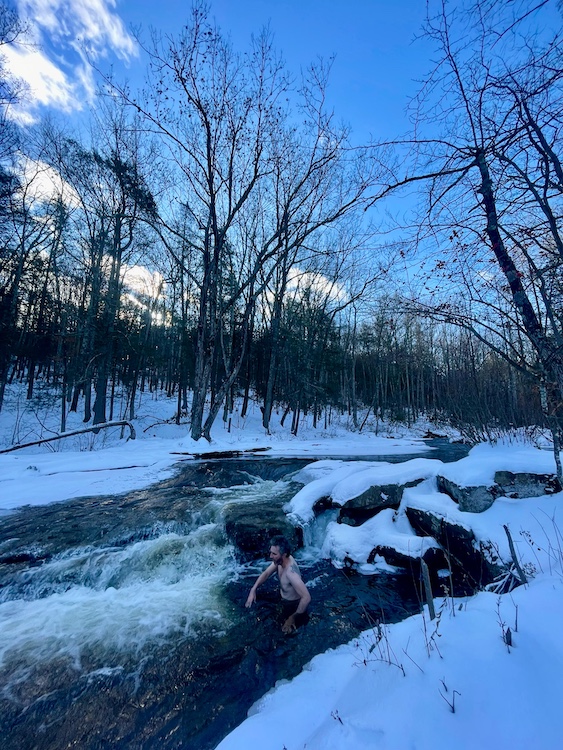
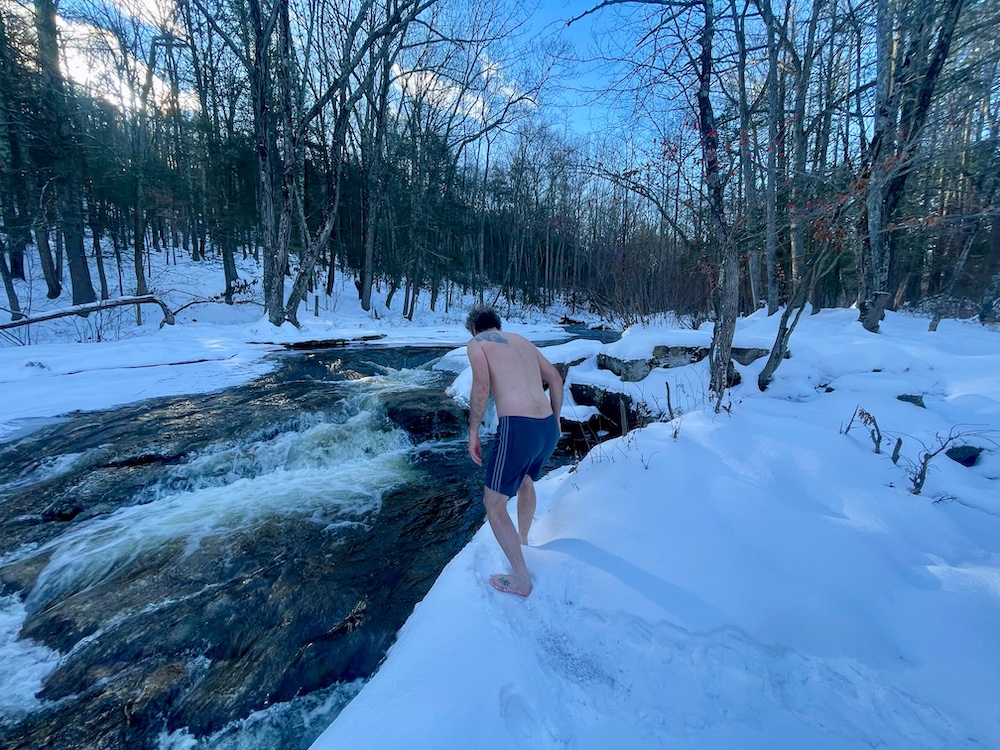
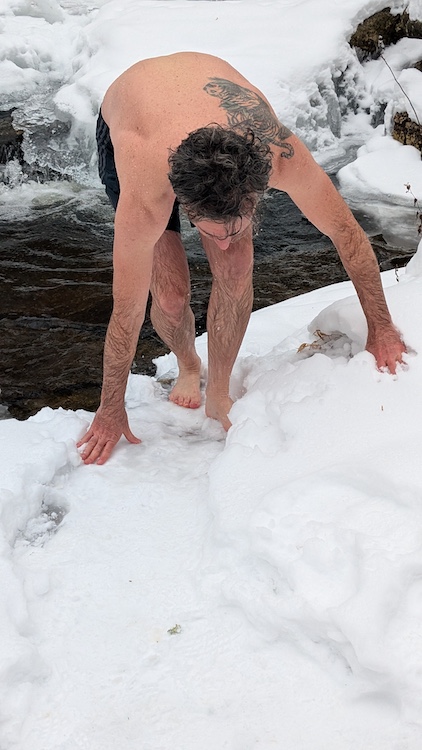
The frigid air raises goosebumps as I step gingerly across the ice. The stones of the cataract are so slippery that I have to crouch down on my hands and knees to reach the natural plunge pool, formed by the action of the fast-flowing water over time. I lower myself into the creek until the water is up to my neck.
At first, my breath comes quick and fast, but – as is my habit – I stay in long enough for my breathing to regulate. A sense of calm settles in, and the sensation of intense cold suddenly seems to matter much less.

Photos by Antony Crook
It’s like this every time I cold plunge. There comes a moment when the initial bodily panic dissolves, replaced by a deep sense of peace. At this point, I always feel as if I could stay in the water indefinitely.
What makes the experience feel profound is harder to name. It has something to do with witnessing, firsthand, the collapse of your assumptions about what you are physically capable of—of finding yourself in a liminal space where you become aware that physical experience can, however briefly, be transcended.
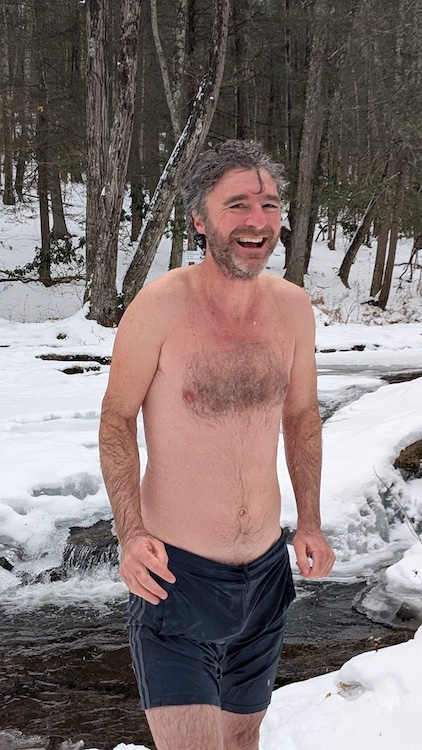
The next moment, I am climbing out of the water onto the frozen banks. The sub-zero temperatures hardly register, and it’s only when I try to put my clothes on that I realize my hands are frozen claws that I even become aware of how cold I actually am.
What makes the experience feel profound is harder to name. It has something to do with witnessing, firsthand, the collapse of your assumptions about what you are physically capable of—of finding yourself in a liminal space where you become aware that physical experience can, however briefly, be transcended.
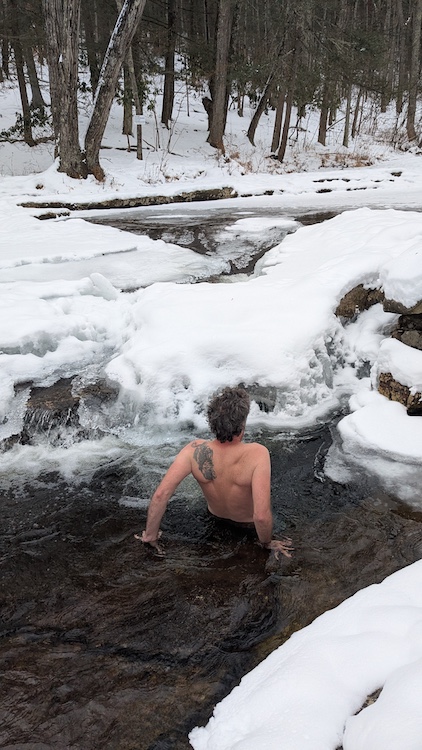

I started cold plunging at Peter’s Kill (Minnewaska State Park Preserve) five years ago during the early days of the COVID-19 lockdown. It was an anxious time – we were all trapped inside, isolated from one another, trying to make sense of the unprecedented global emergency going on around us.
I needed to do something to break out of the cycle of rumination the pandemic had pushed me into. Scrolling through social media one day, I saw a video posted by a yoga teacher I knew showing himself plunging into a local swimming hole. As soon as I saw the footage of him submerging in the icy waters of the creek, I knew it was what I needed.
The first time I did it, I drove alone to the river. I still remember the exhilarating feeling of emerging from the water and standing on the riverbank, my body flushed with heat despite the cold. Since that first plunge, I’ve returned to the icy waters again and again—drawn back with something like addiction, sometimes with friends, sometimes alone.
I love it. Even now, nearly every time I do it, I approach the water with a sense of trepidation. There is always a moment before the plunge when time seems to stop, when my mind rebels against what my body is about to do. And yet I always go through with it—because I know that on the other side of the physical shock waits a sensation of deep embodiment.
I drove alone to the river. I still remember the exhilarating feeling of emerging from the water and standing on the riverbank, my body flushed with heat despite the cold. Since that first plunge, I’ve returned to the icy waters again and again—drawn back with something like addiction, sometimes with friends, sometimes alone.
These days, of course, the wellness world is awash with influencers extolling the health benefits of cold plunging. People like the Dutch extreme athlete Wim Hof, who has made a name for himself testing the limits of his body’s capacity to survive freezing temperatures.
Hof is something of a showman, whose methods have occasionally raised concern among health experts. But the self-styled “Iceman” also has a deeply personal relationship to cold plunging, crediting the practice with helping him survive the death of his wife, who died by suicide following a long battle with mental illness.
“When you go into the cold water, you’re no longer thinking about your mortgage, your next meal, your emotional baggage,” Hof wrote in his book, The Wim Hof Method. “You’re not caught up in your thoughts. It’s freezing, and you’re just surviving. That brought me to a place where I could heal.”
Of course, it’s always possible that what can cure you can also kill you, and there have been tragic cases of people dying as a result of cold water plunges – with Hof himself cleared of liability after a California teenager died in 2022 after allegedly performing his method in her family pool.
“When you go into the cold water, you’re no longer thinking about your mortgage, your next meal, your emotional baggage. You’re not caught up in your thoughts. It’s freezing, and you’re just surviving. That brought me to a place where I could heal.” — Wim Hof
Maybe for people like Hof—and to a far lesser extent, for me—pushing at the edges of things is part of how we self-regulate. But I don’t advocate anyone following in my footsteps, especially not in the heart of winter when you have to kick ice away from the water’s edge to get in, and the water is so cold that chunks of ice ricochet off your skin as you submerge. This is not something to undertake lightly, and is better attempted in the company of others.
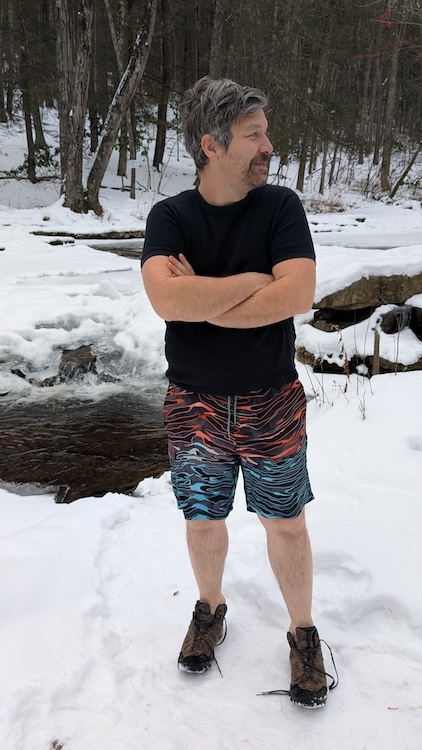
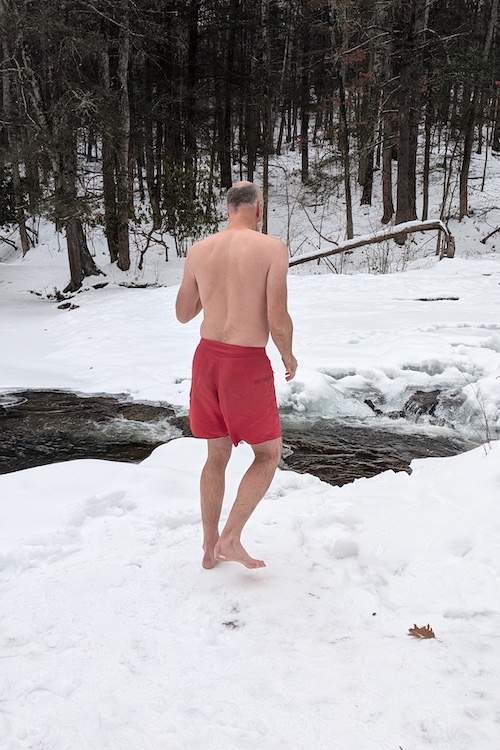
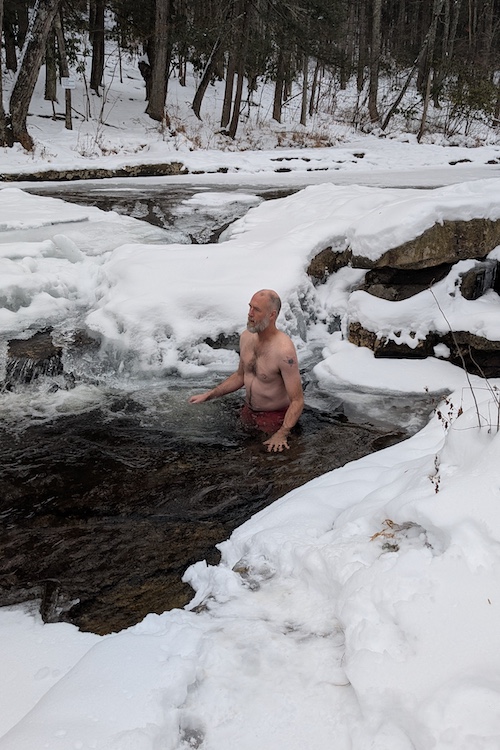
I sometimes cold plunge with my friend Dylan, whose approach is much more smash-and-grab. He jumps into the freezing water with an exuberance that can seem cavalier, until you see him emerge a second or two later, panting and howling and climbing out nearly as fast as he went in. He calls it the Minnesota fratboy approach and it seems to work for him.
My other friend David is more like me. He likes to remain utterly still, even as the creek waters cascade violently around him, and when he recounts his experience later on the riverbank, he describes it as something akin to an out-of-body experience.
In the year following the start of the pandemic, I found myself returning to Peter’s Kill again and again, often weekly, drawn less by discipline than by instinct. These days, my visits are rarer, though I still take cold showers almost daily. But while the physical benefits may be similar, a shower can’t compete with the ritual of plunging into a natural body of water—especially at the turn of the year, when the act feels like a deliberate way of beginning again.
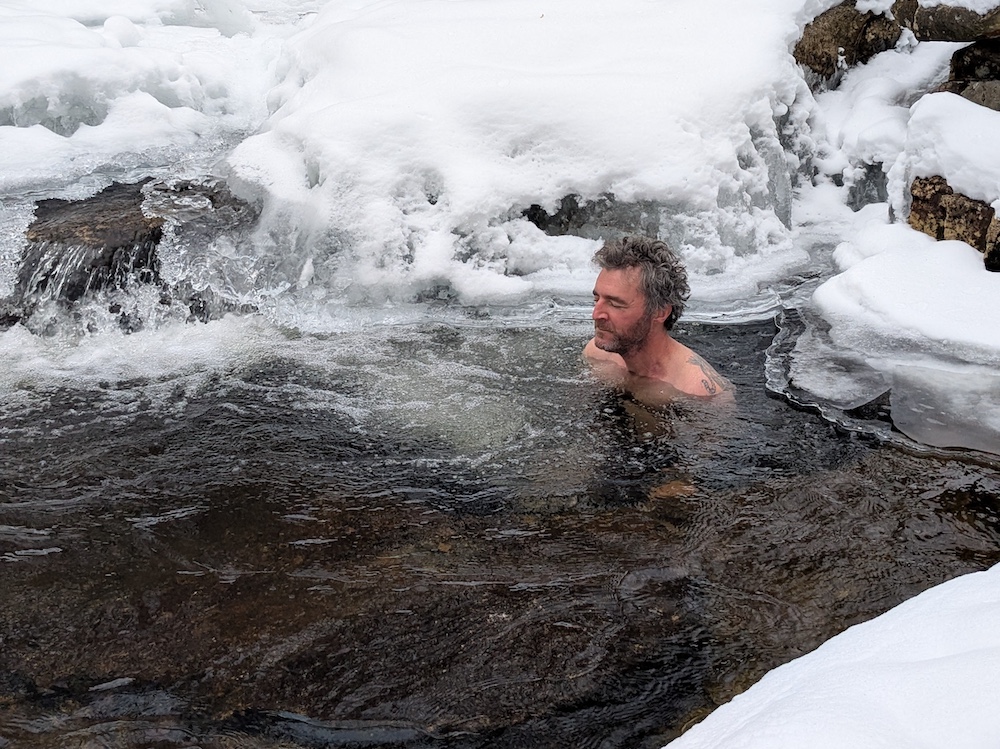
The creek has been my constant companion on these expeditions. I have seen it in every season – bursting its banks in the heavy pregnancy of the spring snow melt, and spare and small in the dead heat of summer. I have seen it in fall when sunshine breaks through the burnt orange canopy of trees and glitters magically on the water’s surface, and in winter when the creek is frozen over and the air is bitter.
It’s in those winter moments, especially, that the plunge takes on the feeling of a ritual. I come not to test myself for sport, but to mark something—to meet the year head-on, to feel, firsthand, my own capacity to endure. To remember, as Albert Camus once wrote, that even in the depth of winter, there exists within us “an invincible summer.”
There have been days when this little creek felt like my best friend in the world, days when immersing myself in its waters felt about the closest thing to a spiritual practice I have found in life. The climber Anatoli Boukreev once said of mountains that they were “not stadiums where I satisfy my ambition to achieve,” but “cathedrals where I practice my religion.”
Standing on the edge of Peter’s Kill, I know just what he meant.
Photos by Paul Willis + Antony Crook
Related Posts


Write a Comment
You must be logged in to post a comment.